Cart
No products in the cart.
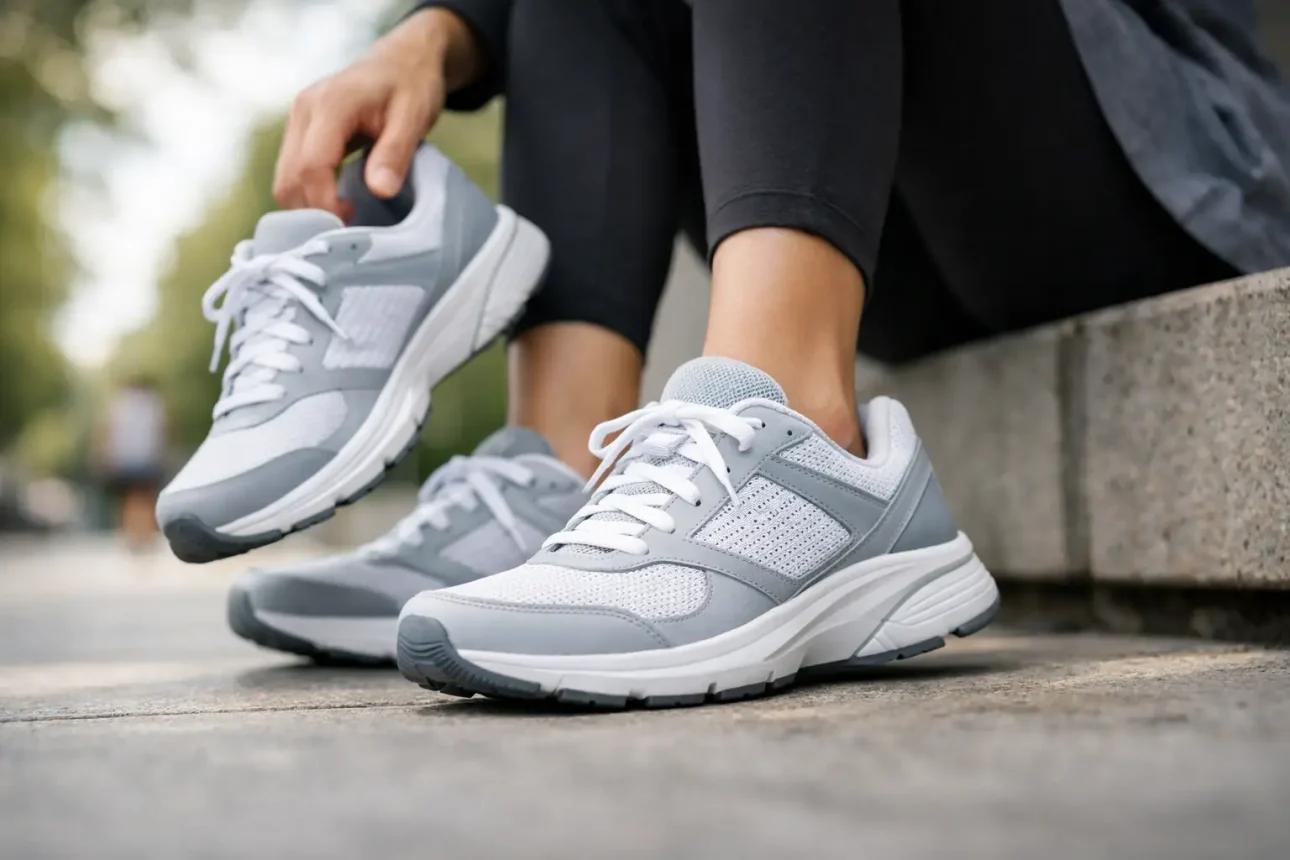
Your feet usually tell you the truth before the brand name does. If a pair feels stiff, sloppy, too narrow, or weirdly hard underfoot in the first few minutes, that matters. When people ask us how to choose walking sneakers, we keep it simple – stop shopping by looks alone and start with how long you walk, where you walk, and how your feet feel at the end of the day.
A lot of shoppers get stuck because every shoe page says the same thing. Soft foam. Great support. All-day comfort. Sounds nice. Doesn’t help much. What actually matters is whether the shoe fits your body and your routine.
Start with your use case. That sounds basic, but most people skip it. A person walking 2 miles on smooth pavement has different needs than someone working retail, chasing kids, commuting, and standing for eight hours.
If your walking is light and casual, you can usually get away with a flexible everyday sneaker with decent cushioning. If you’re walking long distances or staying on your feet all day, you’ll want more underfoot protection and a more stable platform. Not rock-hard. Not mushy either. Too soft can feel nice for ten minutes, then sloppy by midafternoon.
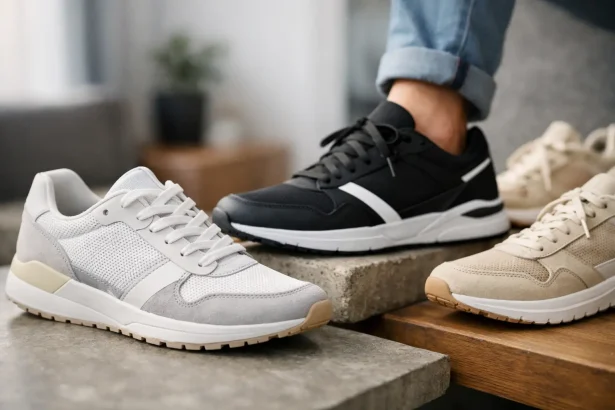
This is where people get tricked by trendy sneakers. Some look clean and wear terribly. Flat soles, weak cushioning, and no structure might be fine for coffee runs. They’re not what we’d pick for 10,000 steps or a full shift.
The best walking shoe on paper is useless if the fit is off. We’d take a less flashy shoe that fits right over a popular pair that rubs your heel raw.
You want a secure heel, enough room through the forefoot, and space in front of your toes. Not a ton of space. Just enough so your toes aren’t jammed when you walk downhill or after your feet swell later in the day. That swelling part matters more than people think, especially if you walk a lot or stand for work.
Try shoes on later in the day if you can. Your feet are usually a little bigger then. Wear the kind of socks you actually use. If the shoe only feels right with ultra-thin socks you never wear, it’s probably not the one.
Width matters too. A lot of people don’t need a bigger size. They need a wider shoe. If the sides of your feet feel squeezed or your pinky toe gets bullied every time, sizing up might just make the length sloppy. Better to look for a shape that matches your foot.
It should feel secure without needing to crank the laces too hard. Your heel shouldn’t slide around. Your toes should be able to move a bit. And the shoe should bend where your foot bends, not in some random spot near the middle.
If you notice pressure points right away, don’t talk yourself into them. Some shoes break in a little. A bad fit is still a bad fit.
People often assume softer means better for walking. Sometimes yes. Often not.
Very soft cushioning can feel great at first step, then unstable once you’ve been moving for hours. If you walk on sidewalks, concrete, store floors, or airport terminals, you usually want cushioning with some control to it. Enough softness to take the edge off. Enough structure so you don’t feel like you’re sinking.
This is why max-cushion shoes can be great for some people and annoying for others. Models like the Hoka Bondi or Brooks Ghost Max work well if you want a lot of foam underfoot and a smooth ride. But if you prefer more ground feel or you hate bulky shoes, they can feel like too much.
On the other side, old-school flat sneakers might look sharp, but they can be rough on your feet over long days. We like a clean low-profile sneaker as much as anyone. We just wouldn’t pretend it’s the smart pick for all-day walking.
A supportive walking sneaker doesn’t need to feel like a brick. It should guide your foot without fighting it.
If your foot rolls inward a lot, or you know you do better in more stable shoes, look for models with a firmer base and less side-to-side wobble. That doesn’t mean you need the most corrective shoe possible. It means you probably shouldn’t buy the squishiest neutral runner you can find and hope for the best.
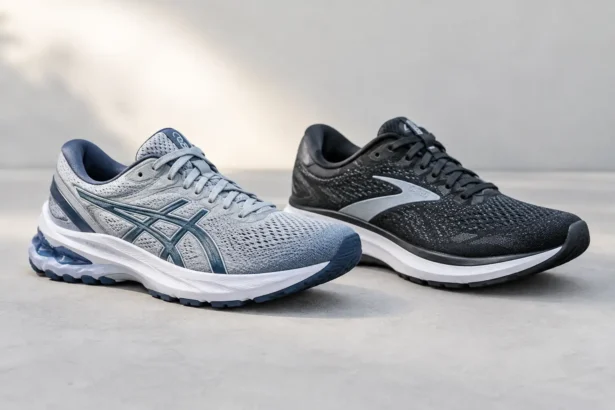
Stable options from lines like Asics Gel Kayano, Hoka Arahi, and some New Balance walking and running models tend to work well for people who want a little more control. If your stride is pretty neutral and you just want comfort, softer neutral shoes from brands like Brooks, On, Nike, or Adidas can make more sense.
It depends on how you move. And yes, that answer is less fun than a hard rule. It’s still the honest one.
The bottom of the shoe matters more than the logo. Look at the base. A wider platform usually feels more stable. A rocker shape, where the shoe curves a bit from heel to toe, can help the step feel smoother. Some people love that rolling feel for long walks. Others want something more natural and flexible.
Also check how the shoe bends. A walking sneaker should flex through the forefoot, not fold in half like a cheap deck shoe. Too stiff can feel clunky. Too floppy can feel tiring.
Grip matters if you walk on slick sidewalks, polished floors, or in wet weather. You don’t need trail lugs for daily walking, but a little traction goes a long way.
A shoe can have a great midsole and still be annoying because the upper is hot, stiff, or weirdly tight. Mesh uppers usually feel cooler and easier on the foot. That’s good for warm weather and long days. Knit can feel comfortable too, but some knit uppers stretch too much and lose that locked-in feel.
If you want one pair for everyday wear, we’d lean toward something breathable, easy to lace, and not too precious-looking. Walking shoes get used. A lot. Better if they still look decent after real life happens.
If your day includes more standing than actual walking, don’t assume you need the same shoe as someone power-walking for exercise. Standing all day often feels better in a shoe with stable cushioning and a broad base. Too much bounce can get tiring.
We’d skip flat lifestyle pairs here. Go for something built with comfort in mind, even if it looks a little chunkier. By 5 p.m., your feet won’t care that the sleeker pair looked cooler at breakfast.
A heavy shoe isn’t always bad. Some heavier walking sneakers feel planted and solid, which many people like. But if a shoe feels like work just to pick up your feet, that adds up over miles.
The sweet spot for most people is moderate. Enough substance to feel supportive, not so much that the shoe drags. If you walk fast or cover a lot of distance, lighter usually feels better. If your priority is standing comfort and stability, a little extra weight may be worth it.
Some of the most expensive sneakers are expensive because of hype, not because they’re better for walking. We’re not impressed by that.
What you’re paying for should be clear. Better cushioning. Better fit options. Better outsole durability. A shape that works for real miles. If a shoe costs more but solves a real comfort problem for you, fine. Worth it. If it’s pricey because it’s trendy, pass.
This is also why it helps to shop across brands instead of locking yourself into one label. Nike might fit you well. Or maybe Asics does. Or Brooks. Or New Balance. Brand loyalty is fine until it gets in the way of buying the pair that actually feels right.
If you’re unsure, start with three questions. How many hours will you wear them at a time? Do you want soft comfort or more stable support? And is your foot narrow, average, or wide?
Those answers cut through most of the noise. From there, look for a walking or running-inspired sneaker with enough cushioning, a shape that matches your foot, and a sole that feels steady when you move. If you’re between two pairs, choose the one that feels better under your arch and heel after ten minutes, not the one that photographs better.
We’ll say it plainly: the right walking sneaker is the one you stop thinking about once you’ve got it on. No rubbing. No sliding. No foot fatigue hitting early for no reason. Just a shoe that gets through the day with you.
That’s the pair worth buying.