Cart
No products in the cart.
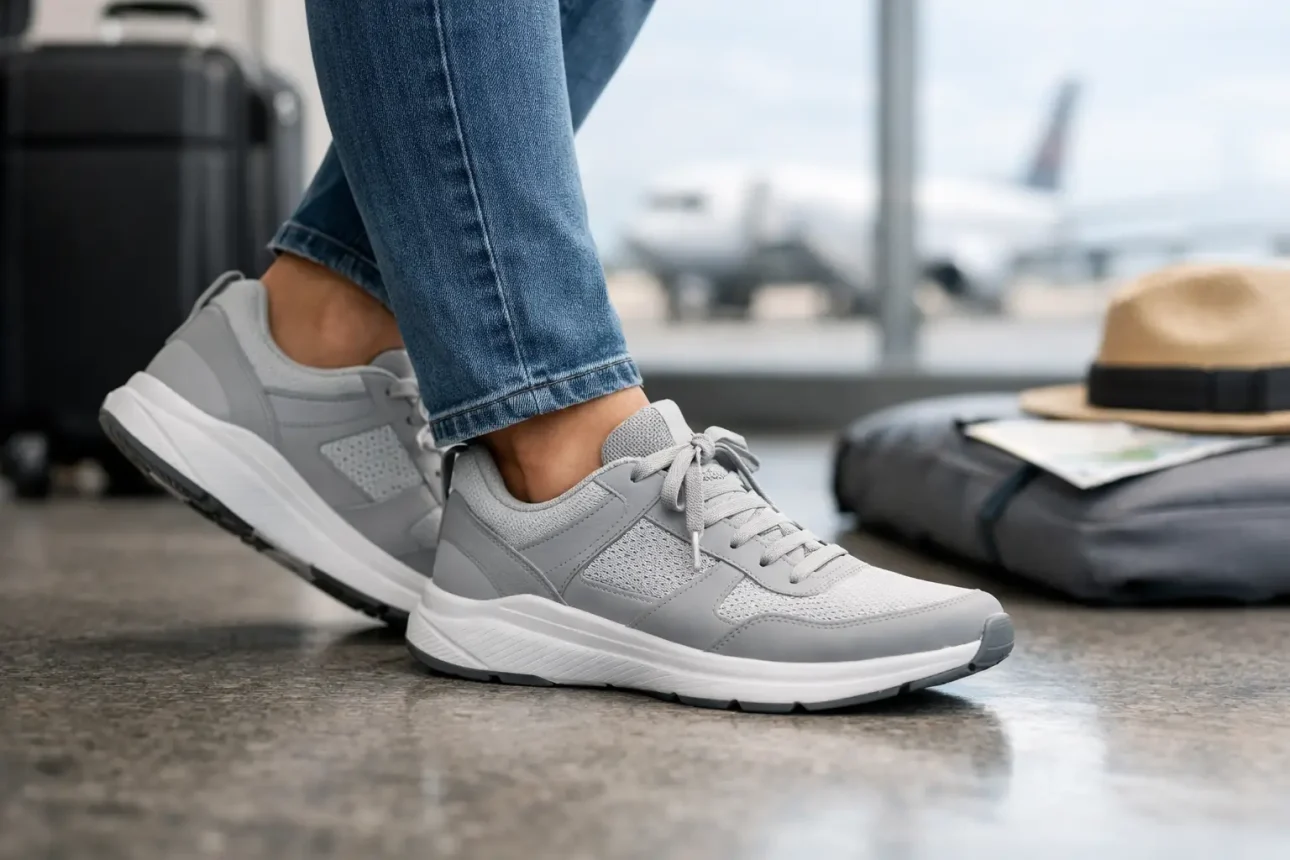
Airport floors are brutal. So are cobblestones, rushed train changes, long museum days, and that last mile back to the hotel when your feet are done. That’s why comfortable sneakers for travel matter more than almost anything else you pack. If your shoes are wrong, the whole trip feels longer.
We’re not talking about sneakers that feel fine for a quick coffee run. We mean pairs you can wear for hours, with a backpack on, through lines, stairs, and streets you didn’t plan to walk. The sweet spot is simple – enough cushion to keep you moving, enough support to stop that flat, tired-foot feeling, and a look that doesn’t scream gym shoe in every photo.
A travel sneaker has a harder job than your average daily pair. It has to handle long stretches of walking, weird surfaces, and all-day wear without becoming heavy, sweaty, or annoying. A shoe can feel soft in the store and still be terrible by 4 p.m. We’ve all had that pair.
What actually matters is how the midsole feels after hours, not the first five minutes. Soft is nice, but too soft can get sloppy fast, especially if you’re carrying luggage or walking on uneven streets. We usually prefer cushioning with some structure. That keeps the ride comfortable without making your foot work overtime to stay stable.
The upper matters too. Travel means heat, movement, and swelling. A stiff upper can start rubbing where you didn’t expect it. A very thin upper can feel great at first, then leave you missing support by the end of the day. There’s a balance.
Outsole grip gets overlooked until you hit wet pavement or smooth airport tile. Same with weight. A heavy shoe might feel supportive, but if it starts dragging after ten miles, you’ll notice.
A lot of people shop for travel sneakers by chasing the softest pair they can find. We get it. Cushion feels safe. But if you’re walking all day, pure softness is not always your friend.
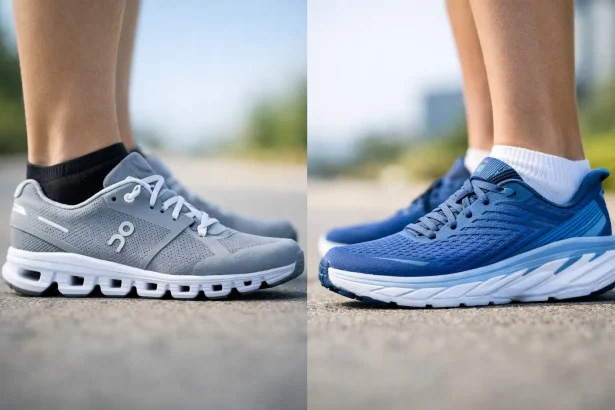
For some people, especially if your feet get sore fast or your knees feel the miles, max-cushion shoes are a solid move. Models like the Hoka Bondi or Brooks Ghost Max make sense here. They give you a lot underfoot, which helps when your trip includes full days on concrete. The trade-off is bulk. These shoes can feel bigger on foot, and they don’t always pack well.
If you want something more balanced, the Asics Gel Kayano, Hoka Arahi, and some New Balance walking and running styles are often better travel picks. They still feel cushioned, but they add structure. That matters when you’re moving through airports, crossing streets fast, or walking for hours without breaks.
And if you know you hate bulky shoes, don’t force yourself into one. A lighter, moderate-cushion sneaker that fits your foot well can beat a giant foam brick every time.
If your trip is built around walking, start with comfort first and style second. Not because style doesn’t matter, but because blisters are worse than ugly shoes. This is where shoes like the Bondi, Ghost Max, or a well-cushioned New Balance runner earn their place. They’re not always sleek, but they do the job.
We like these for big-city trips, theme parks, and vacations where you’re easily doing 15,000 steps a day without thinking about it. If your feet are usually tired by afternoon, don’t get cute here. Go cushioned.
Some people want one pair that can handle the flight, the walking, and a casual dinner. Fair. In that case, you want a cleaner-looking sneaker with real comfort under it. That’s where Adidas lifestyle runners, On models with lower-profile looks, or some Nike and New Balance options hit the mark.
This category is all about compromise. You won’t get the same plush feel as a max-cushion walking shoe, but you’ll get something easier to wear with more outfits. If your travel style is light packing and one-pair-only, this is usually the smartest lane.
Airport sneakers need easy comfort, decent slip-on feel even if they technically lace, and enough support for standing around forever. We like pairs that have a padded heel, forgiving upper, and outsole that doesn’t feel stiff.
This is where some On, Nike, and Brooks pairs work well. Not too chunky. Not too flat. Just easy. A travel day shoe doesn’t need to be your max-mile option, but it should still be ready if your gate changes three times and your hotel is farther than expected.
Flat fashion sneakers are the big trap. They look clean. They pack well. They also tend to feel dead fast if you’re doing real walking. If your trip includes more than a few casual blocks a day, skip the super-flat sole unless you already know your feet love it.
We’d also be careful with very stiff leather sneakers. They can look sharp, but break-in on a trip is a bad idea. Same goes for shoes that fit just a little tight. Travel often means heat and swelling. A snug fit at home can turn annoying fast.
Another miss is buying a technical running shoe that feels great but looks so aggressive you don’t want to wear it anywhere except outdoors. If you care about versatility, don’t ignore the mirror. You’re more likely to enjoy a shoe that works with your clothes and your itinerary.
We sell major brands because they make a lot of good shoes. But brand alone doesn’t save a bad fit. A comfortable travel sneaker should feel secure in the heel, roomy enough in the toe box, and stable when you walk at normal speed.
Heel slip is a no. Toe pressure is a no. Arch pressure that feels weird right away is usually a no too. Don’t talk yourself into it because the color is good or the reviews are loud.
If you’re between sizes, think about how you actually travel. Thick socks, long days, and warm weather can all change the fit. A little extra room is often better than a pair that feels exact at home and cramped on the road.
We’re not going to pretend looks don’t matter. You want a sneaker that works in photos and doesn’t make every outfit feel off. Fair enough. The good news is you don’t have to choose between comfort and a decent-looking shoe anymore.
Adidas Gazelle and Puma Speedcat look sharp, but we wouldn’t call them top-tier travel choices for heavy walking. They’re better for lighter days, short city breaks, or trips where comfort demands are low. If you’re doing serious mileage, these are style pairs first.
On the other side, a lot of comfort-forward shoes have gotten cleaner. Some Hoka, New Balance, Nike, and Asics pairs now hit a better middle ground. Still cushioned. Still wearable. Just less clunky than older comfort models.
Our take is simple. If your trip is built around movement, let comfort lead. If it’s a lighter trip with more sitting, shorter walks, and easy schedules, you can lean more into style.
Asics is usually a safe bet if you want support without the shoe feeling like a tank. The Gel Kayano has been around for a reason. It’s dependable.
Hoka is strong if cushion is your top priority. Bondi is great for soft, protected miles, but not everyone loves the bulk. Arahi gives you a little more control.
Brooks is often underrated for travel. Their comfort is straightforward, and models like Ghost Max make a lot of sense for long walking days.
New Balance does balance well – no surprise there. A lot of their shoes land in that useful middle space of comfort, support, and easy wear.
Nike and Adidas have plenty of good-looking options, but not every stylish pair is built for all-day travel. Pick carefully. Don’t assume the logo means comfort.
On works well for people who want a more modern, cleaner look with decent all-day wear. Some people love the firmer feel. Some don’t. That’s the trade-off.
Here’s the honest part. Don’t buy a pair two days before a trip and hope for the best. Even good shoes need a real-world test. Wear them on errands. Take a long walk. See how they feel after a few hours, not just around the house.
If they rub a little now, they’ll probably rub more later. If they feel heavy now, they won’t magically feel lighter in Rome, Chicago, or Tokyo. Trust what your feet tell you.
If you’re shopping at The Sneaker Base, we’d keep it simple. Start with your trip. Long walking days? Go cushioned and supportive. Want one pair for everything? Look for a cleaner all-day sneaker with real underfoot comfort. Mostly care about style? Fine – just be honest about how much walking you’re actually doing.
Good travel shoes don’t need to be exciting. They need to disappear on your feet so you can get on with the trip.