Cart
No products in the cart.
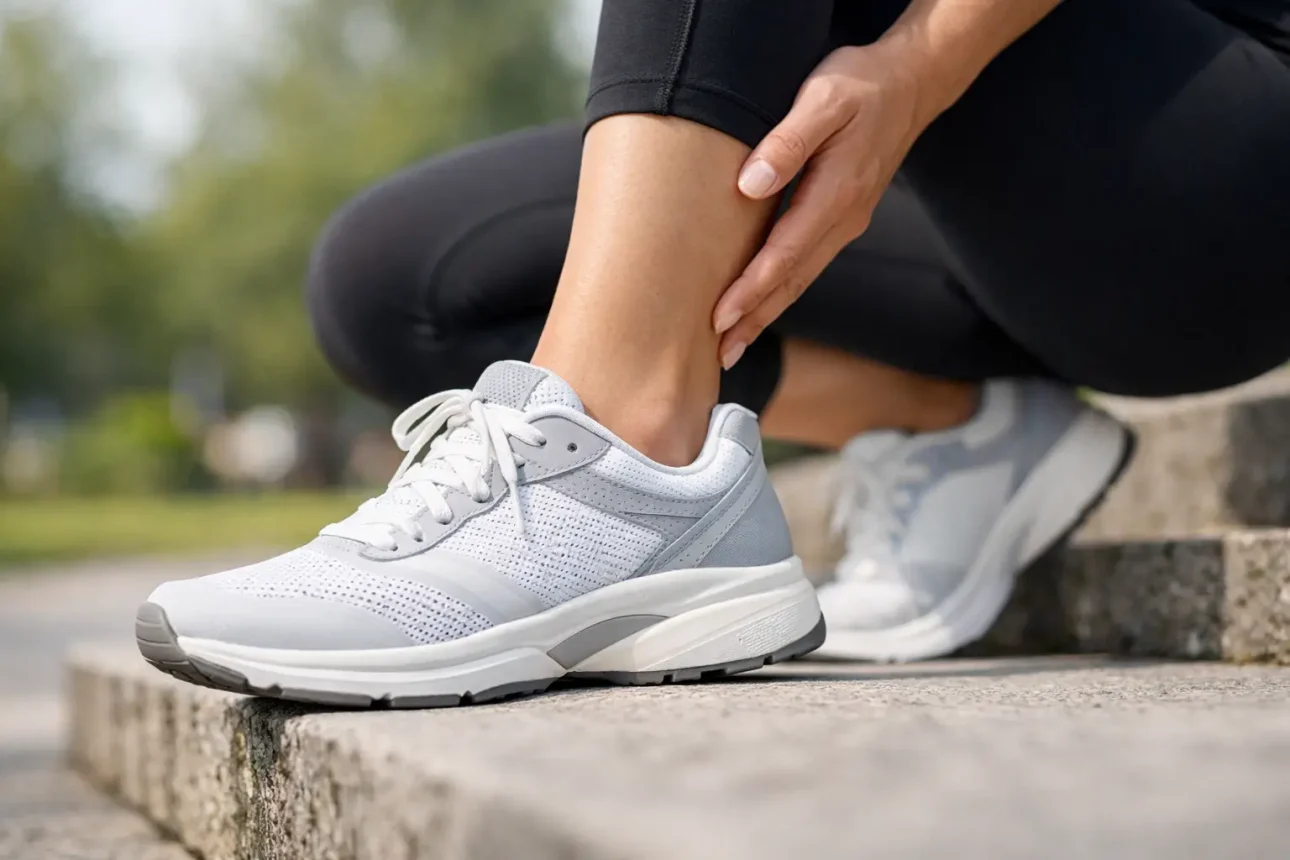
Your knees usually tell you the truth around 4 p.m. The floor feels harder, stairs feel longer, and that pair of flat, good-looking sneakers suddenly seems like a bad idea. The best sneakers for sore knees are not magic. They will not fix an injury. But the right pair can make walking, standing, and getting through a long shift feel a lot less punishing.
We look for three things first: enough cushioning to soften repeated impact, a stable platform that does not let your foot roll around, and a fit that keeps your heel locked in place. Style matters too. You still have to want to put them on tomorrow.
Knee discomfort can come from plenty of places. A hard day on concrete. A sudden jump in walking or running. Old shoes that have gone flat. Sometimes it is your gait, your hips, or an issue that needs a medical professional instead of another shoe box.
Sneakers cannot diagnose or treat that. What they can do is reduce some of the daily beating that reaches your legs. A well-cushioned midsole takes the edge off hard surfaces. A broad base gives you a more planted step. A smooth rocker shape can make the stride feel less clunky, especially when your legs are tired.
Do not confuse soft with supportive, though. Some very soft shoes feel amazing for five minutes, then make your feet work harder because they are unstable. For sore knees, we usually prefer cushioning with some structure underneath it. You want a shoe that feels protective, not like you are walking on a mattress.
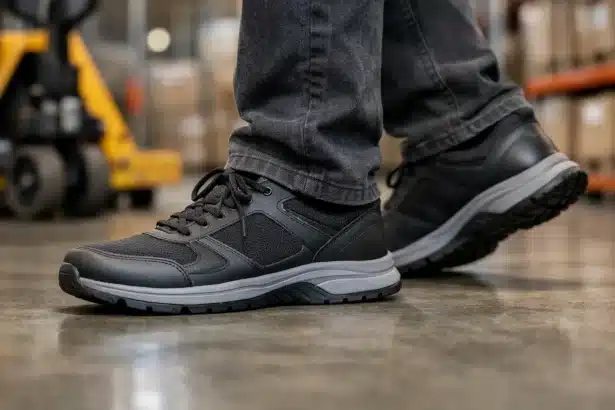
If you stand all day or walk long distances, a high-stack shoe is often a solid call. More foam underfoot can reduce the harsh feel of concrete and pavement. But the shoe should still feel steady when you turn a corner, carry groceries, or step off a curb.
A wider platform helps here. So does a heel that does not feel loose. If your heel slips, your body starts making small adjustments all day. That is tiring for your feet, ankles, and knees.
This sounds obvious, but it is one of the biggest mistakes we see. Your feet can swell over a workday or a long walk. If your toes are jammed into the front, you may alter your stride without realizing it.
Leave about a thumb’s width in front of your longest toe. Make sure the heel feels secure, and do not assume a narrower shoe will loosen up enough to become comfortable. If you have a wider foot, choose the wide version when it is available. Fighting the fit is never worth it.
There is no single winner for every person. A runner, a nurse, and someone walking the dog twice a day do not need the same shoe. These are the models we would start with because they offer real cushioning, reliable support, or both.
The Hoka Bondi is the obvious pick if your main complaint is hard ground. It has a thick, protective midsole and a rocker-shaped sole that helps the foot roll forward rather than slap flat into the floor. For standing shifts, city walking, and recovery days, it is hard to argue with.
The trade-off is the look and feel. The Bondi is bulky. It is not a sleek, low-profile sneaker, and some people will hate that. It also feels like a lot of shoe if you prefer quick, natural ground contact. But if your knees are sore after concrete-heavy days, this is one of the first pairs we would try.
The Brooks Ghost Max is a good middle ground for people who want plenty of cushion without feeling like they are balancing on foam. It has a broad base, a smooth transition from heel to toe, and enough structure for walks, easy runs, and everyday wear.
We like it for the person who does a little of everything. It is not the flashiest shoe in the room. That is fine. It is built for repeat wear, which matters more when you need something that still feels decent after a full day.
If your feet tend to roll inward a lot, a stability shoe may feel better than a neutral shoe. The ASICS Gel-Kayano has long been a dependable choice for runners and walkers who want cushioning plus extra guidance through the stride.
That does not mean everyone with sore knees needs a stability shoe. If your current neutral sneakers feel stable and comfortable, forcing more support can feel awkward. But if your shoes wear down heavily on the inside or you notice your ankles collapsing inward when tired, the Kayano is worth trying on.
The New Balance Fresh Foam X 1080 is for people who want a soft ride but do not want an oversized walking shoe. It works well for easy miles, errands, and long casual days. The upper is usually forgiving too, which is useful if your feet swell or you dislike stiff shoes.
The downside is that soft foam can feel less planted than a firmer shoe. If you move quickly side to side, work around lots of stairs, or simply prefer a stable ride, the Ghost Max or Gel-Kayano may suit you better. Still, for straightforward comfort, the 1080 is a strong pick.
The Hoka Arahi gives you stability without the heavy, stiff feeling some support shoes have. It is lighter and less bulky than the Bondi, with enough guidance for walkers and runners who want help staying centered over the shoe.
We would choose the Arahi over the Bondi if you want a more active feel. It is better for someone who wants to walk fast, run easy miles, or wear one pair for a commute and a workout. It is not as plush as the Bondi, but that is the point. More cushion is not always better.
The On Cloudrunner is a good option if giant foam midsoles are not your thing. It has a more structured, firmer ride than the softest shoes on this list, along with a clean look that works easily with regular clothes.
We would not put it first for a 10-hour shift on concrete. The Bondi and Ghost Max are kinder for that. But for daily walking, light running, and people who want support without a marshmallow feel, it makes sense.
Start with what your day actually looks like. If you are standing on concrete for hours, go for maximum protection with the Hoka Bondi or Brooks Ghost Max. If you walk or run and need more guidance, look at the ASICS Gel-Kayano or Hoka Arahi. If you want soft comfort for casual miles and everyday wear, the New Balance 1080 is tough to beat.
Try shoes later in the day if you can. That is when your feet are closest to their real working size. Wear the socks you normally use. Walk around, take a few turns, and pay attention to your heel. A good shoe should feel comfortable right away. Do not buy it hoping pain, pressure, or rubbing will disappear after a break-in period.
Also check the condition of the pair you already own. If the outsole is worn unevenly, the midsole feels flat, or you have had them for years of regular use, they may be part of the problem. You do not need to replace shoes on a strict calendar, but dead foam does not come back to life.
If knee pain is sharp, swelling, persistent, or getting worse, stop trying to shop your way out of it. Get it checked. A better sneaker is useful for everyday comfort, but it is not a substitute for medical advice, rest, or rehab when you need it.
For the usual sore-after-a-long-day feeling, skip the flat lifestyle sneakers and give your legs some help. Pick the pair that matches your actual routine, not the one with the loudest marketing. Your knees do not care what is trending. They care how the shoe feels on hour eight.