Cart
No products in the cart.

Your feet do not care whether you call it a run, a dog walk, or a long shift. They care about how they feel three hours in. That is the point of this guide to everyday running shoes: finding a pair that can handle normal life without feeling stiff, flat, or fussy.
A proper everyday running shoe is not always the fastest shoe, the lightest shoe, or the best-looking shoe on the wall. It is the pair you reach for when you want reliable comfort. A few easy miles before work. Errands afterward. A full day on your feet. That kind of shoe has a job to do.
Running shoes come in a lot of flavors. Some are built for race day. Some are made for trails. Some are so soft and tall that they feel great walking around but can feel wobbly when you pick up the pace.
An everyday pair sits in the middle. It should have enough cushioning to take the edge off pavement, enough stability that your foot does not feel like it is drifting around, and enough durability to survive regular use. It should also fit without a long break-in period. We are not interested in shoes that need two painful weeks before they start behaving.
For most people, a daily running shoe is best used for easy runs, walks, gym sessions, commuting, and casual wear. If you run hard workouts or races, you can add a faster shoe later. Start with the pair that will actually get worn.
Before getting caught up in foam names and heel-to-toe drop, think about your routine. Be honest here. Buying for the runner you wish you were usually ends with an expensive pair collecting dust.
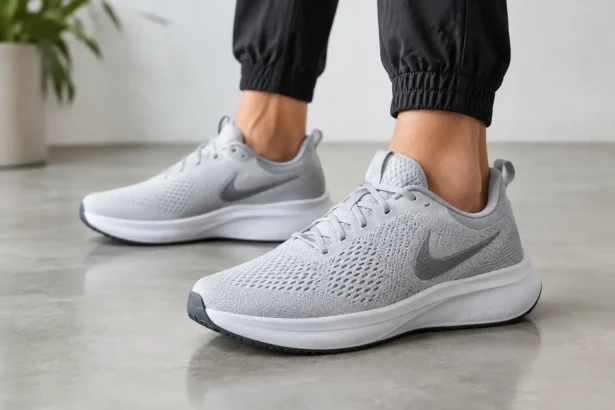
If you run two or three times a week and walk a lot, look for balanced cushioning. You want a shoe that feels protective but not like a mattress. Models in the New Balance Fresh Foam, Brooks Ghost, ASICS Gel-Cumulus, and Nike Pegasus lane tend to make sense for this kind of use. They are not trying too hard. That is a compliment.
If you work on your feet, walk several miles daily, or tend to feel beat up by late afternoon, more cushioning can be worth it. Hoka Bondi, Brooks Ghost Max, and some On models can make hard floors and sidewalks feel less harsh. The trade-off is that bigger midsoles can feel bulky, especially if you like a close-to-the-ground, quick feel.
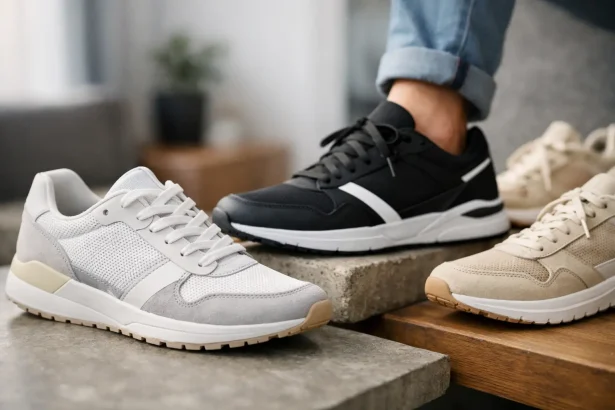
If you want one shoe for easy runs and a cleaner everyday look, a moderate, neutral trainer is usually the safe move. Avoid ultra-soft shoes if you hate a squishy feeling. Avoid flat lifestyle sneakers if comfort is the main reason you are shopping. Some look sharp but wear terribly after a few hours.
Cushioning gets most of the attention because you notice it the second you stand up. But the softest shoe is not automatically the most comfortable.
Very soft foam can feel fantastic during a short try-on. On a long walk, though, it may feel unstable or make your feet work harder to stay level. This matters more if your ankles roll inward, you carry a heavier load, or you simply prefer a planted feel.
Moderate cushioning is where we would start for most shoppers. It gives you enough protection for pavement without turning every step into a wobble. Think of it as a solid daily driver. You do not need to baby it, and it does not need a special occasion.
More cushioning makes sense if impact is your main complaint. Less cushioning can make sense if you want a firmer, more connected feel for gym work or shorter runs. Neither choice is morally better. It depends on what feels good at 5 p.m., not what sounds impressive in a product description.
Drop is the height difference between the heel and forefoot. A higher drop often feels familiar for people who land more toward the heel or have tight calves. A lower drop can feel more natural to some runners, but it asks more from the calves and Achilles area.
There is no prize for choosing low drop. If you are switching from a traditional running shoe, make the change slowly. Your feet and lower legs need time to adjust. For a first everyday pair, a moderate drop is usually the least complicated choice.
We like good-looking shoes as much as anyone. But fit wins. Every time.
Leave about a thumb’s width of space in front of your longest toe. Your feet spread and move when you run and walk, especially later in the day. A shoe that feels perfectly snug in the morning can feel cramped after a few miles.
Your heel should feel held in place without being squeezed. The midfoot should feel secure, not pinched. And the toe box should let your toes relax rather than stack on top of each other. If you feel pressure or numbness while trying them on, do not talk yourself into it. That problem rarely gets better.
Widths matter too. If the side of your foot hangs over the midsole, or your little toe gets rubbed, look for a wide option or a roomier model. Plenty of people have spent years buying a size up when what they really needed was more width. A longer shoe is not always a better-fitting shoe.
Try shoes on with the socks you wear most. Walk around. If possible, stand on one foot and gently roll forward through a step. You are checking whether the shoe bends where your foot bends and whether the upper holds you without fighting you.
Neutral shoes suit many runners and walkers. They do not add extra guidance elements aimed at controlling foot motion. If you have worn neutral shoes comfortably for years, there is no reason to complicate it.
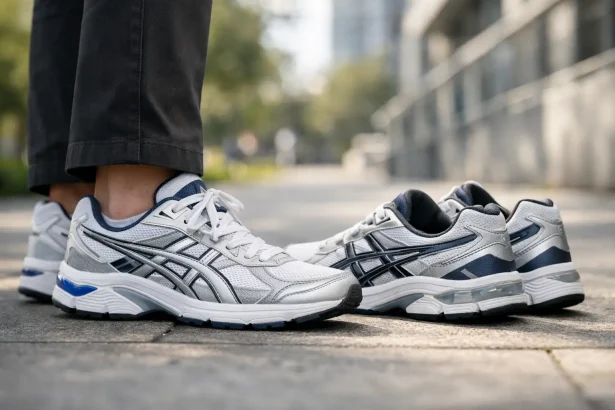
Stability shoes add structure around the heel or midsole to create a steadier ride. They can be a good call if your ankles feel unstable, your feet roll inward a lot, or you simply prefer more support on long days. ASICS Gel-Kayano, Hoka Arahi, and certain Brooks support models are popular for a reason: they make some people feel more planted.
Still, do not assume stability is necessary because a chart says you pronate. Nearly everyone pronates to some degree. The better question is whether a shoe feels stable and comfortable under you. If you have ongoing pain or a significant injury history, get advice from a qualified clinician rather than trying to diagnose it with a shoe label.
A good everyday running shoe can handle a lot, but it is not indestructible. If you run regularly, save your running pair for running and walking when you can. Wearing it for yard work, heavy lifting, and every single casual outing will wear it down faster.
Most running shoes last roughly 300 to 500 miles, but mileage is only part of the story. Heavier runners, rough pavement, and daily wear can shorten that range. Watch for a midsole that feels dead, new aches after familiar routes, worn-down outsole areas, or an upper that no longer holds your foot securely.
You do not have to throw shoes away the day they hit a number. But if a pair suddenly feels flat and tired, trust that feeling. Your body often notices before the shoe looks worn out.
If you are stuck between options, narrow it down like this. First, choose the comfort level you want: balanced, plush, or firm. Then choose the amount of support you prefer: neutral or stable. Finally, pick the fit that gives your toes room and locks your heel in place.
Brand matters less than people think. Nike, ASICS, Hoka, Brooks, On, Adidas, Puma, and New Balance all make solid everyday options. They also all make shoes that will not suit your foot. Do not buy a pair because everyone online loves it. Buy it because it feels right when you move.
At The Sneaker Base, we would rather see you in a simple pair you wear constantly than a flashy pair you avoid after week one. Start with comfort, give yourself enough room, and choose a shoe that matches the miles and hours you actually put in. Your feet will tell you if you got it right.