Cart
No products in the cart.
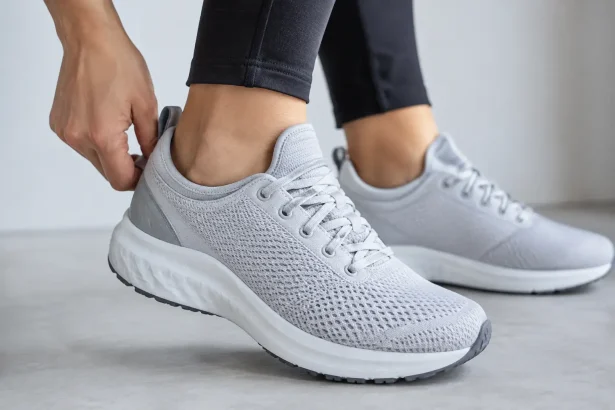
By 5pm, your shoes tell the truth. If your heels ache, your arches feel tight, or your lower back is complaining, it is time to choose shoes for standing with more care than just picking the pair that looks best in the box.
A good standing shoe is not always the softest shoe. It is not automatically a running shoe either. What matters is whether it keeps your foot supported, stable, and comfortable through the kind of day you actually have. Working retail for eight hours is different from teaching, hospital shifts, warehouse work, or standing at a desk. Start there.
Think about the floor first. Hard concrete, tile, and warehouse floors punish thin soles fast. If that is your daily setup, you need more underfoot cushioning and a sole that does not flatten after a few weeks. A shoe that feels fine for a 20-minute walk can feel rough halfway through a long shift.
If you move around constantly, look for a lighter walking or running-inspired sneaker with some flex in the forefoot. If you mostly stand in one spot, stability matters even more. Your feet should not feel like they are sinking sideways into a soft foam platform.
This is where people get it wrong: they buy based on job title instead of movement. A nurse covering long hallways may want a different shoe than a cashier behind one counter. Be honest about the miles, the surface, and whether you get breaks.
Cushioning is usually the first thing shoppers look for, and fair enough. A thicker midsole can take some sting out of hard floors. Models with a plush feel, such as the Hoka Bondi or Brooks Ghost Max, are popular for a reason. They give your feet a little more protection when the ground is unforgiving.
But we would not tell every person on their feet all day to buy the thickest sole possible. Very soft foam can feel unstable, especially if your ankles tend to roll inward or you carry weight through the inside of your feet. If you feel like you are balancing on a mattress, that shoe is not helping.
The sweet spot is cushioning that compresses a little, then holds you up. You want comfort without the wobble. Shoes like the ASICS Gel-Kayano or Hoka Arahi make more sense for people who want a guided, steadier ride, while neutral options can work well if your stride already feels stable.
A shoe can feel amazing when you first step into it and still be a bad choice for an eight-hour day. The test is whether your feet feel supported after the foam has had time to compress. Walk around the house on a clean surface. Stand still for a few minutes. Pay attention to your heel and arch, not just the soft feeling under your toes.
We like a clean sneaker as much as anyone. But if your toes are pressed against the front or your heel slips every few steps, the color does not matter.
Your standing shoes need enough room up front for your toes to spread naturally. Feet often swell during a long day, especially in warm workplaces or after lots of walking. A shoe that fits perfectly at 8am can feel painfully tight by mid-afternoon. Leave about a thumb’s width between your longest toe and the end of the shoe, and make sure the toe box is not squeezing from the sides.
Heel lockdown matters too. Your heel should sit securely without rubbing or lifting. A little movement can turn into a blister fast when you are repeating the same steps all shift. Lace the shoe properly before you judge it. Loose laces make a decent shoe feel sloppy.
If one foot is slightly bigger, fit the larger foot. Most people have this difference, and pretending otherwise is how you end up with one numb toe by lunch.
Support does not mean the shoe has to feel stiff and heavy. It means your foot is not doing all the work alone.
Check the middle of the shoe. If you can twist it like a towel or fold it completely in half with almost no effort, skip it for long standing days. Some flexibility at the forefoot is good. A shoe that collapses through the middle usually will not feel great once fatigue kicks in.
Also look at the base. A wider platform gives you a steadier place to land than a narrow, rounded sole. That matters on hard surfaces and when you are turning, reaching, or carrying things. It is not the flashy feature, but it is one you notice after hour six.
Arch feel is personal. High arches may prefer a shoe with enough shape under the middle of the foot, while flat feet may appreciate more structured stability. Still, do not buy a shoe because somebody told you it has “the best arch support.” If the arch bump hits the wrong spot on your foot, it can be annoying all day.
If you already use orthotics or insoles, bring them into the decision. You need a shoe with a removable insole and enough internal space to accommodate them. Trying to jam an insert into a tight shoe is a bad plan.
You do not need to wear a bulky orthopedic-looking shoe to be comfortable. Plenty of athletic-inspired sneakers work for long days, and some look sharp enough for casual workplaces. But style should follow function, not lead it.
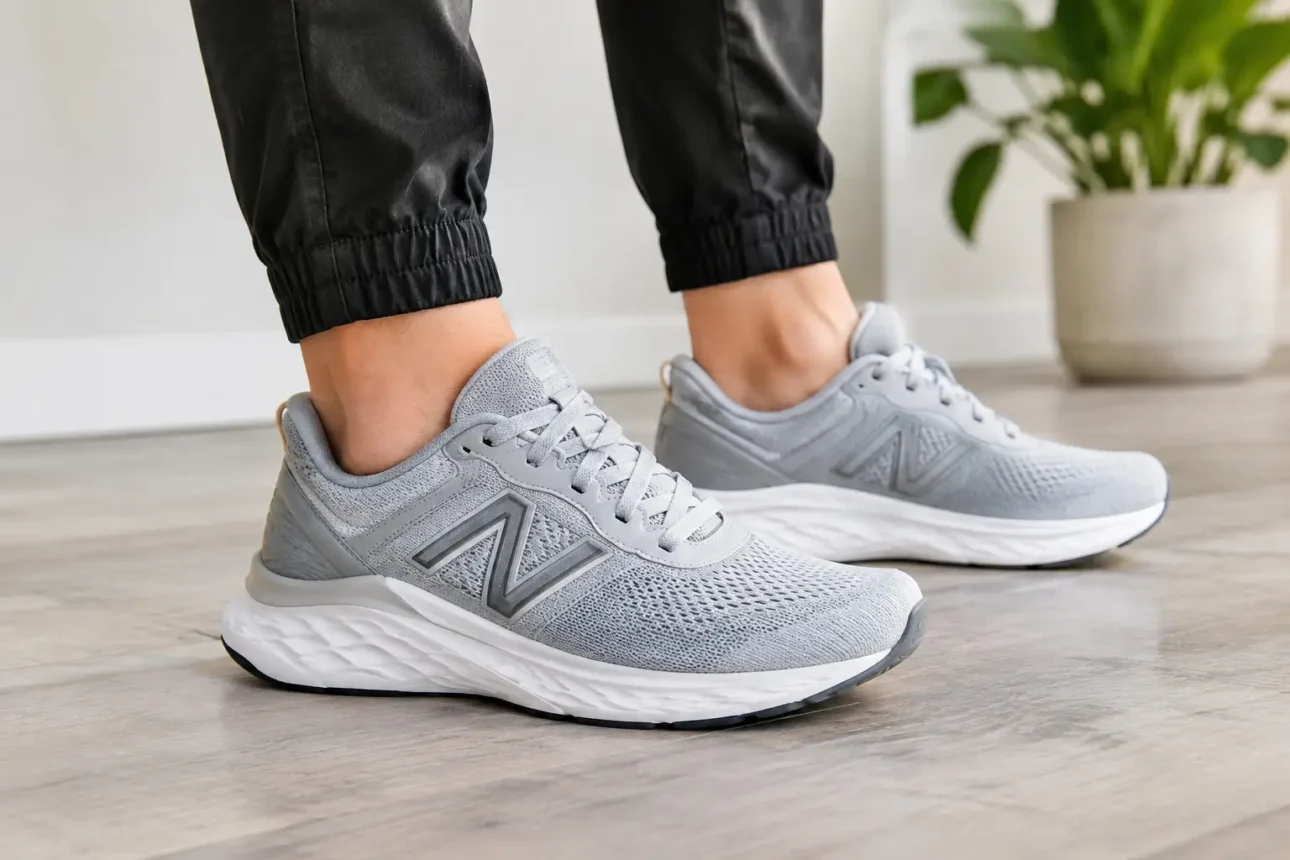
For a job with lots of walking, a breathable mesh upper can help keep your feet cooler. Shoes such as New Balance walking models, Brooks runners, or On running-inspired sneakers can be solid options when you want a lighter feel. Just remember that mesh is not ideal if you work around spills, rain, or anything that requires a more protective upper.
For standing at a counter, desk, or station, we would lean toward a stable sneaker with a cushioned but planted midsole. A clean leather or synthetic upper may also be easier to wipe down than open mesh. It depends on the dress code and the mess level of your work.
Flat lifestyle shoes have their place. Adidas Gazelles look good. Nike Shox make a statement. Puma Speedcats are fun. But if you are standing all day, be selective. Many low-profile, flat sneakers do not offer enough cushioning or support for hard-floor shifts. Save them for shorter days, commuting, or weekends unless you know your feet handle them well.
A good shoe can still feel bad with thin, worn-out socks. Choose socks that stay put and have a little cushioning under the heel and forefoot. Avoid cotton socks if your feet sweat heavily. Once they get damp, they can bunch up and rub.
If you stand for work most days, owning two pairs is worth it. Alternating shoes gives the foam time to rebound and lets each pair dry out between wears. You do not need a huge collection. Two dependable pairs beat one pair worn into the ground.
Watch for the signs that a shoe is done: the outsole is worn smooth in key areas, the midsole looks creased and flattened, or your body starts feeling worse even though your routine has not changed. Shoes do not need to have holes in them to be past their best.
Try shoes on later in the day if you can. Your feet are more likely to be slightly swollen then, which gives you a more realistic fit. Wear the socks you normally work in, and stand up when testing. Sitting down tells you very little about a standing shoe.
Walk around. Shift your weight from side to side. Notice whether your toes have room and whether the arch feels helpful or pushy. If the shoe feels wrong in the store or at home, do not talk yourself into it because the design is nice. Breaking in can soften an upper. It will not magically change a bad fit.
At The Sneaker Base, we would take a stable, well-fitting shoe that looks simple over a trendy pair that leaves you limping home. Your feet do enough every day. Give them a shoe that pulls its weight.