Cart
No products in the cart.
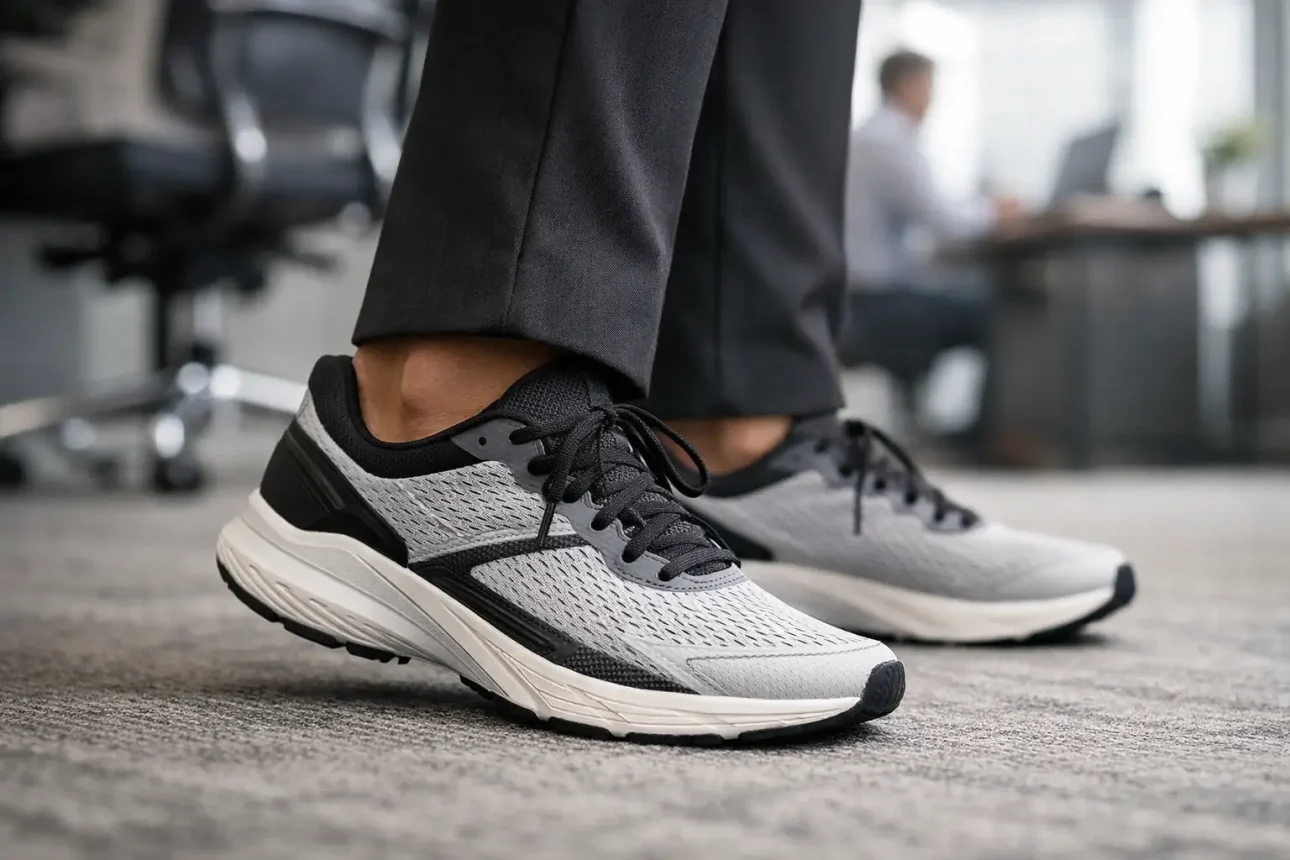
Your feet do not care that your shift started with a fresh coffee. By 5pm, they care about hard floors, miles walked, and whether your shoes are pinching your toes. So, are running shoes good for work? For a lot of jobs, yes. But not every running shoe works for every workplace.
If you stand, walk, stock shelves, teach, work in healthcare, commute on foot, or spend all day moving around a store, a good running shoe can make the day feel less brutal. The soft midsole, breathable upper, and lighter feel are a real upgrade from flat casual sneakers or stiff dress shoes.
There is a catch. A running shoe is built for forward motion. Work can mean standing still, turning sharply, climbing ladders, walking on wet floors, or carrying boxes. The best shoe is not always the softest one on the shelf. It is the one that feels stable, fits your job, and still feels good when you walk through your front door.
Running shoes make sense when your job involves lots of walking or standing on hard, flat ground. Think hospital corridors, classrooms, airport terminals, retail floors, warehouses with dry indoor surfaces, and long days on your feet in general.
The biggest win is cushioning. Concrete and tile are unforgiving. A well-cushioned shoe spreads out some of that repeated impact so your feet are not taking the full hit every step. That does not mean a soft shoe is automatically right, but it can take the edge off a long shift.
They are also usually lighter than work boots and many leather shoes. That matters more than people think. A heavy shoe can feel fine for the first hour, then start feeling like you are dragging your feet by lunch. A lighter pair helps when you are covering ground all day.
Breathability is another plus. Mesh running shoes let more heat out than thick leather or synthetic casual shoes. If your feet run hot, that can be the difference between a shoe you wear happily and one you kick off in the car.
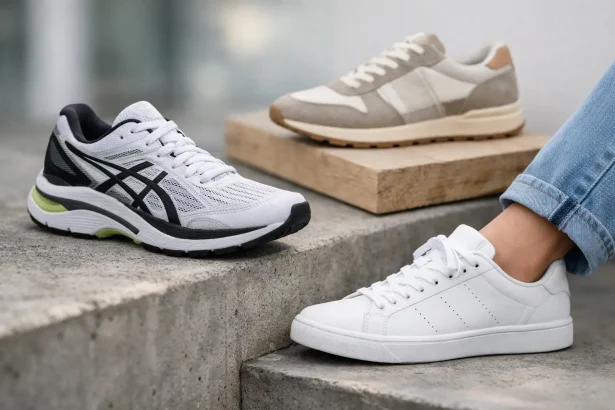
We also like that running shoes do not have to look like race-day gear. Clean black, white, gray, or navy pairs can work with scrubs, chinos, jeans, uniforms, and plenty of casual office outfits. A shoe can be practical without looking like it belongs only at the gym.
Some jobs have rules that matter more than cushioning. If your workplace requires safety toes, puncture protection, slip-resistant outsoles, waterproof materials, or electrical-hazard protection, a regular running shoe is not a substitute. Do not try to make it one.
Kitchen work is a common example. A standard road-running outsole may grip well on dry pavement but still slide on grease, soap, or a wet tile floor. A shoe that feels amazing until you lose your footing is not worth it. Look for footwear specifically marked as slip-resistant if wet floors are part of your day.
Construction sites, industrial settings, and jobs involving dropped tools or heavy loads are another clear no. You need proper work footwear. Running shoes can be great for the commute or breaks, but they do not offer the protection those environments demand.
Dress codes can also be the deciding factor. Some offices are fine with clean sneakers. Others expect leather shoes, boots, or something more formal. A sleek all-black running shoe may pass in a relaxed workplace, while a bright foam-heavy pair probably will not. Read the room before you buy.
Usually, yes, but choose carefully. Standing for eight hours is different from running five miles. Super-soft shoes can feel fantastic at first, then leave some people feeling wobbly or tired because their feet are constantly working to stabilize.
For standing-heavy work, we would lean toward a cushioned shoe with a broad base and a secure heel. You want some softness underfoot, not the feeling of balancing on a sponge. A stable daily trainer often beats a tall, bouncy running shoe for a cashier, nurse, salon worker, or anyone posted in one place for long stretches.
Models in the comfort-running lane, such as the Hoka Bondi, Brooks Ghost Max, or New Balance Fresh Foam styles, appeal for a reason. They give you plenty of underfoot protection. But fit and stability still come first. If a shoe feels tippy when you stand or turn, skip it, even if everyone online says it is comfortable.
If you need more guidance from the shoe itself, stability running shoes can help. Options like the ASICS Gel-Kayano or Hoka Arahi are designed to provide a more controlled feel than a loose, neutral shoe. They are not magic, and they are not mandatory for everyone. They are simply worth trying if your feet tend to roll inward or you prefer a planted ride.
Start with the fit. Leave about a thumb’s width between your longest toe and the front of the shoe. Your toes should not feel squeezed at the sides, and your heel should not slip when you walk. If you are buying after a long day, that is often smart – feet naturally swell, and a too-snug morning fit can become miserable later.
Next, pay attention to the base. A wider platform generally feels more stable when you are standing, turning, or carrying things. Very narrow, curved shoes can be fun for a run but less convincing for a full shift.
Then look at the outsole. Deep, durable rubber in the right places is a good sign, especially if you walk outdoors between buildings or commute on pavement. Exposed foam may keep weight down, but it can wear faster when your workday includes rough sidewalks or concrete.
Upper material matters too. Mesh is cooler, but it is easier to stain and offers little protection from rain. A more structured knit or synthetic upper can hold up better for retail, travel, and everyday use. For messy work, choose a darker color and something you can wipe clean. White mesh looks sharp on day one. We are not going to pretend it stays that way.
Finally, think about how the shoe looks with what you actually wear. If your work wardrobe is mostly black pants and a uniform shirt, a black ASICS, Brooks, On, or Nike pair will get more wear than a loud colorway you save for weekends. The best work shoe is the one you will reach for every morning.
People often shop for the thickest midsole they can find, then wonder why the shoe feels awkward at work. More foam is not always more comfortable. The right amount depends on your body, your shift, and your surface.
If your job is mostly walking, a well-cushioned neutral shoe can be a solid choice. If you stand in one spot, prioritize stability along with cushioning. If you move quickly through tight spaces, choose a lower, more grounded feel. And if you work outside in bad weather, traction and protection can matter more than a plush midsole.
Support is personal, too. Some people love a firm arch feel. Others hate it within ten minutes. Do not buy a shoe because it promises “support” without trying to understand what that means for your feet. A comfortable fit through the heel and midfoot is usually a better starting point than chasing a label.
A running shoe used for work will wear out based on your weight, surface, shift length, and how you walk. There is no exact calendar date. Still, if you wear the same pair for five long shifts every week, expect it to lose its fresh feel sooner than a pair used only for a few runs.
Watch for compressed foam, worn-down tread, a heel that leans to one side, or new aches that were not there when the shoes were fresh. Those are better signs than judging by how clean the upper looks.
If you can afford it, rotate two pairs. It gives the foam time to recover between wears and gives you a backup when one pair gets wet or dirty. It is also easier on you mentally. Nothing ruins a morning like realizing your only work shoes are still damp.
Running shoes are good for work when the job is walking or standing-heavy, the floor is reasonably dry, and your workplace does not require safety footwear. They are often one of the smartest buys you can make for a long shift.
Just do not grab the softest or flashiest pair and call it done. Get a stable fit, enough cushioning for your day, decent traction, and a color you can wear without thinking. Your feet will give you the honest review by the end of the shift.