Cart
No products in the cart.
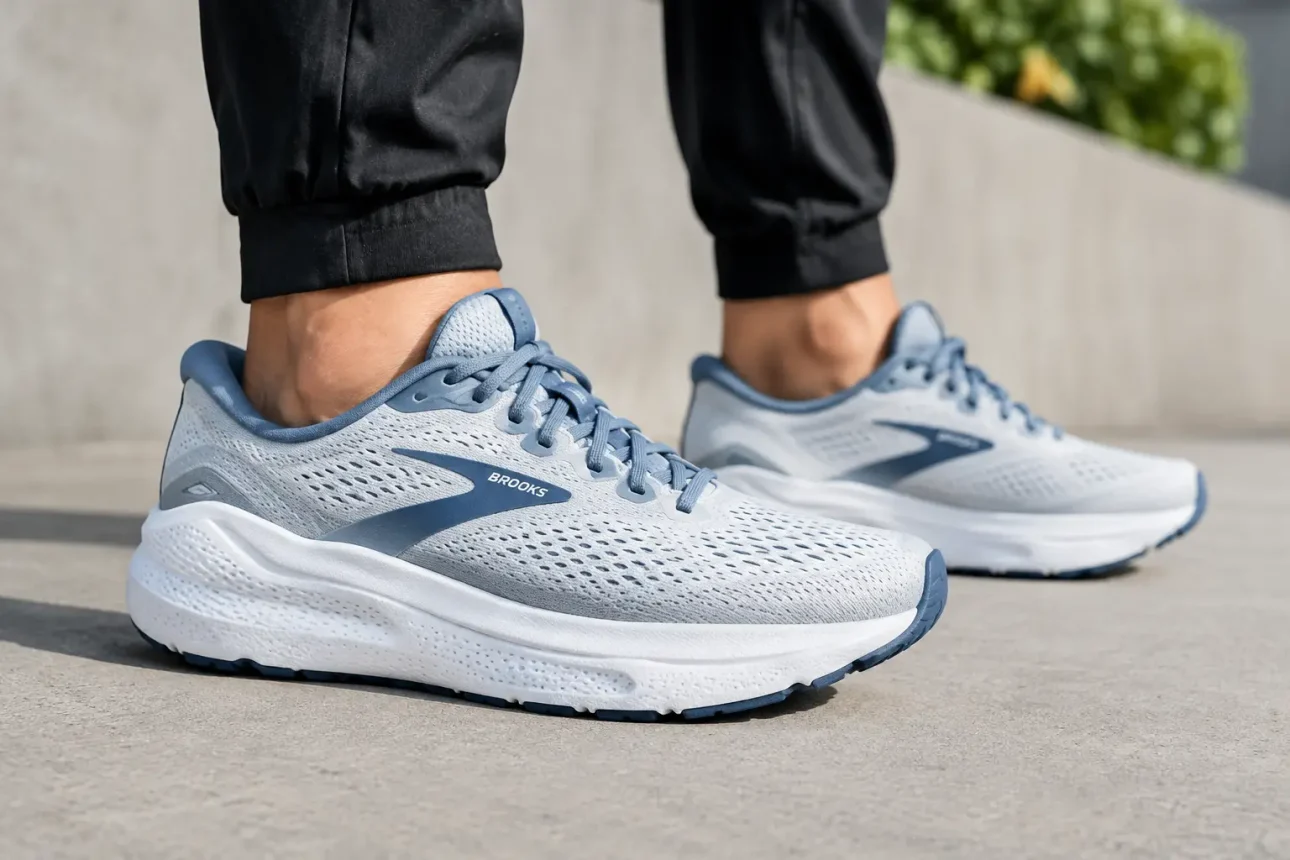
A walking shoe can feel good for ten minutes and still leave your feet cooked by late afternoon. That is where this Brooks Ghost Max review for walking starts. The Ghost Max is built around a big, soft midsole, but it is not just a running shoe with extra foam slapped on. For long walks, errands, work shifts, and travel days, it has a lot going for it. It also has a few reasons it will not suit everyone.
We like the Brooks Ghost Max for people who want a cushioned walking shoe without the unstable, sinking feeling some max-cushion shoes give you. It feels protective underfoot, rolls forward easily, and has a broad base that makes it more dependable than it looks.
It is especially good for walkers who cover a lot of ground on pavement, stand for hours, or simply hate feeling every crack in the sidewalk. The trade-off is simple: this is a big shoe. It is not the lightest, lowest, or sharpest-looking option around. If you prefer a close-to-the-ground, flexible sneaker, skip it.
The first thing you notice is the stack of foam. Brooks uses its DNA LOFT v2 cushioning here, and there is plenty of it. The ride is soft, but not loose or mushy. Your foot does not disappear into the shoe. That matters when you are walking, because a soft shoe that wobbles with every step gets annoying fast.
The Ghost Max also uses a rocker-shaped sole, called GlideRoll Rocker by Brooks. Fancy name aside, it means the shoe helps move you from heel to toe instead of making your foot do all the work. On a long, steady walk, that rolling motion feels natural. It can take some getting used to if you mostly wear flat sneakers, but most people will notice the benefit after a few blocks.
This is not a speed-walking shoe. It does not feel quick and snappy. It feels smooth, protected, and easy. If your goal is getting through a 10,000-step day without thinking about your shoes every ten minutes, that is a good thing.
Let’s be direct: you buy the Ghost Max for the cushioning. The thick midsole takes the edge off hard sidewalks, store floors, airport terminals, and concrete paths. It is the kind of shoe that makes a long day feel less punishing, especially when your usual shoes are thin, flat, or worn out.
The cushioning works best for steady walking. We would pick it for commuting, dog walks, city trips, theme parks, and jobs where you are on your feet most of the day. It is also a smart choice for runners who want one pair that can handle easy runs and recovery walks.
But more foam is not automatically better. If you like feeling the ground or need a shoe that bends easily through the forefoot, the Ghost Max may feel too built up. It is comfortable, but it is not subtle.
For a neutral shoe, yes. The Ghost Max has a wide platform and raised sidewalls around the foot. Those details help keep the ride centered rather than tippy. That is a big reason we would choose it over some softer max-cushion shoes for all-day walking.
Still, this is not a true motion-control shoe. If you have been told by a medical professional that you need structured stability or orthotic support, do not assume any neutral cushioned sneaker will do the same job. Try the shoe with your usual insert if you wear one, and pay attention to how your heel and arch feel after a real walk, not just a lap around the house.
For most people, though, the Ghost Max hits a useful middle ground. It is softer than a standard daily sneaker but does not feel like you are balancing on a foam platform.
Brooks usually does a good job with practical fit, and the Ghost Max follows that pattern. The heel feels secure, the midfoot is not overly tight, and the toe box gives your toes decent room to spread during a long walk. That extra space matters later in the day, when feet tend to swell.
We would start with your normal Brooks running-shoe size. If you are between sizes, have a very wide forefoot, or regularly wear thick socks, trying both your usual size and a half size up is the safe move. Brooks offers wide options in many Ghost Max colorways, which is better than forcing a standard-width shoe to work.
The upper is padded and comfortable, not stripped-down or airy like a race shoe. That makes it pleasant for everyday wear, though it can run warm in hot weather. For dry, cooler walks, it is solid. For humid summer days, a lighter mesh shoe may feel better.
The Ghost Max is not perfect, and pretending otherwise does not help anybody.
First, it is bulky. The high foam and broad sole give it a chunky profile. Some colorways look clean and understated, but this is not the shoe we would choose if style is your top priority. It looks like a comfort-first running shoe because it is one.
Second, it is not especially light. The weight is reasonable for a max-cushion model, but you will notice more shoe on your foot than you would in a basic Ghost or a lightweight walking sneaker. On short trips, that does not matter much. On very fast walks or if you like a barely-there feel, it might.
Third, the rocker shape is personal. Some walkers love the forward roll. Others feel disconnected from the ground and would rather have a flatter, more flexible sole. There is no right answer here. Your walking style decides it.
The Ghost Max makes sense if your current sneakers leave your heels, soles, or knees feeling beat up after long pavement walks. It is also a strong pick if you stand at work, travel often, or want a single pair for walking, casual wear, and easy runs.
We would recommend it most to walkers who value comfort over a sleek profile. It is for the person who gets home at 5 p.m. and wants their feet to feel tired from the day, not wrecked by their shoes.
It is less convincing for someone who wants a flat gym shoe, a flexible everyday sneaker, or a firm platform for lifting. It is also not the best call for muddy trails or rough terrain. The outsole can handle normal streets and packed paths, but this is a road shoe first.
Compared with a standard lifestyle sneaker, the Ghost Max is usually softer, more supportive through a full day, and much better at handling repetitive impact. A flat casual shoe can look sharper with jeans, but it often gives you very little underfoot after a few hours.
Compared with the regular Brooks Ghost, the Ghost Max gives you more foam, a more pronounced rolling feel, and a broader, more planted ride. The regular Ghost is the better pick if you want a lighter, more traditional running-shoe feel. The Max is the better pick if walking comfort is the whole point.
If you are deciding between the Ghost Max and an even softer max-cushion option, pay attention to stability. The Ghost Max is not the plushest shoe out there, but that is part of why it works so well for walking. Too much squish can get tiring.
The Brooks Ghost Max is worth it for walking if your priority is making hard ground feel less hard. It is cushioned, stable for its size, and built for the kind of miles most of us actually do – sidewalks, errands, workdays, and long weekends away.
It will not win over minimal-shoe fans, and it will not magically solve every foot problem. But if your old sneakers feel flat by lunchtime, this is the kind of shoe we would put on first. Choose the fit that gives your toes room, wear it for a proper walk, and let your feet make the final call.