Cart
No products in the cart.
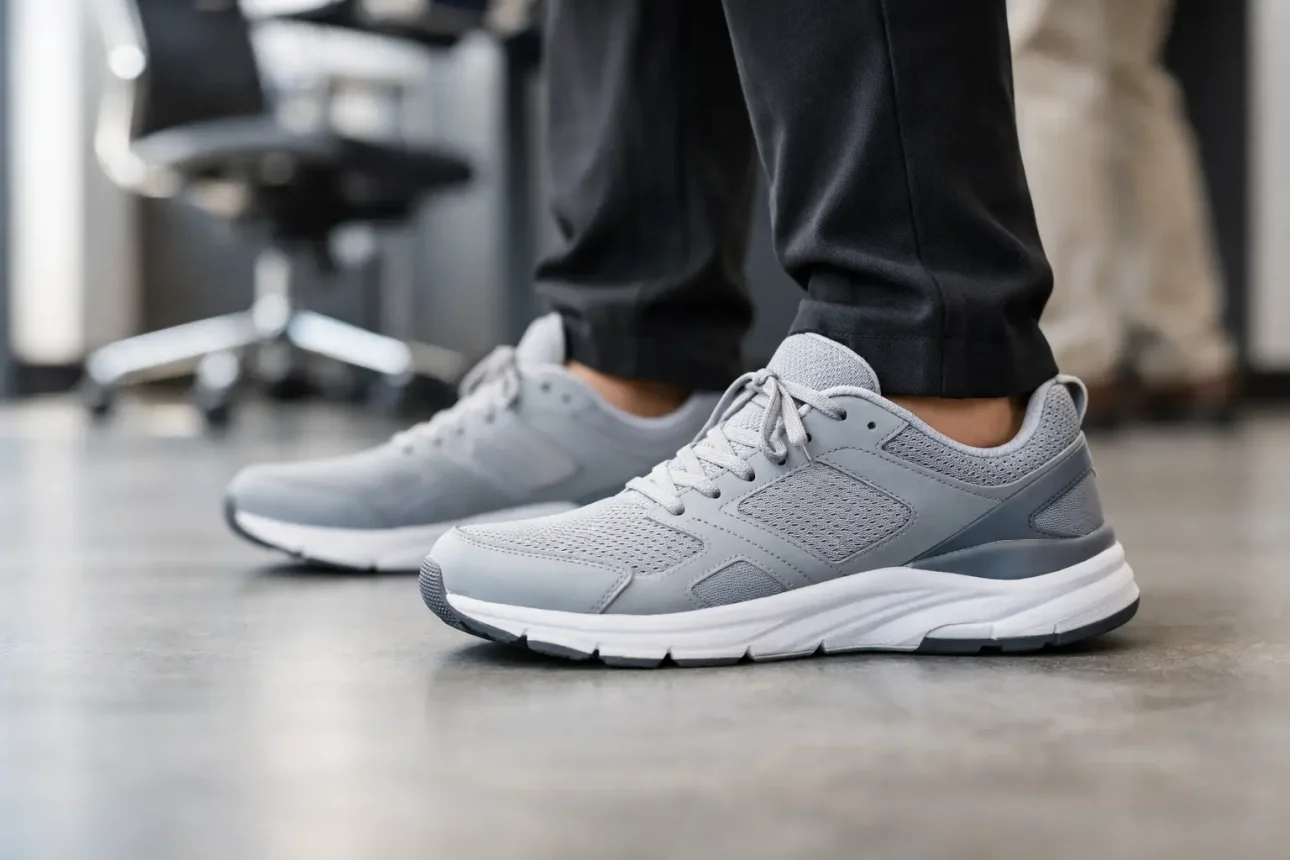
By hour six, most shoes tell the truth. The pair that felt fine at breakfast starts feeling flat, hot, stiff, or weirdly unstable by midafternoon. That’s why finding the best shoes for standing all day is less about flashy tech and more about what still feels decent when your shift, commute, or errands just keep going.
We’ll be straight with you. There isn’t one perfect shoe for everyone. Some people need soft cushioning. Some need a stable base. Some need both. And some popular sneakers that look good for coffee runs are a terrible call if you’re planted on hard floors for eight hours. If you’re on your feet all day, skip the flat ones.
The first thing we look at is cushioning, but not the marshmallow kind just for the sake of it. Super soft foam can feel great for twenty minutes, then start feeling sloppy when your legs get tired. For standing all day, the sweet spot is cushioning with some structure under it. You want impact protection, but you also want the shoe to hold you steady.
Support matters too, but people use that word too loosely. A supportive shoe usually has a stable midsole, a secure heel, and enough shape through the arch to keep your foot from working overtime. That does not mean everyone needs an aggressive stability shoe. It means your foot should feel held, not wobbly.
Then there’s the base of the shoe. This gets ignored all the time. A wider platform usually feels better for long standing than a narrow, tippy one. That’s especially true if you move between standing and walking. The shoe should help you feel planted.
Fit is the dealbreaker. A great model in the wrong size becomes a bad shoe fast. If your toes are jammed, your heel slips, or the upper squeezes the top of your foot, no amount of foam is going to save it by 5 p.m.
If you want soft, easy comfort with a lot of underfoot protection, Hoka Bondi is one of the safest picks. It’s not subtle. It’s stacked, cushy, and clearly built to take the edge off hard ground. For nurses, retail workers, teachers, or anyone who stands on concrete, Bondi makes a lot of sense. The trade-off is simple: it’s bulky, and not everyone likes that tall feel.
If you want something stable without feeling overly corrective, the Hoka Arahi is worth a look. We like it for people who feel tired and sloppy in very soft shoes. It gives you guidance without screaming “stability shoe.” It’s a smart middle ground if your feet roll inward a bit or you just want a more controlled ride.
For people who want plush comfort but a more familiar sneaker feel, Brooks Ghost Max is strong. It has that protected, smooth underfoot feel that works well for long shifts, and the platform feels broad enough to inspire confidence. It’s not the sharpest-looking shoe in the room, but this is one of those cases where we care more about your feet than your outfit.
New Balance has a few good answers here, especially if fit tends to be your problem. Their shoes often do a better job with shape and width options than brands that run long and narrow. If you’ve tried popular models and felt squeezed, New Balance is usually worth your time. We like the brand because it tends to respect the fact that real feet are not all built the same.
Asics Gel Kayano is still a solid call if you want support that feels a bit more traditional. It’s structured, dependable, and usually a good match for people who know they do better in a more guided shoe. The downside is that some people will find it a little too built-up if they prefer a simpler feel. Still, for long standing hours, Kayano keeps showing up for a reason.
If you want a clean, sporty shoe that doesn’t scream “work shoe,” On can be tempting. Some On models feel great at first step, especially if you like a firmer, snappier platform. But we’ll say it anyway: not every On shoe is ideal for all-day standing. Some are better for walking or short wear than long hours parked on hard surfaces. Try them for feel, not just looks.
Nike has options, but this is where people get tripped up by hype. Not every popular Nike sneaker is built for standing all day. Some lifestyle pairs look sharp and wear terribly for long shifts. If comfort is the goal, stick to models with real running or walking DNA, not flat fashion silhouettes. Good-looking is nice. Foot pain by lunch is not.
Adidas sits in a similar spot. There are comfortable Adidas shoes, no question, but the ones that work best for standing are usually the pairs with proper running-shoe midsoles and enough width underfoot. A slim casual sneaker might work for dinner. It’s a bad bet for a 10-hour day.
If you like a very soft ride, start with Hoka Bondi or Brooks Ghost Max. These are the pairs we’d point to for people who say hard floors beat them up.
If you want more support and control, look at Asics Gel Kayano or Hoka Arahi. These make more sense for people who feel unstable in softer shoes.
If fit is your main issue, especially width, New Balance deserves a serious look. A shoe that fits right beats a trendy shoe every time.
If you care a lot about style and still want decent comfort, choose carefully from Nike, Adidas, or On, but don’t buy on looks alone. Some models carry a whole day better than others.
Very flat shoes are the first thing we’d cut. That includes a lot of classic casual sneakers people wear because they match everything. They may look clean, but if there’s not enough cushion or support, your feet and lower back usually pay for it later.
We’d also be careful with ultra-soft shoes that feel unstable. There’s a point where soft becomes tiring. If the foam compresses too much and your foot starts wobbling, that “ahh” feeling disappears fast.
Another trap is buying a running shoe that’s great for quick movement but not for standing still. Standing and running are not the same thing. Some shoes feel better when you’re moving than when you’re planted in one place for hours.
Try shoes on later in the day if you can. Your feet swell. A pair that feels roomy in the morning can feel tight by evening.
Leave some space in the toe box. Not a ton, but enough that your toes are not pressing forward. If you stand all day, cramped toes get old fast.
Pay attention to heel hold. If your heel slips, your foot works harder to stabilize itself, and that can make an already long day feel longer.
Socks matter more than people think. A cushioned sock can change how a shoe feels, especially if the fit is close. If you wear thicker work socks, test shoes with those, not paper-thin ones.
You do not always need the most expensive pair on the wall. But cheaping out on all-day shoes usually backfires. If you stand for work, this is one of those purchases where spending a bit more for the right model makes sense.
That said, expensive does not mean right. Some premium sneakers are priced for looks, brand heat, or design details you won’t care about after a full day on your feet. We’d rather see you in a slightly boring shoe that feels solid at 7 p.m. than a trendy one you regret by noon.
If you’re shopping across brands and just want to compare cleanly, that’s where stores like The Sneaker Base make life easier. You can look at real comfort-driven options side by side without bouncing around ten different brand sites.
If you want the safest pick for pure comfort, start with Hoka Bondi or Brooks Ghost Max. If you know you need more support, go Asics Gel Kayano or Hoka Arahi. If fit has been your problem all along, give New Balance a fair shot.
And if you’ve been trying to force a flat lifestyle sneaker into an all-day job, stop doing that to yourself. The best shoe is the one that still feels good when your day is dragging, your legs are tired, and you still have two hours left. Buy for that version of the day, not the first five minutes.