Cart
No products in the cart.
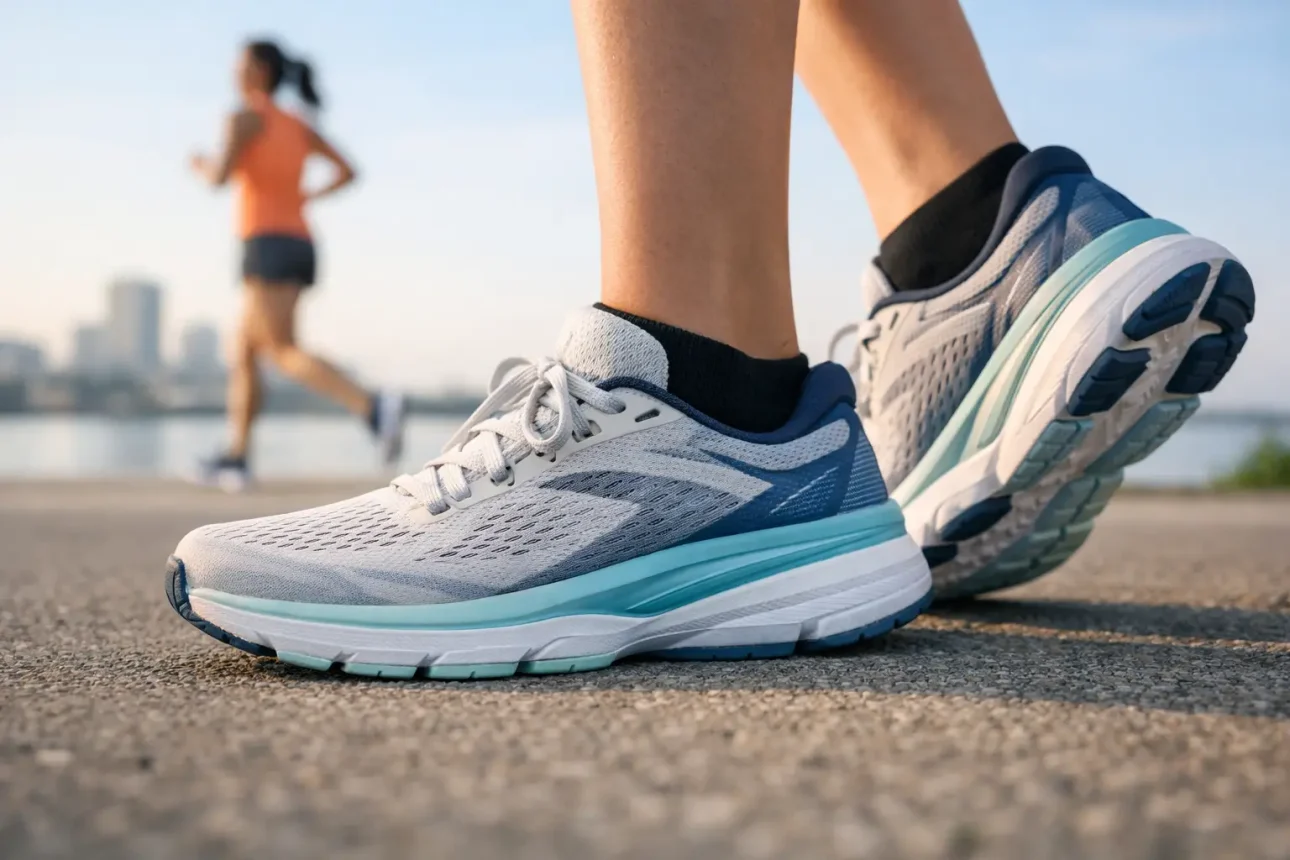
Your feet usually tell the truth before the marketing does. If your legs feel beat up after a short run, or your heels ache halfway through a long shift, you’re probably not looking for speed. You’re looking for relief. That is exactly why so many people end up searching for the best cushioned running shoes.
The problem is that “cushioned” gets thrown around way too loosely. Some shoes feel soft for ten minutes, then flat by lunch. Others look huge and pillowy, but run stiff. And some of the ugliest pairs out there are honestly the ones your feet thank you for later.
A good cushioned shoe should make the ground feel less harsh without making you feel unstable. That’s the balance. Too firm, and every step feels sharp. Too soft, and your foot sinks in and works harder than it should.
For most people, cushioning matters most in three situations. You’re running easy miles and want less impact. You’re walking a lot and need your shoes to stay comfortable after hours, not minutes. Or you’re on your feet all day and just want your legs to feel less cooked by the end of it.
This is where people get tricked by specs. More foam does not always mean more comfort. The shape of the shoe, how the midsole compresses, how stable the heel feels, and how the upper holds your foot all matter just as much.
If you just want the short version, we lean toward a few names again and again because they tend to work for real people, not just runners chasing numbers.
If your top priority is a plush ride, the Bondi is the obvious one. It’s big, soft, and built to eat up hard pavement. For walking, standing, recovery runs, and everyday comfort, it does the job well.
We like it because it feels protective without needing a break-in period. The trade-off is simple. It’s not quick, and it’s not exactly subtle. If you want a low-profile shoe, this is not that. But if your feet are tired and you want something forgiving, the Bondi is worth a look.
The Ghost Max makes a lot of sense for people who want comfort but don’t want to feel like they’re standing on marshmallows. It has a smooth, stable feel and works well for easy runs, long walks, and all-day wear.
This is one of those shoes we recommend to people who are tired of overthinking it. It doesn’t try too hard. It just feels solid underfoot. If the Bondi feels too bulky, the Ghost Max is often the better pick.
Not everybody needs a support shoe, but plenty of people do better in one and don’t realize it. If your ankles roll inward, or you feel worn down on the inside of your feet, the Gel Kayano can be a smart move.
It has plenty of cushioning, but the bigger win is how planted it feels. That extra guidance can make a long day feel easier. The downside is that some neutral runners will find it a bit controlling. If your stride feels fine already, you may not need that much structure.
The 1080 has been a go-to for people who want a cushioned trainer that still feels versatile. Soft enough for easy miles. Comfortable enough for walking. Clean enough to wear casually without looking like you gave up.
We like that it usually hits a nice middle ground. It doesn’t feel as massive as a Bondi, and it isn’t as corrective as a Kayano. Fit can be the deciding factor here, though. Some versions feel roomy, some feel a bit odd through the forefoot. Trying your usual size is smart, but don’t be shocked if half a size changes everything.
Not everyone wants pillow-soft cushioning. Some people want impact protection without that sinking sensation. That’s where the Cloudmonster stands out. It has plenty of stack underfoot, but the ride feels more energetic than squishy.
We’d pick this for someone who wants a cushioned shoe that still feels a little fun. The catch is price and feel. On shoes can be polarizing. Some people love that structured, bouncy ride. Others never really settle into it.
Nike has plenty of popular running shoes, but if cushioning is the goal, the Vomero is usually the safer bet over racier options. It gives you a softer, more forgiving ride that works well for easy runs and daily wear.
We like it most for people who already know they get along with Nike’s fit. If you’ve had trouble with narrow toe boxes in the past, pay attention here. Nike can still run a little snug depending on the model.
This part matters more than brand loyalty. The best cushioned running shoes for someone else might feel wrong for you in ten minutes.
Start with your actual use, not your fantasy use. If you’re mostly walking, standing, and doing the occasional jog, buy for that. You do not need a stripped-down trainer because you like the idea of becoming faster one day. Buy the shoe you’ll wear now.
Then think about feel. Do you want soft and pillowy, or cushioned but stable? Those are not the same. Softer shoes can feel amazing at first, but some people get tired in them because the platform is less steady. If your knees, ankles, or arches tend to get cranky, a more stable cushioned shoe usually makes more sense.
Weight matters too, but maybe less than people think. A heavier shoe is not automatically bad if you’re using it for walking, easy miles, or long shifts. We’d take a slightly heavier shoe that still feels good at 5 p.m. over a lighter shoe that starts bothering you by noon.
This is where we take a side. More cushion is not always better.
If a shoe feels too tall, too soft, or too unstable, that comfort can backfire. You may feel wobbly on corners, awkward on stairs, or just disconnected from the ground. For some runners, especially lighter runners or those with a quick stride, a moderate cushioned shoe feels better than a maxed-out one.
There is also the fit issue. Thick midsoles get all the attention, but a bad upper ruins the whole thing. If your heel slips or your toes feel cramped, the foam underneath will not save the shoe.
So yes, look for cushioning. But don’t buy blindly just because a shoe has the biggest sole in the room.
Hoka still owns the conversation when people want max comfort, and for good reason. The Bondi and Arahi both have a place. We like the Bondi more if softness is the goal, and the Arahi more if you want a little guidance without going full support-shoe mode.
Brooks is less flashy, but that’s part of the appeal. Their cushioned shoes usually just work. The Ghost Max is one of the easiest pairs to recommend if you want comfort without drama.
Asics has gotten better at making supportive shoes feel less clunky. The Gel Kayano is still one of the safer picks for people who need stability and don’t want to gamble.
New Balance is strong in the middle ground. Cushioned, wearable, not too weird. That’s a useful lane.
On makes good-looking shoes, but we won’t pretend every model works for every foot. Some do. Some feel overly specific. Try them if you like a firmer bounce and a clean look.
Nike and Adidas both have good cushioned options, but we think shoppers sometimes pay for the logo first and the comfort second. There are hits, no doubt. Just don’t assume the biggest name gives you the best ride.
Here’s the least exciting advice and probably the most useful. Judge the shoe by how it feels after an hour, not after thirty seconds on carpet.
A lot of shoes feel soft when you first step in. Fewer still feel good after a walk around the block, a treadmill session, or a full day on hard floors. That is the difference between a shoe that sells well and a shoe that earns its keep.
If you’re choosing between two pairs, pick the one that feels easier on your feet when you’re tired. That’s the one you’ll actually keep reaching for.
The best cushioned running shoes are not always the coolest-looking pair or the one with the loudest reviews. They’re the ones that make your day feel less hard. If a shoe does that, it’s doing its job.