Cart
No products in the cart.
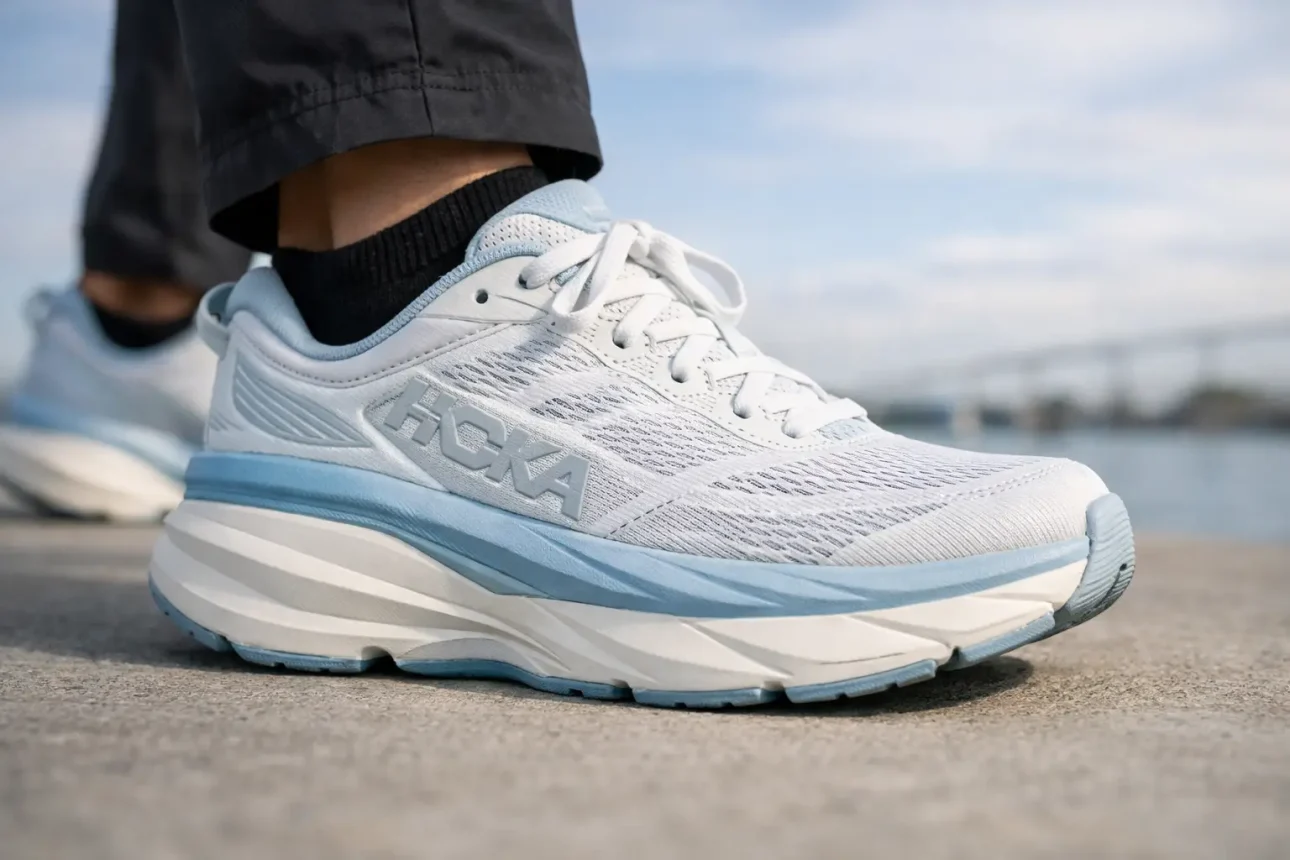
Some shoes feel fine for 20 minutes, then annoy you for the next eight hours. The Hoka Bondi is not that kind of shoe. In this hoka bondi review, we’re talking about what actually matters once the day gets long – comfort, fit, support, weight, and whether this big cushioned shoe is worth your money.
The short version? We get why people keep coming back to the Bondi. It’s soft, stable for a max-cushion shoe, and easy to trust if you spend a lot of time on your feet. But it’s not for everyone. It’s bulky. It’s not quick. And if you like a lower, more connected feel, this probably won’t be your thing.
The Bondi has one job. Keep your feet feeling decent when the miles stack up or your shift drags on. It does that well.
The first thing you notice is the stack of foam. This shoe is tall, and it looks tall. That can be a turnoff if you prefer cleaner, lower-profile sneakers. But once it’s on foot, the point makes sense. The ride is plush without turning into mush. You get softness underfoot, but there’s still enough structure to stop the shoe from feeling sloppy.
That matters if you’re walking a lot, standing all day, or heading out for easy runs where comfort matters more than speed. The Bondi isn’t trying to make you faster. It’s trying to make rough pavement and long hours feel less harsh. In that role, it’s solid.
We also like that the cushioning has a stable feel for such a thick shoe. Some max-cushion models feel wobbly, especially around corners or when you’re tired. The Bondi usually avoids that. The base is broad, and the platform helps keep things controlled.
The fit is one of the biggest reasons people either love the Bondi or return it.
In general, it fits true to size in length. The toe box has decent room, though it doesn’t feel extra roomy in a sloppy way. It gives your toes some space without making the forefoot float around. For a lot of people, that balance works.
The upper usually leans soft and comfortable rather than race-day tight. That’s a good thing here. This is not a shoe you buy for a locked-in, aggressive fit. You buy it because you want something forgiving and easy to wear for hours.
If you have wide feet, the Bondi is often a better bet than slimmer running shoes, especially since wide options are commonly available. If you have very narrow feet, though, the shoe can feel like a lot. A lot of foam. A lot of width. A lot of shoe around your foot.
Heel hold is generally fine, but not amazing for everyone. Most walkers and casual runners won’t care. If you’re sensitive to heel slip, you may need to play with the lacing a bit.
Yes, and that’s where it makes the most sense.
If you work on hard floors, commute on foot, or end most days with sore feet, the Bondi earns its keep. We’d take it for all-day wear before we’d take it for tempo runs. That’s the lane. It’s a comfort-first shoe with enough support to stay useful after the first few hours.
That said, all-day comfort depends on what kind of feel you like. If you hate thick midsoles and want a shoe that bends more naturally, the Bondi may feel awkward at first. The rocker shape helps move you along, but it still feels like a substantial shoe.
For walking, the Bondi is one of the easier shoes to recommend. The cushioning helps on concrete. The rocker geometry keeps the transition smooth. The upper is usually comfortable right away. You don’t need to be a runner to appreciate what this shoe does.
For easy running, it works well if your goal is simple: get out, get the miles done, and keep your legs feeling fresher. It handles slow to moderate paces better than faster efforts. When you try to pick it up, the weight and bulk start to show.
That doesn’t make it a bad running shoe. It just means you should buy it for the right reason. Recovery runs, easy mileage, walk-run sessions, and general comfort? Yes. Speedwork, sharp cornering, and fast turnover? Not really.
We’d also say the Bondi works well for people coming back to running who don’t want a harsh ride. It feels protective. Not exciting. Protective.
This is where an honest Hoka Bondi review matters, because the Bondi has clear downsides.
First, it’s bulky. Some people put it on and instantly think, nope. That’s fair. The look is max-cushion, no hiding it. Depending on the colorway, it can look clean enough for casual wear, but it’s still a big shoe.
Second, it’s not light. You feel the cushion, and you feel the weight that comes with it. For walking and standing, that trade-off is usually acceptable. For running, especially if you want a nimble feel, it can be a deal-breaker.
Third, the ride can feel a bit dull. Soft shoes often land in one of two groups: fun soft or just soft. The Bondi leans more toward the second group. It rolls along nicely, but it doesn’t have much snap. That’s fine if comfort is your top priority. Less fine if you want some energy back from each step.
Finally, the price can make people pause. The Bondi is not cheap. If you only need a general everyday sneaker and don’t spend long hours on your feet, you may not get full value from what it offers.
If you want a lightweight daily trainer, skip it.
If you prefer a low-to-the-ground feel, skip it.
If you mainly care about style and want something sleek, skip it.
And if you’re expecting the Bondi to magically make every foot issue disappear, that’s not how shoes work. It can feel better than flatter or firmer options for some people, but comfort is personal.
The Bondi sits in the part of the market where people compare it with other max-cushion shoes from Brooks, New Balance, Asics, and On. That’s fair. There are plenty of soft, high-stack options now.
What makes the Bondi stand out is how straightforward it feels. It doesn’t try to be fast and plush at the same time. It doesn’t pretend to be a lifestyle shoe first. It’s built around one clear idea: lots of cushion, stable platform, easy miles, long days.
Compared with some softer rivals, the Bondi often feels a little more controlled. Compared with more energetic shoes, it feels calmer and less lively. That balance is exactly why some people love it and others move on quickly.
If you’re choosing between comfort shoes, ask yourself one question: do you want soft and steady, or soft and bouncy? If your answer is soft and steady, the Bondi starts looking better.
For the right person, yes.
We think the Bondi is worth it for nurses, retail workers, teachers, travelers, walkers, and runners who keep things easy. It’s also a good pick for anyone who has tried flatter shoes and ended the day feeling beat up. You’re paying for cushion and consistency, and in this case, you generally get both.
If you’re buying one pair to handle long walks, work shifts, errands, and the occasional easy jog, the Bondi makes a lot of sense. It’s one of those shoes that earns repeat buyers because it solves a simple problem well.
If you want one shoe for everything, including speed sessions, gym work, and sharp lateral movement, look elsewhere. The Bondi is too specialized for that. It shines when life is repetitive and hard on your feet, not when your workouts get technical.
We like the Bondi because it knows what it is. Big cushion. Smooth ride. Honest comfort. No fake versatility.
It’s not pretty to everyone. It’s not quick. It’s not the shoe we’d grab when we want to feel fast. But if your feet are tired, your days are long, and you want something that feels soft without feeling unstable, it’s a strong pick.
A lot of shoes try to do five things at once and end up average at all of them. The Bondi sticks to one lane. If that lane sounds like your day, it’s probably worth trying.