Cart
No products in the cart.
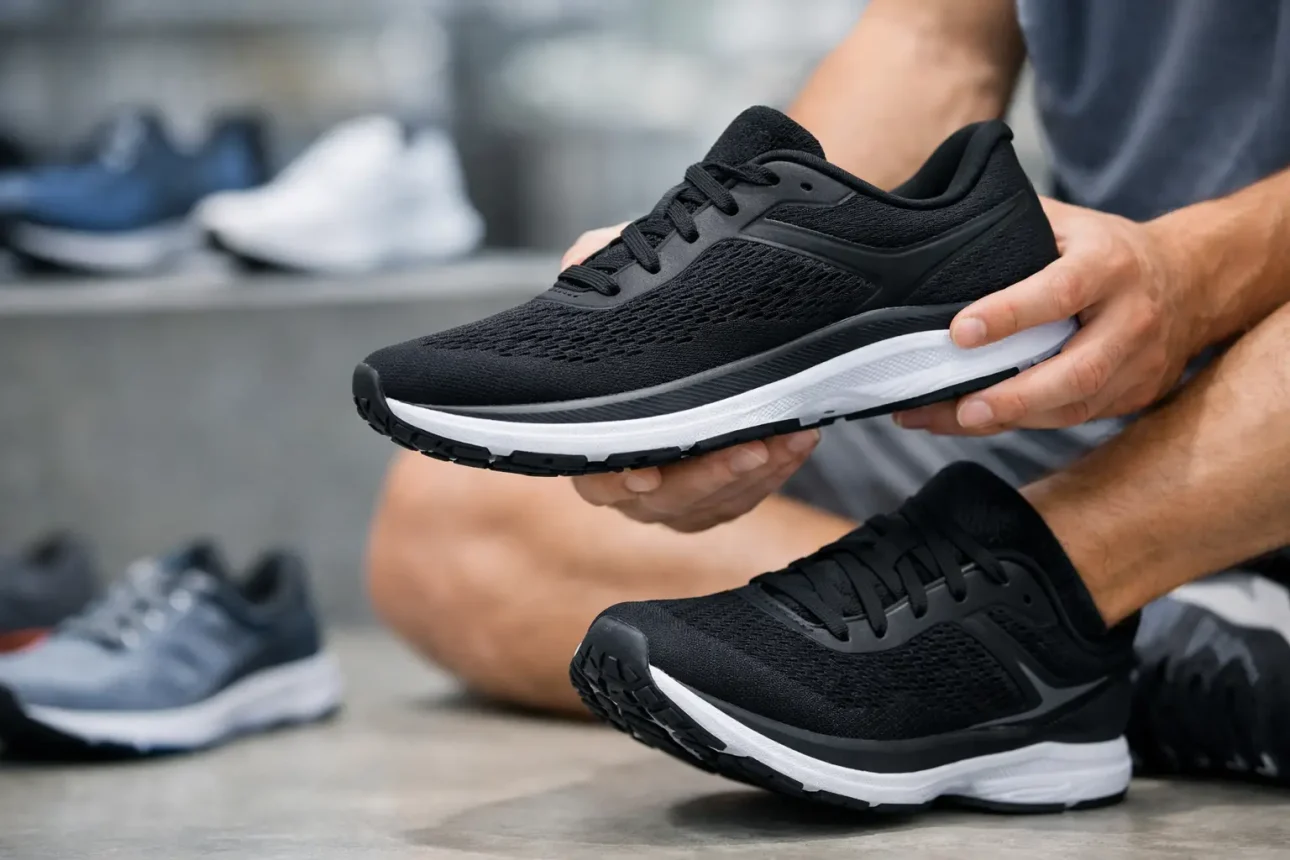
You notice bad running shoes fast. Usually around mile two. Or halfway through a long shift. Or the next morning, when your feet feel like they worked harder than the rest of you. That’s why knowing how to pick running shoes matters more than whatever color is trending or whatever pair got the loudest review.
We’ll say it straight. Most people do not need the fastest shoe, the most expensive foam, or the pair some marathon guy on YouTube swears by. You need a shoe that fits your foot, matches how you run, and still feels decent when the novelty wears off. That’s it.
Start with where and how you actually run. Not your fantasy self. Your real self.
If you run mostly on roads, sidewalks, and paved paths, look at road running shoes. They’re built for smoother ground and usually feel lighter and less clunky. If you run on dirt, gravel, or uneven trails, trail shoes make more sense because they grip better and hold your foot more securely. Wearing trail shoes on pavement is doable, but it often feels stiff and awkward. Wearing road shoes on loose trails can feel sketchy fast.
Then think about distance. A shoe that feels fine for 20 minutes can feel awful after an hour. Short runs give you more room to get away with a firmer, lighter shoe. Longer runs usually call for more cushioning and a shape that doesn’t annoy your foot over time. If you’re just getting into running, we usually lean toward comfort first. Speed can wait.
The next question is simple – do you want soft, balanced, or firm underfoot? Soft shoes can feel great, especially if you’re on your feet all day or you like a plush ride. But too soft can also feel mushy or unstable for some runners. Firmer shoes can feel more controlled and responsive, but they’re not everyone’s idea of comfort. Most people do best somewhere in the middle.
This is the part people ignore, then regret later.
A good running shoe should feel secure at the heel, comfortable through the midfoot, and roomy enough at the toes. Not sloppy. Not tight. Your toes should not be jammed into the front, especially on downhill runs or longer efforts when your feet swell a bit.
In most cases, you want about a thumb’s width between your longest toe and the end of the shoe. That extra space is not wasted space. It’s what keeps your nails and forefoot from getting beat up.
Width matters too. A lot. If a shoe feels good in length but squeezes the sides of your foot, it’s the wrong shoe. Don’t try to talk yourself into it. Some brands run narrow, some run more accommodating, and some specific models are known for one shape or the other. This is why buying by brand alone is a bad move. A Nike that fits one person perfectly can feel way too narrow for someone else. A New Balance or Brooks model might feel easier right out of the box. It depends on your foot.
Heel slip is another thing to watch. A tiny bit can be normal, but if your heel is lifting a lot when you walk or jog, that usually turns into rubbing. And rubbing turns into blisters. Fast.
Usually, the warning signs show up early. Pressure on the little toe. Pinching across the forefoot. Heel rubbing. An arch that feels like it’s poking you instead of supporting you. If you feel any of that standing still, don’t expect it to improve on a run. It probably won’t.
Some shoes need a short break-in period, sure. But a running shoe should feel mostly right from the start. Not perfect maybe, but clearly right.
This part gets made way more complicated than it needs to be.
Neutral shoes work well for a lot of runners. They’re the default for a reason. If your stride feels pretty natural, your old shoes wear down evenly, and you haven’t had issues with feeling unstable, a neutral shoe is often the easiest place to start.
Stability shoes are worth a look if your feet roll inward a lot, you feel wobbly late in runs, or you’ve worn neutral shoes and they always feel too loose or too soft through the middle. A good stability shoe should guide your foot a bit. It should not feel like a brace.
We’re not big on forcing everyone into heavy support shoes just because they’re new to running. That used to happen all the time. Sometimes it still does. But more support is not always better. Too much shoe can feel stiff, bulky, and annoying if you don’t need it.
If you want a simple rule, here it is. If neutral feels stable enough, stay there. If neutral feels sloppy, look at light to moderate stability.
Brands love technical terms. Some of them matter. Most matter less than fit.
Cushioning is easy. More cushioning usually means more comfort on longer runs and more protection from pounding on hard surfaces. But max-cushion shoes can also feel bulky, and not everyone likes being that high off the ground. If you want a softer, easygoing ride for daily miles, they can be a solid call. If you want a more connected feel or a lighter shoe, moderate cushioning often works better.
Heel-to-toe drop sounds technical, but think of it as the height difference between the heel and forefoot. A higher drop can feel easier on the calves and Achilles for some people. A lower drop can feel more natural for others, but it may demand more from your lower legs. If you’ve never thought about drop before, don’t panic. Just avoid making a huge jump from what you’re used to.
Weight matters, but not as much as brands want you to think. A very heavy shoe can feel tiring. A very light shoe can feel great until it beats up your feet. Daily trainers should earn their spot by feeling good for the whole run, not by winning on a spec sheet.
This one needs saying.
A lot of flashy running shoes are built for race day or speed workouts, not everyday miles. They can feel fun at first, but some are less stable, less durable, and less forgiving for normal runners. If you’re running a few times a week, walking a lot, or standing all day, a reliable daily trainer is usually the smarter buy.
The fast shoe is not always the right shoe. Sometimes it’s just the louder one.
If you run a couple of easy miles three times a week, get a daily trainer with balanced cushioning. Keep it simple. If you’re heavier on walking than running, comfort and stability probably matter more than speed. If you’re training for longer distances, look for something that stays comfortable late, not just something that feels exciting in the first five minutes.
If you work on your feet all day and want one pair that can handle walks, errands, and occasional runs, we’d skip the stripped-down performance stuff. Go for a shoe with real cushioning, a stable base, and an upper that doesn’t squeeze.
If your knees, feet, or lower legs get sore easily, that doesn’t automatically mean you need the softest shoe on the wall. Sometimes softer helps. Sometimes a more stable platform helps more. This is where being honest about what has and hasn’t worked for you matters.
Look at your current pair. Did it feel flat too quickly? Did it rub your heel? Did your toes feel cramped? Did it feel great walking but weird running? Those details are more useful than any star rating.
We’re not loyal to logos. We’re loyal to good shoes.
Some people do well in Brooks because the fit is usually straightforward and the ride tends to be consistent. Some like Hoka because the cushioning feels easy on long days, though not everyone loves the stack height. ASICS often gets it right for runners who want dependable support options. New Balance is a smart pick if narrow shoes usually mess with your feet. On looks sharp to a lot of people, but some models feel firmer than expected. Nike has great runners, but fit can be hit or miss depending on your foot shape.
That’s the point. Don’t shop the brand first. Shop the feel first.
At The Sneaker Base, that’s how we think about it. Not what sounds coolest. What you’ll actually want to wear again tomorrow.
Try shoes on later in the day if you can. Feet swell. Wear the socks you actually run in. Stand, walk, and if possible, jog a little. Trust pressure points. They usually don’t lie.
And don’t size down because a shoe “might stretch.” Running shoes are not jeans. If it’s tight now, it’s probably wrong. If it feels barely okay in the store, it tends to feel worse on the move.
A good running shoe should disappear once you start moving. You shouldn’t be thinking about your arch, your pinky toe, or that weird hot spot near your heel. You should just be running.
That’s the real answer to how to pick running shoes. Not the loudest pair. Not the trendy pair. The pair that fits your life, your feet, and the miles you actually do.