Cart
No products in the cart.
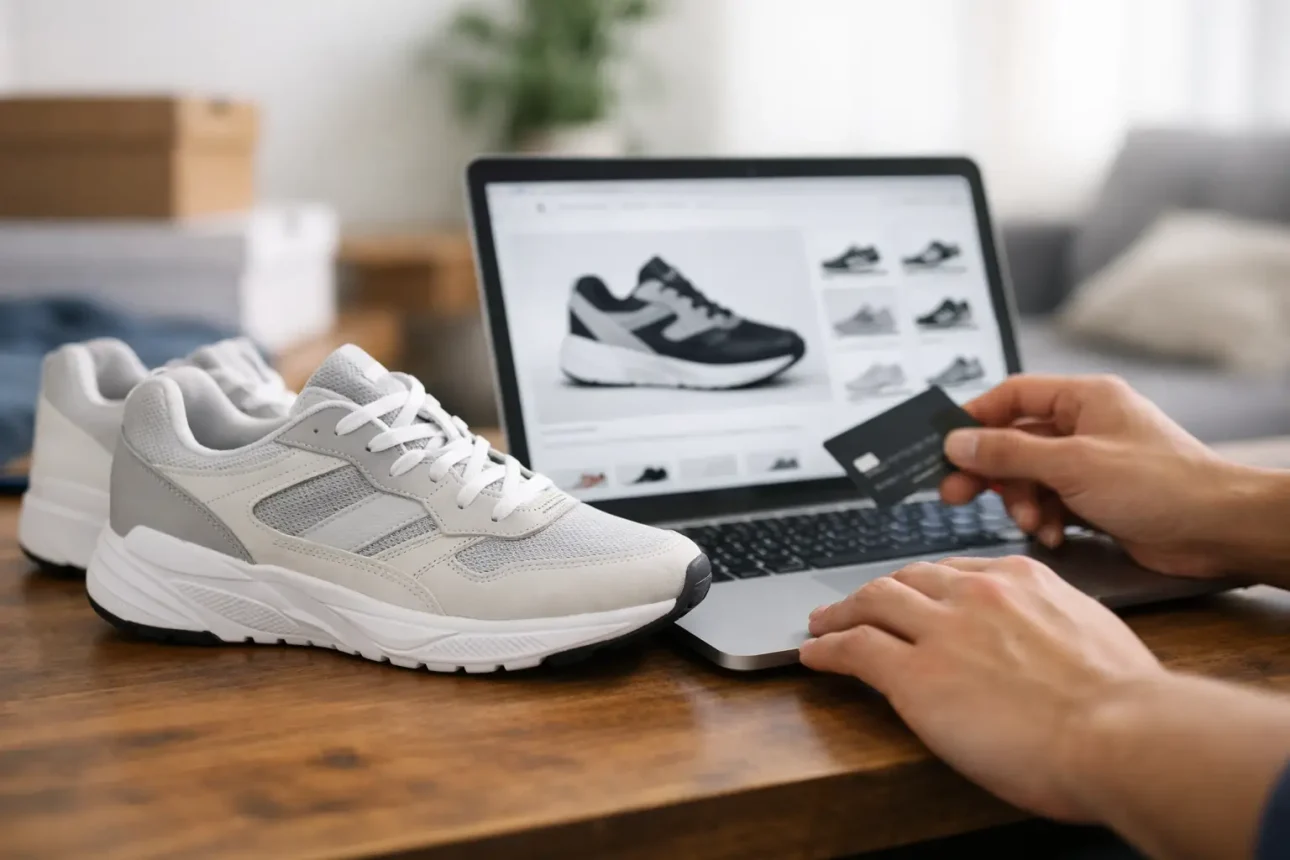
Buying sneakers online sounds easy until you’re staring at ten tabs, three size charts, and a pair that looked clean in photos but feels terrible by Friday.
That’s why knowing how to buy sneakers online matters. Not in a hype way. In a real-life way. If you’re on your feet all day, walking a lot, running a few miles, or just trying to replace worn-out shoes without wasting money, you need a simple way to sort the good pairs from the bad ones.
Most people shop backward. They start with the brand, the color, or whatever pair keeps popping up on social. That’s usually how you end up with sneakers that look sharp for twenty minutes and annoy you for the next six months.
Start with your day instead. Ask one question first: what are these shoes for?
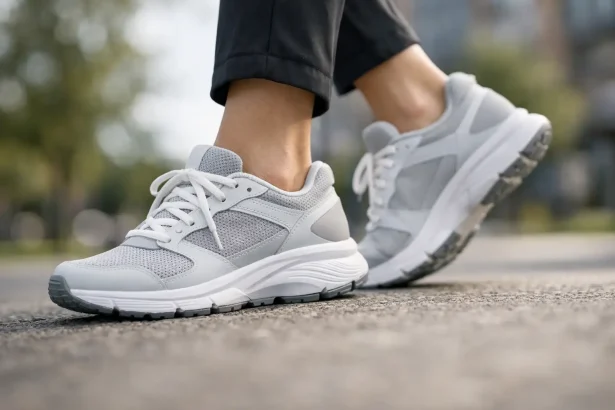
If you stand for hours, you want cushioning that still feels decent late in the day, not just soft when you first step in. If you walk a lot, weight and flexibility matter more than hype. If you run now and then, get a real running shoe, not a lifestyle pair pretending to be one. And if you want one shoe for errands, work, and weekends, you need something balanced – comfortable enough to wear all day and clean enough to wear anywhere.
This part matters because shoe categories are not all the same, even when they look close online. A sleek retro sneaker might look better with jeans, but a cushioned walker or daily trainer will usually feel better at 5 pm. We’ll take comfort over fake versatility every time.
Online shopping gets expensive when you guess your size.
The best move is simple. Check the size of a pair you already own that fits well, then compare. Not the pair you “make work.” The pair you actually reach for. Look at the size tag, the brand, and if possible the model family. A Nike fit is not always the same as a New Balance fit, and even within one brand, different models can run narrow, long, or snug through the toe box.
If your feet swell during the day, shop with that in mind. Measure or try shoes later in the afternoon, not first thing in the morning. That one small detail saves a lot of returns.
Width matters too, and people ignore it way too often. If shoes always feel tight on the sides, rub your little toe, or make the top of your foot feel boxed in, the issue may not be length. It may be shape. Some models have a more forgiving fit, while others are built narrower and feel that way fast. A lot of shoppers keep sizing up when what they really need is a roomier shoe.
A clean product page helps, but photos can still fool you.
Some sneakers look plush and turn out flat. Some look chunky and wear surprisingly light. Some look perfect from the side and weird from the top. So when you’re shopping online, don’t just ask, “Does it look good?” Ask, “What kind of shoe is this actually?”
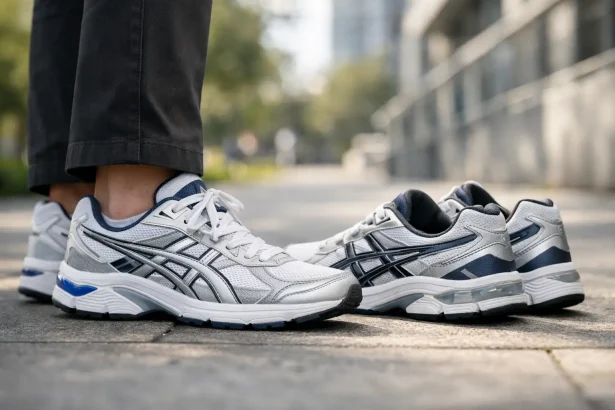
A few examples make this easier. Shoes like the Hoka Bondi are built for max cushioning and long-wear comfort. They’re not subtle, and not everyone loves the look, but if your feet are tired by the end of the day, they make sense. A retro pair like the Adidas Gazelle looks great and works for casual wear, but it’s not the shoe we’d pick for long shifts or heavy walking. Something like the Brooks Ghost Max or Asics Gel Kayano leans more practical. Less fashion-first, more support and all-day use.
That’s the trade-off. Better-looking doesn’t always mean better-wearing. Sometimes the ugly one is the smart buy.
This is where people waste the most time. They compare everything against everything.
Don’t compare a flat lifestyle sneaker to a cushioned walking shoe. Don’t compare a performance runner to a court-style casual pair. Start inside the category you actually need, then narrow it down by fit, feel, and price.
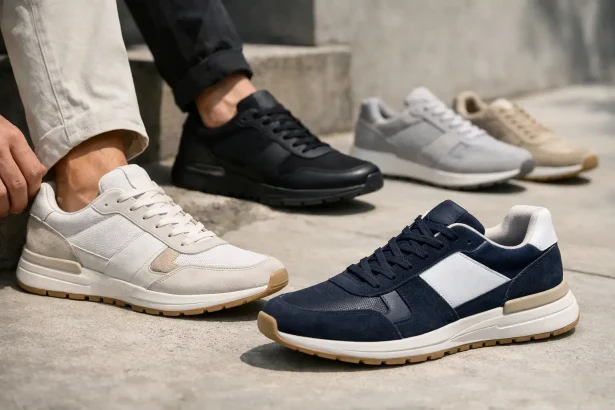
If you want an everyday casual sneaker, keep your search around lifestyle models that are easy to wear and easy to match. If comfort is the priority, stay in walking or running-inspired options. If you’re buying for workouts or regular runs, stick to performance models. Mixing categories usually creates bad choices because the best shoe for one job is often average at another.
We like stores that let you shop this way because it cuts the noise. Brand-first browsing is fine if you already know what works for you. If not, category-first is faster and usually smarter.
You do not need to become a footwear engineer.
You just need to spot the details that change how a shoe feels. Look for cushioning type, upper material, outsole grip, and whether the shoe is described as stable, soft, lightweight, or structured. Those words matter when they’re tied to real use.
For example, mesh usually feels lighter and cooler, but it may not give the same held-in feel as a thicker upper. Extra cushioning can feel great on hard floors, but some people think overly soft shoes feel sloppy. Stability-focused shoes can help the ride feel more controlled, but they may feel firmer than a neutral daily pair. None of that is good or bad on its own. It depends on what your feet like and what your day demands.
This is also where price needs context. A cheaper shoe is only a deal if you’ll actually wear it. If a slightly more expensive pair gets used five times a week and the cheap one sits by the door, the math is easy.
This part is boring. It also matters.
Before you buy, check the basics: return window, exchange options, shipping cost, and how refunds are handled. If sizing is the biggest risk in online sneaker shopping, the return policy is your safety net.
A straightforward store makes this easy. You should be able to find payment info, shipping details, tracking, and returns without digging around. If that info feels hidden, vague, or annoying to find, we’d think twice.
Online sneaker shopping works best when the buying process is simple. Browse by brand or category, check your size, pick your color, and move on. That’s enough. It doesn’t need to feel like a puzzle.
Here’s the filter we use when a pair looks tempting.
Can you picture wearing it for the thing you actually need it for? Not just opening the box. Not just trying it on in the hallway. We mean wearing it on a full workday, a long walk, a grocery run, a weekend trip, or your usual route around town.
If the answer is yes, good. If the answer is “maybe, but mostly because it looks cool,” slow down.
A lot of sneakers are fine in theory and annoying in real life. Stiff collars. Narrow toe boxes. Flat midsoles. Outsoles that feel slick on smooth floors. The pair that works online is the pair that still feels worth it after a week, not the pair that wins in product photos.
The biggest mistake is shopping for a version of yourself that doesn’t exist. Buying a race-day shoe when you mostly walk. Buying a flat retro pair for 10-hour shifts. Buying white suede when you know you’re hard on shoes. Be honest. Your feet will notice.
The second mistake is overcorrecting on trends. Max cushion is popular for a reason, but not everybody wants that much shoe underfoot. Minimal-looking pairs still have a place too, just not for every job. There isn’t one perfect answer. There’s the right answer for how you move.
The third mistake is ignoring repeat wins. If a brand or model family has worked for you before, that matters. Maybe you’ve had good luck with New Balance for fit, Brooks for all-day wear, or Adidas for casual use. That history is useful. Don’t throw it away just because something else is louder online.
Go by the fit notes for that specific model first. If the shoe runs small, size up. If it runs long, stay put. If you’re between sizes and also have wider feet, the larger size is often safer.
Sometimes, but not always. If comfort is your top priority, a walking or running-inspired shoe usually does better over long hours.
No. Some pricier pairs look better than they wear. What matters is whether the shoe fits your day, your foot shape, and your budget.
If you want the real answer to how to buy sneakers online, it’s this: shop for your feet, not your feed. Pick the pair you’ll actually wear. The good one isn’t always the flashiest one. It’s the one that still feels right when the day gets long.