Cart
No products in the cart.
Most people buy running shoes too small. That’s the whole problem.
They try on a pair, stand still for ten seconds, feel that snug race-car fit, and call it good. Then three miles later their toes are getting hammered, their arches feel weird, and they start blaming the shoe. A lot of the time, the issue is simpler than that. It’s sizing. If you’re trying to figure out how to size running shoes, you need more than your usual sneaker size and a quick guess.
Running shoes should not fit like casual sneakers. That’s the first thing to get straight. Your feet swell when you run, especially in warm weather, on long walks, or after a full day on your feet. A fit that feels close and clean in the box can feel cramped fast.
What we want is simple. Your heel should feel secure. Your midfoot should feel held in place. Your toes should have room to move. Not sloppy. Not tight. Just enough space where it counts.
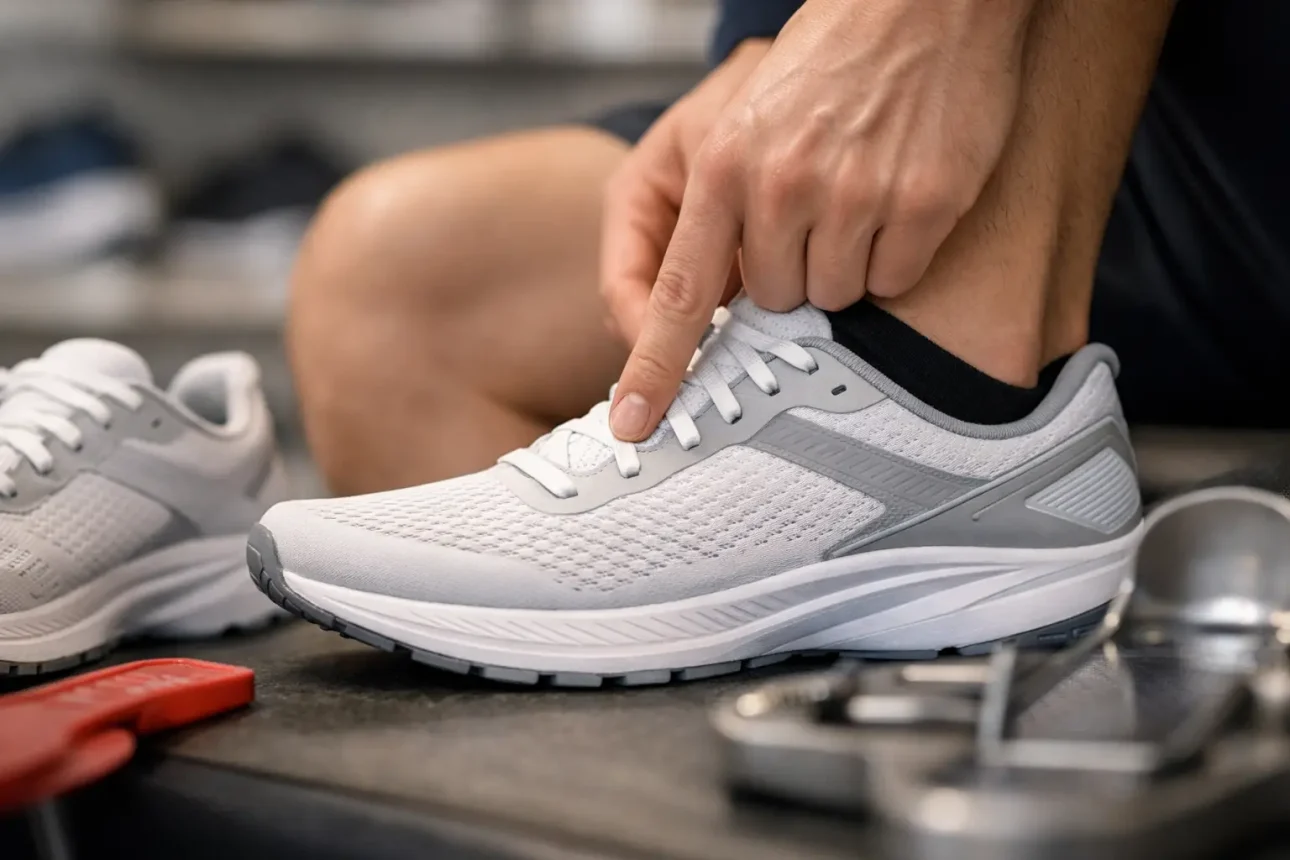
The easiest rule is this: leave about a thumb’s width between your longest toe and the front of the shoe. For a lot of people, that ends up being a half size up from their everyday sneakers. Not always. But often enough that it’s worth checking first.
And yes, we said longest toe. For some people that’s the second toe, not the big toe. If you size off the wrong toe, you’ll feel it later.
Shoe sizes are messy across brands. A Nike 10 does not always fit like a New Balance 10. Hoka can feel different from Brooks. On can feel different from Asics. Anyone telling you every brand fits the same either hasn’t worn enough shoes or isn’t paying attention.
That means your best starting point is your actual foot length and width.
Stand on a piece of paper wearing the socks you’d run in. Trace both feet. Measure from heel to longest toe. Then measure across the widest part of the forefoot. Use the bigger foot as your reference, because almost nobody has perfectly matched feet.
If one foot is slightly longer, size for that foot and adjust the smaller side with lacing. That’s way better than crushing the bigger foot just to make the smaller one feel precise.
Do not measure your feet first thing in the morning unless you only plan to wear your shoes while sitting down. Feet swell through the day. They also swell with activity. Measuring later gives you a more realistic fit.
If you walk a lot, work on your feet, or plan to use your running shoes for both running and daily wear, this matters even more.
Thin no-show socks and cushioned running socks can change the fit more than people expect. If you test shoes in paper-thin socks and then run in thick performance socks, you’ve already changed the size equation.
Use the socks you actually wear. Not the random pair you grabbed from a drawer.
A good running shoe fit is boring in the best way. Nothing rubs. Nothing slips. Nothing gets your attention.
Your heel should stay put when you walk or jog. A little movement is normal, but obvious heel slip usually means the shoe is too long, too wide in the rear, or just not shaped well for your foot.
The midfoot should feel secure without pressure. If the sides of the shoe are digging in, that’s not “support.” That’s a bad fit. If you have to crank the laces so hard the upper bunches up, the shoe may be too wide or too high-volume for your foot.
Your toe box should let your toes spread naturally. We’re not saying your foot should slide around like it’s in a slipper. We’re saying your toes should not be jammed together. If the front looks sleek but your pinky toe is paying the price, skip it.
A lot of runners keep sizing up when what they really need is more width.
That’s a common mistake. If the shoe feels tight at the sides of the forefoot but you already have enough toe room, going longer may just give you a clown-shoe front end and still not solve the squeeze. In that case, a wide version makes more sense.
This is especially true if you get hot spots near your bunion area, pressure on the little toe, or a numb forefoot. Those are classic signs that the shoe shape is wrong, not just the length.
Some brands run narrow through the midfoot and toe box. Some are more forgiving. We won’t pretend every model works for every foot. They don’t. If you have broader feet, skip narrow-fitting models no matter how good they look online. Good photos don’t help at mile four.
Not every runner uses running shoes the same way, so the fit can shift a little depending on what you actually do.
If you’re jogging a couple times a week and wearing the shoes all day too, comfort wins. You want enough room for swelling and long hours on your feet. A slightly roomier fit usually makes more sense here.
If you’re using a lighter, faster shoe for shorter runs, you might prefer a closer fit through the midfoot. That’s fine, as long as your toes still have space up front. Tight does not equal fast.
If you walk a lot, work long shifts, or use running shoes as all-purpose daily pairs, don’t chase an aggressive fit. A clean lockdown is good. Cramped is not.
Trail running shoes often feel firmer, tougher, and more structured than road shoes. That can make them feel tighter even in the same size. If you run downhill a lot, extra toe room matters even more so your toes aren’t constantly smashing the front.
That doesn’t mean automatically sizing way up. It means checking downhill feel, toe clearance, and forefoot space before deciding.
Sometimes the shoe tells you fast. Sometimes it takes a week. Either way, small fit issues turn into annoying ones quickly.
Watch for black toenails, toe rubbing, numbness in the forefoot, pressure on the top of the toes, or blisters at the ends of the toes. Those are strong signs the shoe is too short, too shallow, or both.
Also pay attention after the run, not just during the try-on. Shoes can feel fine for fifteen minutes and wrong after an hour. If your feet feel beat up in very specific spots, that’s useful information.
Too big has its own problems. Your foot slides. Your heel lifts. You feel like you’re chasing the shoe instead of running in it.
That can lead to blisters around the heel, extra lace pressure from over-tightening, and a generally sloppy ride. Bigger is not always safer. We want enough room, not excess.
If the length feels right but the hold feels loose, try better lacing first. If that doesn’t fix it, the shoe shape may just not match your foot.
People always want the shortcut. “I wear a 9 in Adidas, so what am I in Brooks?” We get it. But that shortcut only gets you halfway there.
Different brands use different lasts. Some feel longer. Some feel shorter. Some have generous toe boxes. Some taper hard at the front. Even within the same brand, one model can fit great while another feels completely off.
That’s why we care less about the printed size and more about what your foot is doing inside the shoe. If you need a half size up in one model and your usual size in another, that’s normal. Annoying, but normal.
When you try on running shoes, stand up. Walk. If possible, jog a few steps. Don’t judge the fit sitting down.
Check the toe space while standing. Make sure your heel stays secure. Notice whether the forefoot feels boxed in or natural. Then ask one honest question: would you want to wear this for an hour right now?
If the answer is “maybe after break-in,” we’d pass. Some shoes soften a bit, sure. But sizing problems rarely disappear. A bad fit in the store usually becomes a worse fit outside.
If you’re between sizes, the safer move for most running shoes is usually the slightly bigger one, as long as the heel still feels locked in. Your feet need room to work. That’s not overthinking it. That’s just getting the fit right.
And if a shoe only feels good when you talk yourself into it, it’s the wrong shoe. The right pair should feel solid from the start.