Cart
No products in the cart.
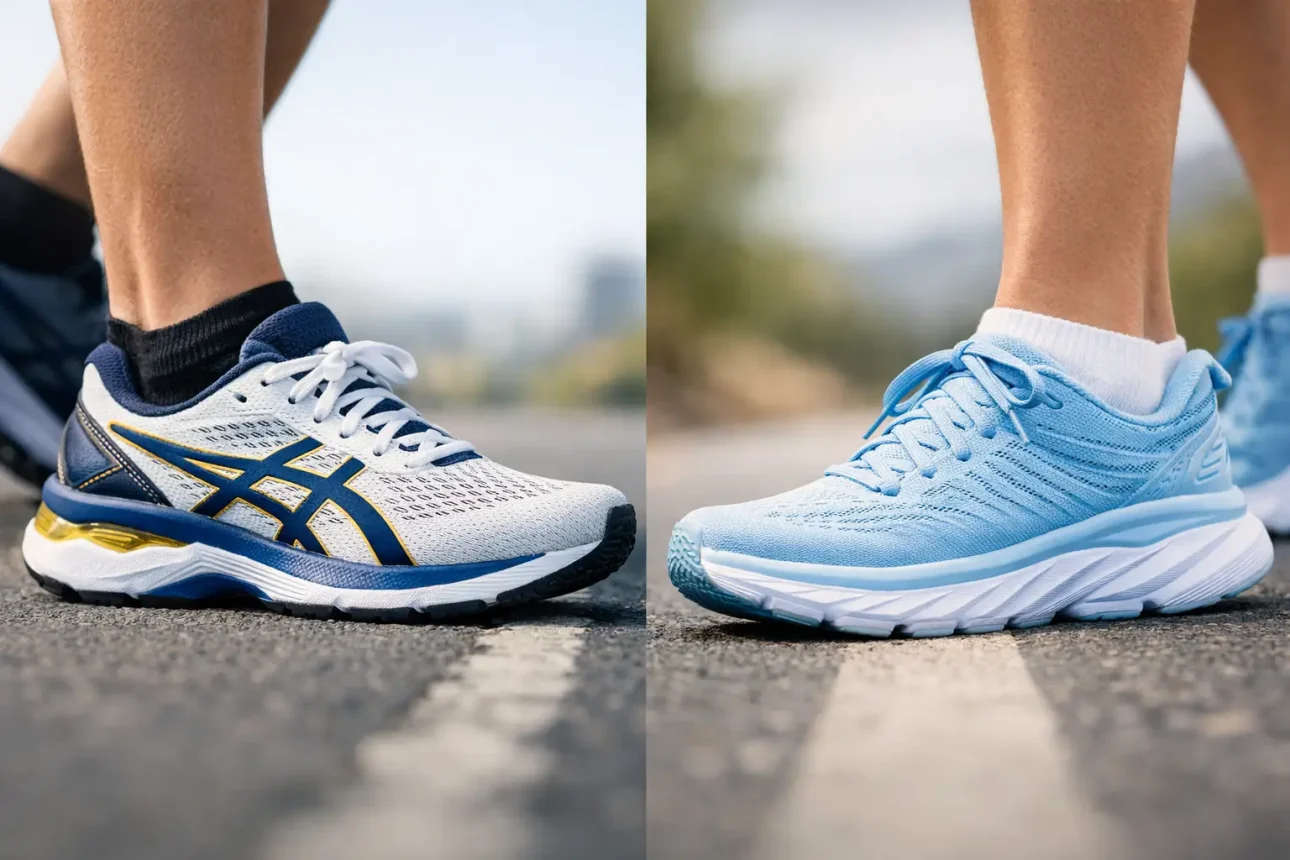
You can waste a weird amount of time comparing shoes that all promise comfort. That’s why asics vs hoka running is such a common question. Both brands make solid running shoes. Both have loyal fans. But they do not feel the same on foot, and that’s what actually matters when you’re halfway through a run or six hours into a shift.
If you want the short version, here it is. Asics usually feels more structured, more planted, and more traditional through the upper and ride. Hoka usually feels softer, more stacked, and more obvious right away underfoot. Neither is automatically better. One just fits your day better than the other.
The easiest way to explain it is this. Asics tends to build shoes that guide your foot without making a big show of it. Hoka tends to build shoes that make cushioning the first thing you notice.
When we try on a lot of Asics models, especially the Gel Kayano, GT-2000, and Nimbus lines, the feeling is controlled. The heel feels secure. The platform feels stable. The upper usually wraps the foot in a way that says, yes, this is a running shoe. It’s not trying to disappear.
With Hoka, especially the Bondi, Clifton, and Arahi, the first impression is usually softer and taller. You feel the stack. You feel the rocker. Some people love that rolling sensation because it helps them keep moving without thinking much about foot strike. Other people try it once and say it feels like too much shoe.
That’s the split. Asics is often the safer pick if you want balance and structure. Hoka is often the better pick if your main goal is plush comfort and easy miles.
This is where a lot of people get stuck. They put on a Hoka and think, wow, that’s soft, so it must be more comfortable. Sometimes yes. Sometimes not.
Soft cushioning can feel great for the first ten minutes. But if the shoe is too high, too wide, or too loose for your foot, that soft feel doesn’t help much later. You start working harder to stay stable. That matters if you walk a lot, stand a lot, or don’t have textbook running form.
Asics usually does a better job of blending comfort with control. The foam may not always feel as marshmallow-soft as Hoka, but the whole shoe often feels more put together. That’s why a lot of people end up saying Asics feels better over a full day, even if Hoka feels softer in the store.
Hoka wins if you want that max-cushioned sensation. Bondi is the obvious example. It’s thick, soft, and built to take the edge off hard ground. But not everyone likes the height. Some runners and walkers feel disconnected from the floor in Hokas, especially if they like a lower, more stable ride.
Here’s the part brands can’t market around. If the fit is off, the shoe is off.
Asics tends to fit more secure through the heel and midfoot. That works well for runners who hate heel slip or want a shoe that feels locked in. It also works for people who don’t want their foot swimming around by the end of the day. Some Asics shoes can feel a bit snug up front, though, depending on the model.
Hoka fit is more mixed. Some models are roomy and easy. Others feel narrow in strange places. A lot of people assume Hoka always means wide and pillowy. Not true. Plenty of Hokas have a tapered feel, especially through the midfoot. If your foot shape doesn’t match the shoe, that soft foam won’t save it.
If you have a wider foot or just hate a restrictive upper, don’t buy based on foam alone. Try the shape. That’s the thing you notice at mile three, not the ad copy.
We’d lean Asics for most people who stand or walk for long hours and want one pair to do everything. The support tends to feel more natural. Shoes like the Gel Kayano or Nimbus usually hold up well when your legs get tired and your posture gets sloppy.
Hoka can still work here, especially if hard floors beat you up and you want more underfoot cushion. The Bondi is popular for a reason. But for some people, the extra stack starts feeling bulky by late afternoon. Great for impact. Not always great for feeling steady.
For easy runs, both brands have strong options. If you like a smooth, soft ride and don’t care about a super connected feel, Hoka makes a lot of sense. The Clifton is one of those shoes people buy because it just feels easy.
If you want a more balanced ride that feels secure at different paces, Asics usually has the edge. The Novablast and Nimbus lines give you cushioning without feeling vague. That matters if you’re not only jogging but also using the shoe for errands, walking, or gym time.
If you know you like a little extra support, Asics is tough to beat.
The brand has been doing stability shoes for years, and it shows. The Gel Kayano and GT-2000 don’t feel clunky the way older support shoes used to. They guide the foot well, and they don’t usually make the ride feel forced. For a lot of people, that kind of support feels reassuring instead of annoying.
Hoka has solid stability options too, especially the Arahi and Gaviota. They’re cushioned and supportive, but the Hoka way of doing stability still comes with that taller platform and rocker shape. Some people love it. Others feel less sure-footed in it.
If you’re deciding between the two and stability matters a lot, we’d start with Asics unless you already know you like Hoka’s geometry.
People often assume Hoka feels lighter because the foam is soft and the ride rolls forward. But actual weight depends on the model. Some Hokas feel quick. Some feel like a lot of shoe.
Asics has cleaned this up in recent years. A lot of its daily trainers no longer feel heavy or old-school. The brand still leans more structured, but not in a bad way. If you want one pair that can handle short runs, walking, commuting, and daily wear, Asics is often easier to live with.
Hoka has a more distinct feel. That can be a plus if you love it. It can also make the shoe less versatile if you don’t. Some Hokas are amazing for steady miles and terrible for anything that involves quick direction changes or a lot of casual wear.
That’s the part people forget. A shoe can be a great running shoe and still not be the best shoe for your actual week.
If you’re comparing brand to brand, it helps to compare model to model.
Asics Gel Nimbus vs Hoka Bondi is basically balanced plush vs max plush. The Nimbus feels more stable and more polished overall. The Bondi feels more padded and more obvious underfoot. If you want soft without feeling disconnected, we’d lean Nimbus.
Asics Gel Kayano vs Hoka Arahi is a support battle. Kayano feels more structured and dependable. Arahi feels lighter on foot for some people, but also less planted for others. If your feet get tired and start collapsing inward late in the day, Kayano is the stronger pick.
Asics Novablast vs Hoka Clifton is a fun one. Both can work as daily trainers, but they feel different. Novablast has more bounce and energy. Clifton feels smoother and easier. We like Novablast if you want more life in the ride. We like Clifton if you just want simple and soft.
If you want our honest take, Asics is the better all-around choice for most people. Not because it’s flashier. It isn’t. Not because every model is perfect. They aren’t. But the brand is more consistent across fit, stability, and day-long wear.
Hoka is still worth it if your number one priority is cushion and you like that tall, rolling ride. For some people, that feel is exactly what they’ve been missing. For others, it’s overkill.
If your feet are tired, your knees are tired, and you just need a shoe that feels solid at 5 p.m., start with Asics. If pavement feels harsh and you want more foam between you and the ground, try Hoka. And if you can only buy one pair for running plus real life, we’d usually put our money on Asics first.
That’s the real answer with asics vs hoka running. Don’t buy the softest shoe. Buy the one you still like after a full day.