Cart
No products in the cart.

Your feet do not care how clean your sneakers look at 8 a.m. They care how they feel at 5 p.m., after a shift, a school run, errands, or a few miles on the sidewalk. That is where a guide to sneaker arch support actually matters. Not because every shoe needs to feel like a medical device, but because flat, flimsy sneakers can make a long day feel even longer.
Arch support is one piece of the comfort puzzle. Cushioning, fit, heel hold, width, and how you use the shoe matter too. Get the balance right and you stop thinking about your feet. That is the goal.
The arch is the curved section along the inside of your foot. In a supportive sneaker, the midsole and insole give that area a stable place to sit rather than letting it collapse inward or hang unsupported. The result can feel more controlled underfoot, especially when you walk or stand for hours.
But more arch is not automatically better. A tall, hard bump under the middle of your foot can feel awful if it hits the wrong spot. We have seen people buy the most supportive-looking shoe they can find, then stop wearing it after two days because it feels like they are standing on a golf ball.
What you want is support that matches your foot and your routine. For some people, that means a noticeable structure through the midfoot. For others, a gently shaped insole and a stable base are enough. If a shoe feels aggressive the moment you try it on, do not talk yourself into it because the spec sheet sounds good.
You do not need a complicated foot scan to spot clues. Put your oldest everyday pair on a table and look at the outsole. If the inner edge of the heel and forefoot is especially worn down, your foot may roll inward more than the shoe can handle. If the outer edge is chewed up, you may land more on the outside. Either pattern can also come from your walking style, so treat it as a clue, not a diagnosis.
Then think about where discomfort starts. Tired arches after standing all day may point to a shoe that is too flat or too flexible. A sore heel can be about cushioning, heel fit, or lots of hard pavement. Knees and lower legs can be affected by shoes, but they are not always caused by shoes. We are not going to pretend a new pair solves every ache.
The simplest test is honest: when you wear your current sneakers for a normal day, do your feet feel supported or just padded? Padding feels soft for ten minutes. Support still feels good later.
Low-support sneakers tend to have flatter insoles and more flexible midsoles. They can feel light and natural, and they often look cleaner with jeans or casual outfits. A classic flat sneaker has its place for short trips, dinner, or easy days.
If you are on your feet for eight hours, skip the flat ones. A thin sole and a dead-flat footbed may look sharp, but they ask your feet to do all the work. Save them for when comfort is not the main job.
For everyday walking, commuting, and general wear, moderate support is where we would start. You get a shaped footbed, a firmer midfoot, and enough cushioning to take the edge off concrete without feeling stiff or bulky.
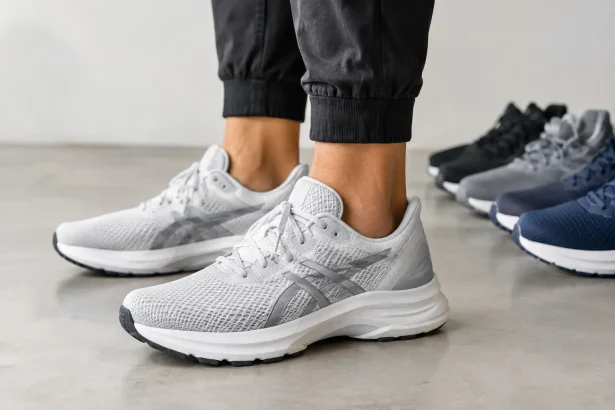
This is why shoes such as the New Balance 860, Brooks Ghost Max, and many ASICS Gel-Kayano models make sense for people who want comfort without overthinking it. They are built for repeat use. They may not be the sleekest choice in every colorway, but a good walking shoe earns its place fast.
High-support shoes often use firmer foam on the inside of the midsole, guide rails around the foot, or a broader platform that limits excess rolling. Models like the Hoka Arahi are made with this kind of controlled feel in mind.
They can be a solid pick if your feet feel unstable in soft shoes or you consistently prefer a more held-in ride. The trade-off is that they may feel less flexible and less natural than a neutral sneaker. Some people love that locked-in feel. Others hate it. Try not to buy structure you do not need.
The shoe you need for a ten-hour shift is not always the shoe you want for a quick gym session. Buying one pair to do everything can work, but it often means compromise.
For standing and walking, choose a stable base first. Look for a heel that does not wobble, a midsole that does not fold easily through the arch, and enough room up front for your toes. Hoka Bondi styles are popular because they bring plenty of cushion, but cushion alone is not the whole answer. If the upper is loose or the shoe is too narrow, the softness will not save the fit.
For easy running, start with a comfortable neutral or stability shoe based on how your feet feel, not what a running app says you should buy. Brooks, ASICS, Hoka, and New Balance all make dependable options in both camps. A neutral shoe like a standard daily trainer can be right if you feel stable and pain-free. A stability-focused option is worth trying if you want more guidance through longer runs or walks.
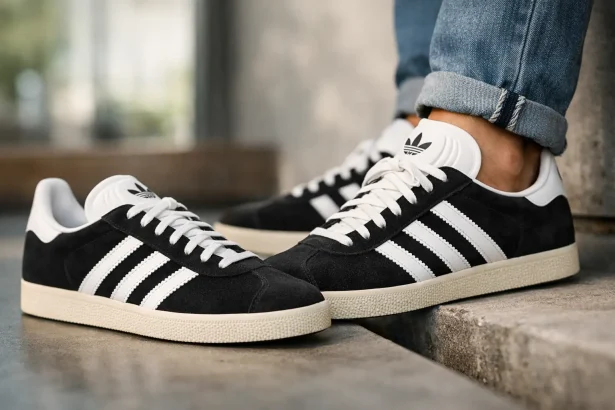
For casual sneakers, be realistic. Nike Shox, Adidas Gazelle, Puma Speedcat, and similar lifestyle-first pairs can look great, but their arch support varies widely and is rarely their main strength. We would wear them for style, short days, and normal city use. We would not pick them first for a warehouse shift or a day of sightseeing.
A supportive shoe that fits badly is still a bad shoe. Your heel should feel held without rubbing. Your toes need room to spread, especially if you walk a lot or shop late in the day when feet are a little bigger. The widest part of your foot should sit at the widest part of the shoe, not spill over the edge.
Pay attention to the arch placement too. The support should sit under your arch, not too far forward under the ball of your foot. Walk around indoors for a few minutes. If you feel pressure building in one sharp spot, it is probably not the pair.
Do not assume your usual size works across every brand. Hoka, ASICS, Nike, and New Balance can all fit differently. Check the length, but also check the width and volume through the top of the foot. A wide foot squeezed into a standard width can make a well-cushioned sneaker feel terrible.
An aftermarket insole can help when you like the sneaker but need more shape under the arch. It is also useful if your current insole is thin, flat, or worn down. Start with a moderate insole rather than the firmest option on the shelf.
There is a catch: insoles take up space. In a snug sneaker, adding one can crowd your toes or lift your heel out of the shoe. Remove the original insole if the replacement is designed to take its place, and wear the pair around the house before trusting it for a full day.
If you have ongoing foot pain, numbness, swelling, or discomfort that changes how you walk, get advice from a qualified medical professional. Sneakers can support your day. They should not be asked to handle a problem that needs proper care.
Do not chase the biggest arch, the softest foam, or the logo you see most. Start with a stable sneaker that fits your foot, then choose the level of support your day actually calls for. For most people, moderate support and a roomy, secure fit beat a stiff corrective-feeling shoe every time.
At The Sneaker Base, we would rather see you in a slightly less flashy pair you can wear all day than a clean-looking sneaker you leave by the door after one uncomfortable week. Your feet vote with every step. Listen to them.