Cart
No products in the cart.
White sneakers look sharp for about five minutes. Then a rainy sidewalk, a coffee splash, or one scuffed curb gets involved. Knowing how to clean white sneakers properly means you can keep wearing the pair you like instead of treating them like display pieces.
We are not fans of throwing white shoes in the washer and hoping for the best. It can work on a tough canvas pair, but it can also warp foam, weaken glue, and leave your sneakers looking clean but feeling wrong. A little hand cleaning takes longer, but it is the safer move for most pairs.
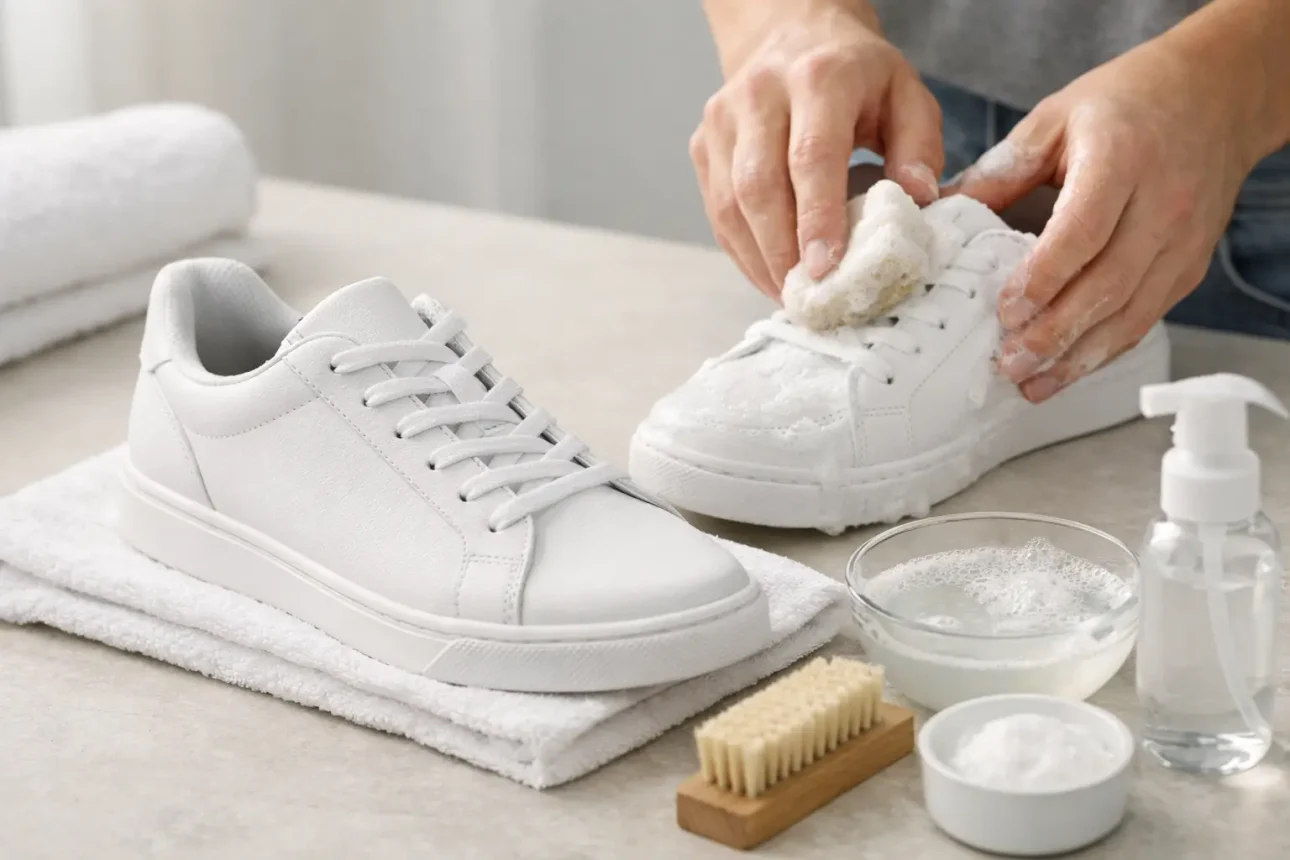
Keep it simple. You need a soft-bristle brush or old toothbrush, a microfiber cloth, a bowl of warm water, mild laundry detergent or dish soap, and a clean dry towel. A white eraser or melamine sponge can help with rubber soles, but go easy. Those sponges are mildly abrasive and can dull some finishes if you scrub like you are sanding a wall.
For deeper stains, baking soda can help on canvas and fabric. Use it carefully. It is useful, but it is not magic, and too much gritty paste can be rough on delicate mesh. Skip bleach completely. It can yellow white fabric, dry out leather, and damage colored logos, stitching, and glue.
Before you start, check the material. Smooth leather, knit mesh, canvas, suede, and synthetic overlays do not all want the same treatment. If your sneakers have suede panels, keep the water away from them as much as possible. Wet suede is where a quick cleaning job turns into a blotchy mess.
Take out the laces and insoles. Tap the shoes together outside, then brush off dry dust and dirt. Do this before adding water. Otherwise, you are rubbing grit into the upper, which can leave fabric looking gray even after it dries.
Use a dry soft brush around the seams, tongue, eyelets, and the line where the upper meets the sole. Those spots hold more dirt than people think. If you have been walking a lot, the outsole grooves will probably need attention too.
Add a small amount of mild soap to warm water. You want light suds, not a sink full of foam. Too much soap is hard to rinse out, especially from mesh and knit uppers.
Dip your brush in the solution, then shake or squeeze out most of the water. Your sneaker should be damp during cleaning, not soaked. Waterlogged shoes take forever to dry and put extra stress on the materials inside.
For leather or synthetic leather, use a microfiber cloth or very soft brush. Wipe in small sections and avoid flooding the surface. A little grime usually lifts quickly. If it does not, repeat with a clean part of the cloth rather than scrubbing harder.
For canvas, nylon, and tougher fabric, use the soft brush in gentle circles. Work from the cleaner areas toward the dirtier spots so you are not spreading mud across the shoe. Stubborn marks may need two passes. That is normal.
Mesh needs the most patience. It is easy to snag and easy to push dirt deeper into the weave. Use minimal pressure and blot with a damp cloth after brushing. If a white mesh running shoe is heavily stained, it may never return to box-fresh white. We would rather tell you that than have you wreck the upper chasing perfection.
For knit uppers, such as many walking and running shoes, use a cloth first. A brush can pull at the fibers if it is too stiff. Clean gently along the knit pattern, then blot away the moisture.
The white midsole usually makes or breaks the whole look. Even when the upper is not perfect, a clean midsole makes the shoe look far better.
Use your brush and mild soap solution on the rubber and foam edges. For scuffs on firm rubber, rub lightly with a damp melamine sponge or white eraser. Do not use that method on painted foam midsoles or printed graphics. It can remove the finish along with the mark.
Clean the outsole too, especially if you wear the pair indoors. Nobody sees much of it outside, sure. But dried grit in the tread can get tracked through your home, your car, and everywhere else.
Laces collect oil, dirt, and whatever was on your hands when you tied them. Soak them in warm soapy water for 10 to 15 minutes, rub them between your fingers, then rinse well. If they still look yellow or frayed, replace them. Fresh white laces are cheap and can make an older pair look noticeably cleaner.
Wipe insoles with a damp cloth and a little mild soap. Do not soak them unless the care label says you can. Most insoles dry better when they are lightly cleaned and left out in the air.
Grass stains respond best when you get to them early. Dab the mark with soapy water, then use a soft brush. Do not immediately reach for strong stain remover, especially on mesh. It can leave a lighter patch that stands out just as much as the grass did.
For mud, let it dry first. Wet mud smears. Dry mud brushes away. Once the loose dirt is gone, use your mild solution to clean the leftover mark.
Oil stains are tougher. Sprinkle a little baking soda or cornstarch over the spot and leave it for a few hours to absorb some oil. Brush it off, then clean gently with soap and water. It may take more than one treatment. Old oil stains are stubborn, and anyone promising a guaranteed fix is selling you something.
For salt lines from winter streets, wipe the area with a cloth dampened with equal parts water and white vinegar. Test a hidden area first, especially on colored accents. Follow with a clean damp cloth so the vinegar does not sit on the material.
Usually, no. We know it is tempting. Put them in a pillowcase, press start, and let the machine do the work. But a washing machine can bend heel counters, loosen adhesive, damage cushioning, and make leather look rough.
Canvas shoes with basic rubber soles are the exception where it sometimes makes sense. Even then, use cold water, a gentle cycle, and no dryer. Remove laces and insoles first. We would still hand-clean a pair you actually care about, especially running shoes, cushioned walking shoes, or anything with layered materials.
Never put sneakers in a dryer. Heat can shrink fabric, warp foam, and soften the glue holding the shoe together. That is a fast way to turn a solid pair into a pair that squeaks, separates, or fits badly.
After cleaning, wipe away excess soap with a clean damp cloth. Stuff the shoes loosely with plain white paper or a clean towel to help them hold their shape. Avoid newspaper if the upper is very light or wet because ink can transfer.
Let them air-dry in a well-ventilated spot, away from direct heat and harsh sun. A fan nearby is fine. A radiator is not. Give them time. If the inside is still damp, do not wear them for a full day out. Damp shoes can smell fast, and nobody needs that.
A quick wipe after a dirty walk is better than a major cleaning session once a month. Keep a soft cloth by the door, brush dried dirt off before it settles, and rotate your shoes when you can. Wearing one white pair every day is hard on them, no matter how careful you are.
We also think white sneakers should be worn, not guarded like museum pieces. A few signs of life are fine. But dirt, salt, and grime do more than look bad – they can wear down fabric and leave materials stiff over time. Clean them gently, let them dry properly, and keep enjoying the pair that already feels right on your feet.