Cart
No products in the cart.
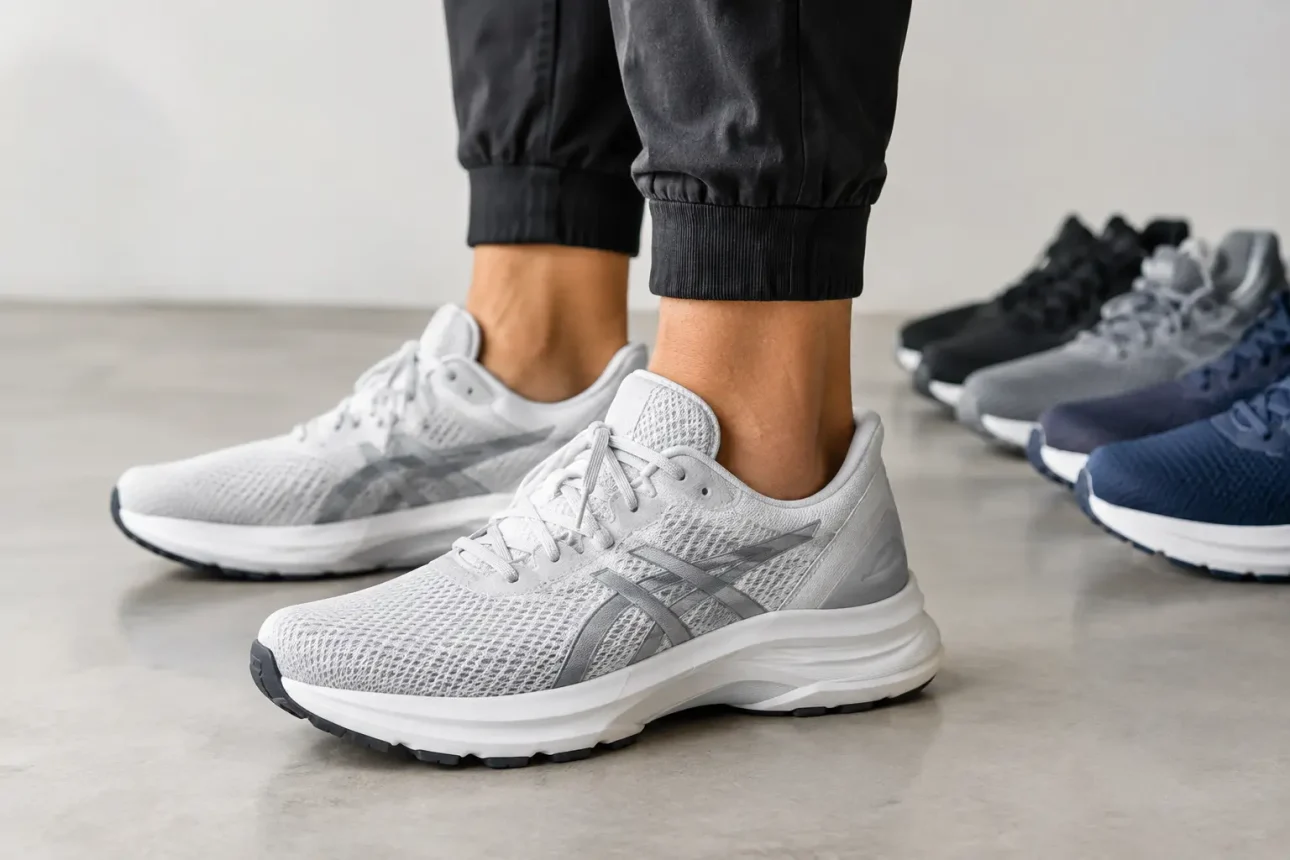
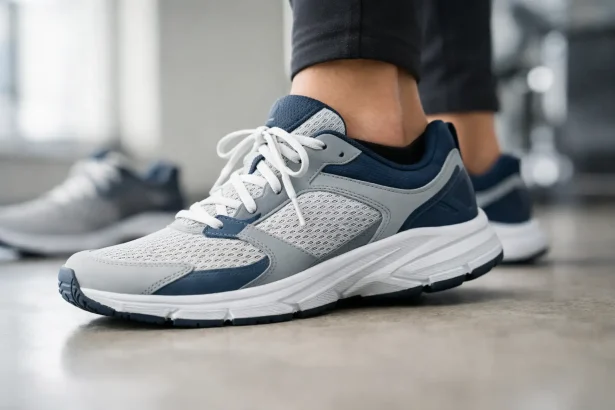
Your shoes can be the right length and still feel terrible by 5pm. That is usually where sneaker widths come in. If your toes feel squeezed, your little toe hangs over the edge, or the sides of the upper bulge after a short walk, going up a half size may not be the answer. You may simply need more room across the foot.
We see this all the time. People buy longer shoes to escape a tight forefoot, then deal with heel slip and a clumsy fit. A properly sized wide sneaker is usually the better move. It gives your foot space where it needs it without turning the whole shoe into a loose mess.
Length gets all the attention because it is the number printed on the box. Width changes how the shoe actually feels when you stand, walk, run, and spend a full day on your feet.
A shoe that is too narrow can pinch the forefoot, rub the outside of your toes, and leave deep marks across the top of your foot. It can also make a decent cushioning setup feel worse because your foot is fighting the upper instead of sitting naturally on the midsole. If you stand at work, walk a lot, or run for fitness, that tightness adds up fast.
Too wide has its own problems. Your heel may slide, your foot can move around on turns, and the shoe may crease in odd places. So wider is not automatically better. The goal is a secure heel and midfoot, with enough room for your toes and the widest part of your foot to sit flat.
What matters is how your feet feel after a normal day, not just during the two minutes you spend trying shoes on.
Most adult sneakers use letters to show width. The system is not perfectly consistent across every brand, but these are the labels you will see most often:
That sounds simple, but there is a catch. A D width from one brand can feel different from a D width in another. The shape of the toe box, the height over the top of the foot, the stiffness of the upper, and the shape of the sole all change the fit.
We would not buy a shoe just because the width letter matches your old pair. Use it as a starting point, then pay attention to the shape.
This is where people get tripped up. A sneaker can be technically wide through the middle but still taper hard at the toes. It can also have a roomy, round toe box while fitting securely through the heel.
If your issue is rubbing on your pinky toe or pressure around your big toe, look closely at the front shape of the shoe. You may need a wider toe box, not a shoe that is loose everywhere. Flat, narrow lifestyle sneakers often look clean but can be rough for long shifts or long walks. If comfort is the job, we would skip them.
Foot width is side to side. Volume is the amount of space your foot takes up from the sole to the top of the shoe. Someone can have a narrow foot with a high instep, or a wide foot that is fairly low-profile.
If laces feel painfully tight across the top of your foot even when the sides feel fine, you may need more volume. A softer mesh upper can help. So can a model with a deeper fit. Going wider might help, but it is not always the clean answer.
Start with the shoes you already own. They are more honest than a sizing chart.
Look for pressure points and wear marks. If the upper stretches hard over the sides of your forefoot, that is a clue. If the outsole is wider than your foot but the upper still pinches, the shoe shape may be wrong. If you keep getting blisters around the heel, the shoe may be too wide or too long rather than too narrow.
Try shoes later in the day when you can. Feet often swell after walking, working, or being on them for hours. Wear the socks you actually use, especially if you wear thicker athletic socks at work or on runs. A thin dress sock can make a tight sneaker seem fine in the moment, then ruin the first real wear.
When you stand in the shoe, you want a thumb’s width or so between your longest toe and the front. Then check the sides. Your forefoot should not spill over the midsole, and the upper should not feel like it is cutting into you. Walk around. Bend your knees. Take a few quicker steps. Fit problems usually show themselves when you move.
If you use insoles or orthotics, bring them into the equation from the start. They take up space and can change both the volume and the heel fit. Do not assume your usual size will feel the same once they are inside.
For all-day work, walking, and casual wear, a little extra forefoot room is usually worth having. Your feet are not frozen in their morning size. A soft upper and a stable base often feel better than a stiff, narrow shoe that looks sharp in a mirror.
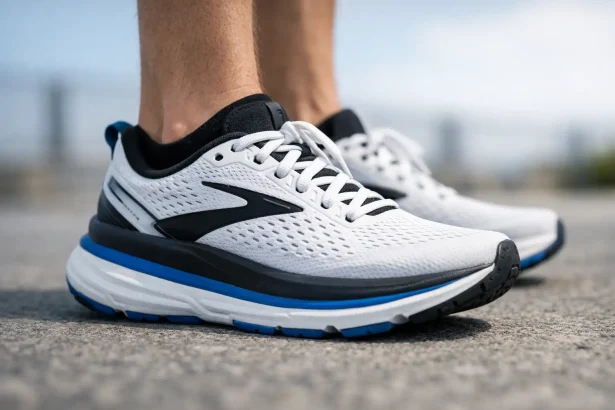
For running, you still need room, especially up front, but the heel and midfoot need to stay locked down. Your foot should not slide side to side when you turn or pick up the pace. A wide version of a running shoe can be a smart choice if standard models make your toes go numb or leave your feet aching after a few miles. It is not a sign that you have “problem feet.” It is just a better fit.
For gym sessions, it depends on what you do. If you mainly lift, a secure, stable fit matters more than lots of soft space. If you use the same pair for treadmill work and errands, give your toes more room. Your feet will thank you after the workout, not just during it.
Brands such as New Balance and Brooks often offer more width choices in performance shoes, which makes the search easier. Other brands may fit naturally wider or narrower depending on the model. That does not make one brand better. It means you should not force your foot into a logo you like.
This is the most common bad fix. A longer shoe may give your toes breathing room, but it can put the flex point in the wrong place and cause your heel to slide. You end up tightening the laces too much, which creates pressure on top of the foot. Now the shoe is both too long and too tight. Not worth it.
Try a wider width first if the length is right. If wider widths are unavailable, look for a model with a rounder toe box, a softer upper, or a naturally roomier fit. Sometimes changing the model works better than changing the size.
There are small adjustments that can help, like changing the lacing pattern to reduce pressure over the instep. But lacing cannot turn a narrow shoe into a wide one. Neither can wearing it around the house until it “breaks in.” Materials may soften a little. The sole shape will not change.
Wear both shoes indoors on a clean floor. Stand still for a minute, then walk around for ten. Check your heel, the ball of your foot, your pinky toe, and the top of your foot. Those are the spots that usually tell the truth first.
Do not keep a pair because it is almost comfortable. Shoes should not require a punishment period before they feel decent. The right sneaker does not need to be fancy. It just needs to hold your foot properly, leave your toes some space, and still feel good when your day runs longer than planned.
That is the fit we would choose every time.