Cart
No products in the cart.

Your shoes should not feel fine at 9am and miserable by lunch. That is the whole point of finding lace shoes for wide feet: you need room where your foot spreads, plus enough adjustment to keep your heel from sliding around. A loose, shapeless shoe is not the answer. Neither is squeezing into a regular-width sneaker and hoping it breaks in.
Laces give you control. You can open up pressure across the top of your foot, lock down the heel, and make small changes when your feet swell after a long shift or a long walk. But laces cannot turn a narrow shoe into a wide one. Start with the right shape, then use the lacing to make it work even better.
Width is not just about the sidewalls of the shoe. Plenty of sneakers feel roomy when you first put them on, then pinch your little toe once you start walking. What matters is the whole fit: toe box, forefoot, instep, heel, and how the upper sits over your foot.
A solid wide-fit lace-up shoe gives your toes space to spread without letting your foot swim inside. The front should feel open, especially around the big-toe joint and little-toe side. Your heel should stay planted. The middle of your foot should feel held, not crushed.
If you are on your feet for eight hours, the fit at 5pm matters more than the fit in your bedroom. Feet often get a little bigger through the day. That is normal. A sneaker that is barely acceptable in the morning can feel brutal by evening.
We also think people get too hung up on shoe length. If you keep going up half sizes to find toe room, but the heel starts slipping, you probably need more width instead of more length. Look for brands and models offered in wide or extra-wide sizing when possible. A naturally roomy shape can work too, but labeled width is usually the safer bet.
The best lacing pattern in the world cannot solve a bad last. The last is the foot-shaped form a shoe is built around, and it decides whether the sneaker feels tapered, straight, shallow, roomy, or strange before you even tie it.
For wide feet, we usually favor shoes with a rounder front and a deeper upper. Running and walking models often do this better than slim lifestyle sneakers. That does not mean every performance shoe looks clunky. It means the shoe is built to let a foot move and flex instead of sitting there looking sharp in a product photo.
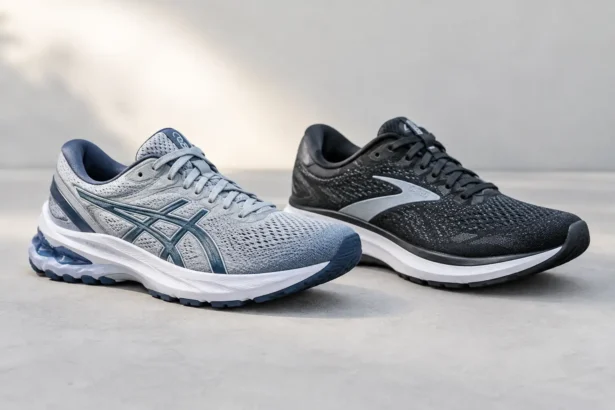
New Balance is often a safe place to start because many of its everyday and running shoes come in multiple widths. Brooks is another strong pick for walking, running, and workdays on your feet. Hoka models can be a good call if you like a cushioned ride, though the fit changes by model. Some are roomy enough in standard width, while others make more sense in a wide option.
Asics also deserves a look, especially if you want a supportive running shoe that can double as an all-day sneaker. The Gel-Kayano family has a loyal following for a reason: it is not the lightest or sleekest shoe out there, but it gives many walkers and runners a stable, cushioned platform. If your feet roll inward heavily or you simply like a more guided feel, that trade-off can be worth it.
On the other hand, some low-profile retro sneakers look great but are a poor match for wide feet. A narrow, flat shoe with a stiff upper can make a quick coffee run feel longer than it should. We like a clean sneaker as much as anyone, but if your toes are pressing into the sides, skip it. Style does not feel so good when you are limping home.
Stand in the shoe with both feet planted. You want a thumb’s width or roughly half an inch in front of your longest toe. More importantly, your toes should not be stacked, curled, or pushed sideways. Walk around for a few minutes. If your little toe hits the edge every step, that shoe is already telling you no.
Also pay attention to the top of your foot. Wide feet often come with a higher instep, but not always. If the tongue digs in or the laces leave deep marks, the shoe may be too shallow. Loosening the laces can help, but only if the rest of the fit is right.
Once you have a shoe with enough basic room, lacing can make a noticeable difference. You do not need fancy tricks for every pair. Most people just need to stop pulling every eyelet as tight as possible.
If the top of your foot feels squeezed, skip one set of eyelets over the sore spot. This creates a small window of space right where you need it. It works well when a shoe fits across the forefoot but feels too tight over the instep.
If your heel slips, use the top eyelets to create a runner’s loop. It sounds technical, but it is simple: leave a small loop on each side at the top, cross the lace ends through those loops, then pull down and tie. This holds the heel back without forcing you to cinch the whole shoe tighter.
For a wide forefoot, keep the lower laces comfortably loose and use the upper laces for security. That is the best balance for most people. Your toes get room, while your heel and ankle still feel steady.
Do not crank the laces down because the shoe feels loose at the ankle. If you have to do that, the shoe may be too long, too wide in the heel, or shaped wrong for your foot. Tight laces can create numbness and hot spots fast.
There is no single best shoe for every wide foot. The right pick depends on what you do in it.
For long work shifts, we would lean toward a cushioned walking or running shoe with a stable base. Think Brooks Ghost Max, Hoka Bondi, or a supportive Asics option. These are not always the most subtle shoes under a pair of jeans, but they are a lot easier to live with when you spend all day standing on concrete.
For casual wear, a roomier New Balance runner-style sneaker is often the smart middle ground. You get enough cushioning for errands and walking, but the look still works with everyday clothes. We would take that over a narrow fashion sneaker that only feels good while you are sitting down.
For running, fit becomes even less forgiving. Your foot moves, warms up, and swells. Leave enough space up front, and do not assume your casual sneaker size is automatically your running size. A half size up may help, but width still comes first if the forefoot feels pinched.
If you wear orthotics or thicker insoles, check the shoe depth too. Removing the stock insole can create room, but it may change how the shoe feels underfoot. A deeper wide-width shoe is usually the cleaner solution.
The biggest mistake is buying a narrow shoe because it is on sale or because you like the color. A deal is not a deal if the shoes stay in the closet.
Another mistake is expecting every mesh upper to stretch out. Mesh can feel forgiving, but the overlays, sidewalls, and sole shape still set the real limits. Leather can soften with wear, but it rarely expands enough to fix a truly narrow fit.
Finally, do not assume wide means sloppy. A proper wide shoe should give your forefoot room while still feeling stable through the heel and midfoot. If it feels like you are sliding from side to side, try a different model, not tighter laces.
At The Sneaker Base, we keep it simple: buy the shape that matches your foot, then lace it for your day. Your shoes do not need to look medical or feel like bricks. They just need to let you walk, work, and move without thinking about your feet every five minutes. That is worth more than a logo on a narrow toe box.