Cart
No products in the cart.
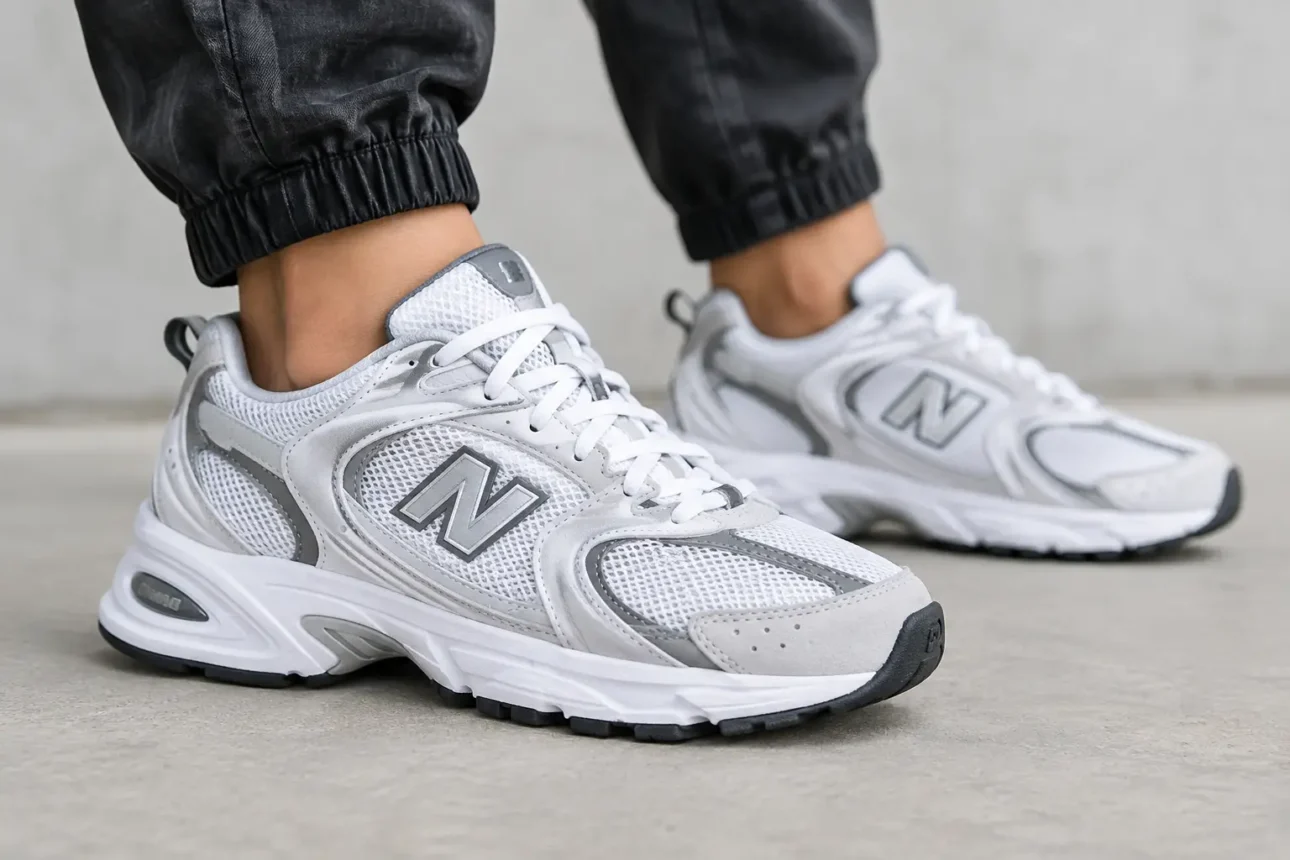
The New Balance 530 has the look of an old-school running shoe and the job of a daily sneaker. That matters because plenty of retro shoes look sharp for an hour, then leave your feet asking why. In this New Balance 530 review, we’re keeping it simple: it’s a clean, comfortable option for errands, commutes, casual workdays, and long stretches of walking. Just don’t mistake it for a serious running shoe.
The 530 works because it doesn’t try too hard. The layered mesh and synthetic upper has that early-2000s runner look, but it is not loud or hard to style. Silver-heavy pairs are the classic choice, though the model comes in plenty of calmer colors if you want something less sporty.
More important, it feels better underfoot than most lifestyle sneakers with a similar look. New Balance uses an ABZORB midsole, which gives the shoe a soft landing without feeling like you are standing on a thick foam block. On pavement and store floors, it takes some edge off each step. That is what most people actually need from an everyday sneaker.
The sole is not overly tall, and the 530 does not feel clumsy. You get enough cushioning for a day moving around without losing the ground feel completely. If you hate shoes that make you feel perched above the floor, this is a solid middle ground.
It is also lighter and more breathable than it looks. Mesh across the forefoot lets in air, which helps when your feet run warm. The trade-off is obvious: mesh is not the best choice for wet weather. A light shower is one thing. Regular rain, slush, or muddy walks are another.
Comfort is the reason to buy the 530, not the reason to brag about it. The padding around the collar and tongue is decent, the heel feels secure, and the cushioning is forgiving enough for daily wear. For someone standing at a counter, walking a campus, commuting by train, or covering a few miles while running errands, it makes sense.
That said, comfort depends on what your day looks like. If you are on your feet for eight or ten hours on hard floors, the 530 can be good, but it may not be the best choice in the New Balance lineup. It has cushioning, but it is still a retro-inspired sneaker with a fairly straightforward platform. A more purpose-built walking or running model with thicker foam and more structure may feel better late in the day.
We’d put it this way: the 530 is comfortable enough to be your everyday shoe. It is not the shoe we would pick first for warehouse shifts, hospital floors, or a full day of travel with a heavy bag. That is not a knock. It just keeps expectations honest.
For casual wear, though, it is hard to complain. Some shoes look good in photos but feel flat, stiff, or narrow by midafternoon. The 530 avoids that trap.
It can be a more forgiving choice than flat casual sneakers, especially if you are used to thin soles and little padding. The cushioned midsole and softer upper can make daily walking feel less harsh. But feet are personal. If you deal with ongoing pain, need stability, or wear orthotics, a retro runner is not automatically the answer.
The 530 has a fairly neutral feel. It does not offer the kind of firm guidance some people want when their ankles roll inward or their feet get tired fast. Try it with your usual socks and, if you use them, your inserts. The removable insole gives you some room to do that.
For most people, the New Balance 530 fits true to size. The toe box has reasonable room, and the mesh upper is more forgiving than a stiff leather sneaker. If you wear your normal size in New Balance lifestyle shoes, start there.
The catch is width. The standard 530 can feel a little snug through the midfoot for people with wide feet, especially if you prefer thicker socks. It is not painfully narrow like some fashion-first sneakers, but it is not a naturally roomy workhorse either.
If you are between sizes, think about how you plan to wear it. Go with your usual size for regular socks and everyday use. Consider going up half a size if your feet are wide, you wear cushioned socks, or you simply hate a close fit across the top of your foot. Going too big can make the heel feel loose, so don’t size up just because you expect a break-in period. The upper softens a bit, but the basic shape stays the same.
The heel is fairly secure for walking, though it is not locked-down like a dedicated running shoe. Lace it properly. It sounds obvious, but loose lacing is behind a lot of complaints about heel movement in casual runners.
The 530 is one of those sneakers that works with clothes people already own. Jeans, joggers, leggings, shorts, loose chinos – it handles all of them. The shape is sporty, but not exaggerated. It has more personality than a plain white tennis shoe and less attitude than a bulky basketball sneaker.
The silver-and-white versions are the easiest to wear and probably the reason the model caught on in the first place. They give an outfit some texture without forcing the rest of it to match. Cream, gray, black, and navy pairs are safer if you want a shoe that disappears into your rotation.
We do think the 530 looks best when it stays clean. The mesh panels and layered overlays pick up dust more easily than smooth leather. A quick brush after a dirty walk goes a long way. Do not throw them in the washing machine unless you are happy to risk changing the shape or damaging the glued sections. Hand-cleaning is slower, but it keeps the shoe looking right.
Technically, yes. Realistically, we would not buy it for that.
The 530 comes from a running-shoe background, but the version people wear now is mainly a lifestyle sneaker. It is fine for catching a bus, jogging across a parking lot, or taking the dog around the block. For regular runs, especially if you are building mileage, choose a current running shoe instead.
Modern running shoes have moved on. They tend to offer better foam, a smoother ride, more purposeful upper support, and more reliable traction for repeated miles. The 530’s cushioning feels good for walking, but it is not designed to handle daily training the way a modern New Balance Fresh Foam model, Brooks Ghost, or ASICS Gel-Kayano can.
This is where people get tripped up by the word “runner.” A shoe can look like a runner without being the right tool for your run. If your exercise is mostly walking, the 530 is much more convincing.
No shoe is perfect, and the 530 has a few limits worth knowing before you buy.
First, the outsole grip is fine on dry sidewalks and indoor floors, but it is not made for slick trails or wet conditions. Second, the lighter mesh upper is breathable but not protective. Cold, rain, and puddles get through quickly. Third, the support is moderate, not specialized. If you need a very stable base or a lot of arch structure, look beyond this model.
There is also the price question. The 530 is worth it when you want a sneaker that covers style and daily comfort in one pair. If looks do not matter much and your priority is all-day standing comfort, you can often get more cushioning and support from a dedicated walking shoe for similar money. We would not pretend otherwise.
Buy the 530 if you want a lightweight, easy-to-style sneaker that feels softer than most casual shoes. It suits people who walk a lot, spend their day moving between work and errands, or want a retro runner that does not feel like a costume. It is especially good if your current sneakers are flat and your feet are tired of them by 5 p.m.
Skip it if you need a true running shoe, work long shifts on concrete, or know you need strong stability features. You may like the look, but a more supportive model will serve you better.
Our real take: the New Balance 530 earns its popularity. Not because it is rare or flashy, but because it looks clean, feels good, and asks very little from you. Wear it for normal life, keep it out of heavy rain, and don’t expect it to replace a serious running shoe. For most daily rotations, that is more than enough.