Cart
No products in the cart.
A cheap pair of sneakers can cost you more by Friday. Not at the register. In sore arches, tired knees, a rubbed heel, and that moment at 5 p.m. when you cannot wait to take them off. The best sneakers under 100 dollars are not the ones with the loudest logo. They are the pair you forget you are wearing.
At this price, you do need to shop with your eyes open. You can find solid cushioning, dependable grip, and clean everyday style. You may not get the newest materials, the lightest racing foam, or every colorway. That is fine. Most people do not need any of that. They need shoes that fit, feel good, and hold up through real life.
A $100 budget is a smart place to shop, especially when you know what matters to you. Sale colors, previous versions, and less-hyped models can be much better buys than a new shoe everybody is talking about. Brands update shoes constantly. That does not mean last year’s version suddenly stopped being comfortable.
We would rather buy a proven walking shoe on sale than a trendy sneaker that looks sharp in photos and feels flat after an hour. The same goes for running. A discounted daily trainer from a known performance line is usually a safer bet than a cheap shoe pretending to be a runner.
Still, there are trade-offs. Under $100, you may see simpler uppers, less durable outsole rubber, or fewer fit options. That does not make a shoe bad. It means you should spend your money on the part that affects your day most. For someone standing at work, that is underfoot comfort. For a casual wearer, it may be a stable sole and a color that goes with everything.
Do not shop by brand first. Shop by the day you are asking the shoe to handle. A pair that works for a quick coffee run may be miserable for an eight-hour shift.
If you work on hard floors, skip thin, flat sneakers. They can look clean, but your feet pay for it later. Look for a thicker midsole with some give, a heel that does not collapse when you press it, and an upper that does not squeeze your forefoot.
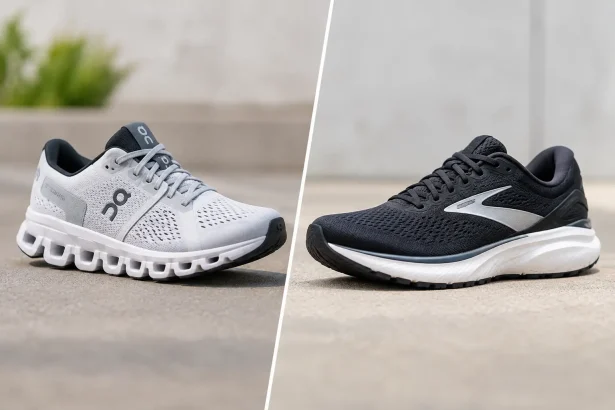
Walking and running brands often do this job better than classic court shoes. Models from lines like New Balance, Brooks, Hoka, Asics, and Adidas can show up below $100 when older versions or quieter colors are marked down. You do not need a max-cushion shoe unless you like that soft, high-stack feel. Some people find them comfortable. Others feel less steady in them. A medium-cushion shoe is often the safer everyday choice.
A walking shoe should bend near the toes, not fold in the middle. That small check tells you a lot. You also want enough outsole grip for wet sidewalks and a secure heel, especially if you walk several miles a day.
Avoid buying a shoe that is too snug because you expect it to stretch. Mesh can give a little. Structured synthetic overlays and stiff leather usually will not give much at all. Your toes need room from the first wear. If the front of the shoe feels crowded in the store, it will not become your favorite pair on a 10K walk.
If you run once or twice a week, you do not need an expensive race shoe. You need a daily trainer with real cushioning and a stable base. Look for a shoe made for running, not a lifestyle sneaker with a sporty shape.
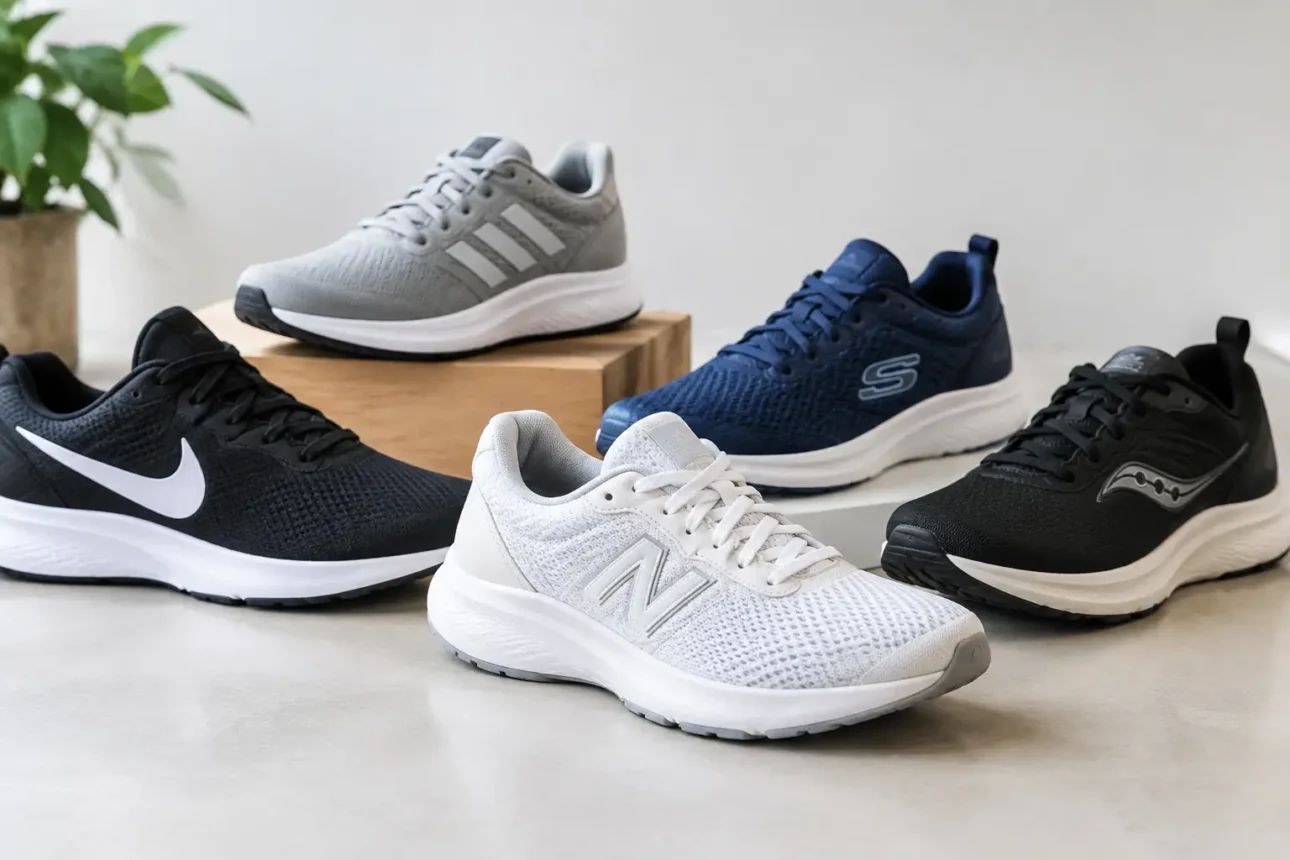
Nike, Puma, Adidas, Asics, Brooks, and New Balance all make models that can fall under budget during sales. We would take a slightly older running shoe from one of those lines over a fashion sneaker for regular runs every time. Your pace does not matter here. Repeated impact does.
For the gym, it depends on your workout. Soft running shoes feel good on a treadmill but can feel wobbly during squats or strength work. If you mostly lift, choose something lower and more stable. If you mix cardio, machines, and light lifting, a versatile trainer makes more sense.
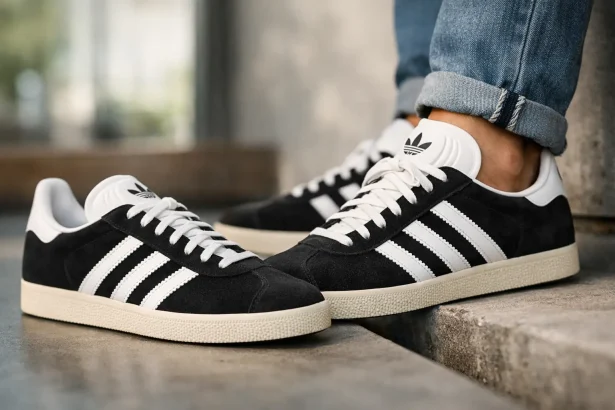
This is where flat sneakers can work. A Gazelle-style shoe, a clean low-profile court sneaker, or a retro runner can handle errands, school pickup, dinner, and weekends just fine. Just be honest about the mileage. Wearing a flat lifestyle shoe all day is different from wearing it for a couple of hours.
Retro runners are often the sweet spot. They usually bring more padding than a court shoe without looking like you are heading to a marathon. Some are chunky. Some are not. Pick the shape you will actually wear, because a comfortable shoe left in the box is still money wasted.
Two shoes in the same labeled size can feel completely different. A narrow running shoe and a roomy casual sneaker are not going to fit the same, even if both say size 9.
Try shoes on later in the day if you can. Feet often swell after walking, commuting, or working. Wear the socks you normally use. Then stand up and walk around for a few minutes. Check for heel slip, pressure across the top of your foot, and any toe contact at the front.
You should have roughly a thumb’s width between your longest toe and the end of the shoe. That sounds basic, but people regularly buy sneakers too short because they like a snug look. Tight shoes do not look better when you are limping home.
If you have a wider forefoot, look for wide sizing where available or favor models with flexible mesh uppers. Do not rely on removing the insole to create room. It can change how the shoe holds your foot and is usually a temporary fix for the wrong size.
The price tag is only useful after you know the shoe suits the job. A $65 pair that wears out fast or hurts your feet is not a deal. A $95 pair you wear four days a week can be.
Start with older versions of shoes you already know you like. This is the easiest win. When a brand releases a new model, the previous one often drops in price even though the changes are small. New colors cost more for no practical reason, too. If the black, gray, or less popular color is cheaper, take it. Your feet will not know the difference.
Pay attention to return policies before you commit. Fit is personal, and photos cannot tell you if a heel collar rubs your ankle. At The Sneaker Base, we think shoppers should be able to choose from style-forward pairs and practical shoes without having to visit five different brand sites. But the right pair is still the one that feels right on your own foot.
Also, do not buy two cheap pairs just because each looks like a bargain. One solid pair for your main use is usually better. If you need a second pair, make it different: a cushioned walking shoe for workdays and a simple casual sneaker for weekends. That gives each pair a break and makes both last longer.
Ask yourself three things: Where will I wear these most? How many hours will I be in them? What has bothered me about my last pair?
If your answer is hard floors and long days, put cushioning and fit ahead of style. If it is casual wear, choose the color and shape you will reach for often. If it is running, buy a real running shoe, even if the design is less exciting. We have seen plenty of good-looking sneakers that belong in a closet more than on a sidewalk.
You do not need to spend big to get a pair you like wearing. You just need to stop paying for details that do not help your day. Find the shoe that fits your routine, give your toes some space, and save the extra money for something better than replacing a bad pair next month.