Cart
No products in the cart.
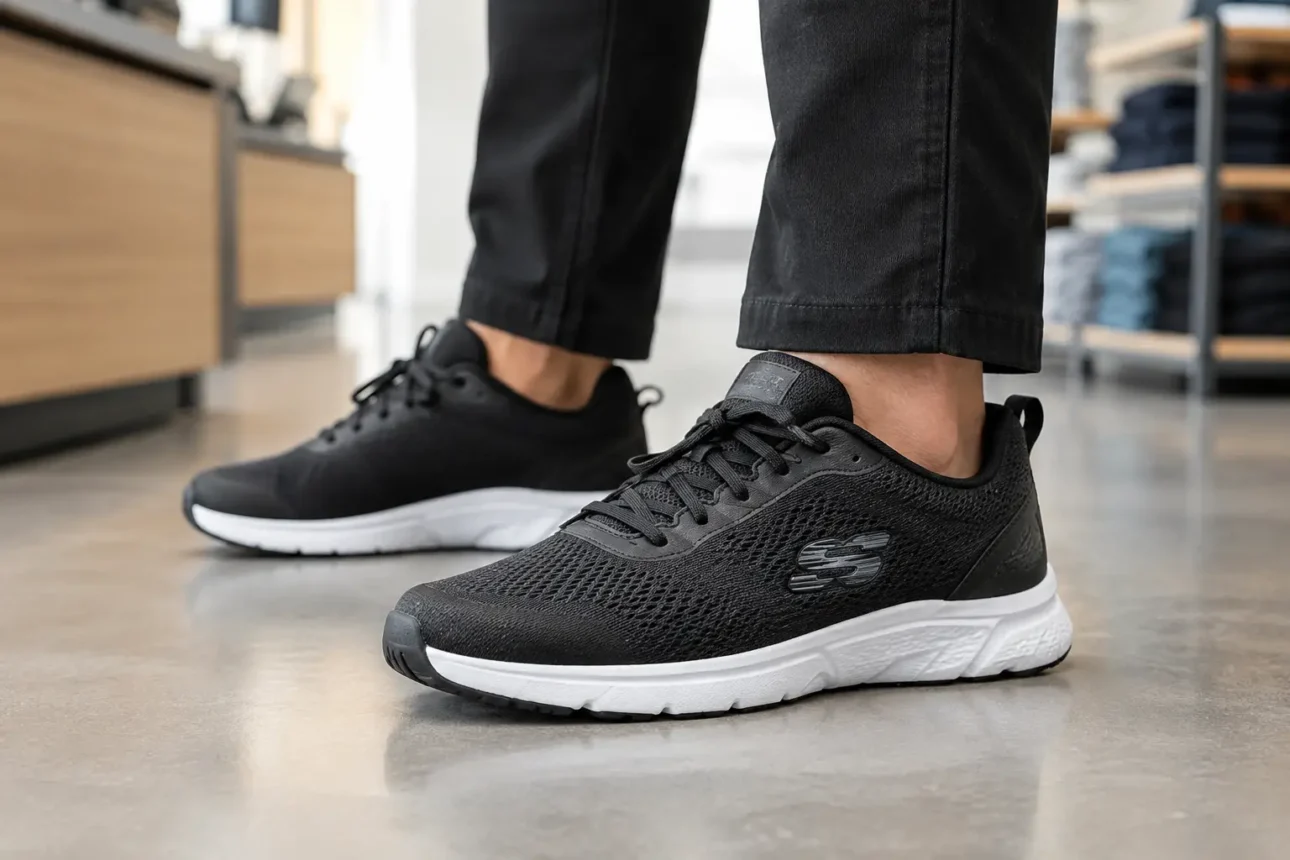
Your feet usually tell you the truth before your manager does. If your heels are throbbing by lunch, your toes feel crushed by 3pm, and the walk to your car is the worst part of the day, your shoes are not doing their job. Good retail work sneakers need to handle concrete floors, quick turns, stockroom runs, and hours of standing without feeling like bricks.
That does not mean you need the softest shoe on the wall. Super-soft foam can feel amazing for ten minutes, then get wobbly when you are moving fast around racks or carrying boxes. What matters is a stable base, enough cushion for your shift, a fit that does not rub, and an outsole that grips a slick floor when it has to.
Retail is not one kind of work. A cashier may stand mostly in one spot. A sales associate can cover miles between the register, fitting room, floor, and stockroom. A grocery or warehouse-adjacent role brings carts, spills, and heavier loads into the picture.
Still, the same basics show up every time: your shoe needs to keep its shape under your weight, give your foot room to spread, and avoid making you work harder to stay balanced. We would take a stable, moderately cushioned sneaker over a fashionable flat sneaker for an eight-hour shift every single time.
The upper matters too. A light mesh shoe keeps air moving, which is great if your feet run hot. But a thin upper can get beat up fast if you are brushing against shelves, moving cartons, or working outdoors between tasks. A more structured mesh or synthetic upper is often the better middle ground. It is not as breezy, but it tends to last longer and holds your foot in place better.
Cushioning takes the edge off hard floors. That is the point. But tall, squishy midsoles are not automatically the best choice for work. If you are standing at a counter, a very soft shoe can make your calves and feet work to find a steady position. If you move quickly through a busy store, it can feel unstable on tight turns.
Look for cushioning that feels supportive rather than sink-in soft. Hoka Bondi models are a strong option for people who want plenty of protection from hard floors, especially if walking is part of the shift. They are not the lowest-profile shoes, though. If you need to move quickly or prefer a more planted feel, the Hoka Arahi or an ASICS Gel-Kayano may make more sense.
New Balance walking and running styles are often solid here because many have a broad, steady platform. Brooks Ghost Max is another good call if your priority is cushion without a flimsy feel. These are not shoes you buy because they look tiny on your foot. You buy them because, at 5pm, they are still comfortable enough to finish the job.
A shoe can be soft and still be stable, but you need to look at its shape. A wider base under the heel and forefoot generally feels more secure. So does a heel counter that does not collapse when you press it. You do not need a rigid boot, but you do want some structure back there.
This matters even more if you tend to roll inward, stand with your weight on one side, or feel your ankles getting tired late in a shift. A stability-focused shoe such as the ASICS Gel-Kayano or Hoka Arahi can feel more controlled than a neutral running shoe. That does not mean everyone needs one. If your current neutral sneakers feel fine and wear evenly, do not overcorrect just because a stability label sounds serious.
Start with how you actually spend your day, not what looks best with your uniform. If you stand in a small area most of the time, prioritize a cushioned platform and a roomy toe box. If you walk the floor all day, go for a lighter shoe with a secure heel and a sole that bends naturally through the forefoot. If you handle stock, carts, or frequent stairs, choose a shoe with a firmer base and tougher upper.
Then think about your work dress code. Black, gray, white, and clean neutral colorways usually slide under the radar. A black ASICS, Brooks, or New Balance runner can give you real comfort without looking like you showed up for a marathon. On the other hand, some lifestyle pairs look sharp but are a bad deal for long shifts. Adidas Gazelle and Puma Speedcat have style, no question. Their flatter soles are fine for casual wear, short errands, or a low-step job. For hours on concrete, we would skip them.
Nike Shox are another case where the look is doing a lot of the work. Some people like their distinct feel, but the platform is not our first choice for all-day retail work. You can get steadier cushioning and better value from a shoe designed around walking or running comfort.
The wrong size will ruin a good sneaker. Your toes should not touch the front when you are standing. You should have roughly a thumb’s width of space ahead of your longest toe, though your personal fit can vary. Your heel should feel held without sliding up and down, and the middle of the shoe should feel snug but not squeezed.
Try shoes later in the day if you can. Feet often swell after being active, and a pair that feels fine at breakfast can feel tight by closing time. Wear the socks you normally work in. Thick socks can change the fit more than people expect.
If the shoe feels narrow straight out of the box, do not convince yourself it will magically become roomy. Some materials relax a little, but the sole shape will not change. Look for wide sizing when it is available, especially if you are getting pressure around your little toe or numbness across the forefoot.
Not every sneaker is slip-resistant. This gets missed because many running shoes have rubber sections on the bottom and feel grippy on dry pavement. That is not the same as being built for greasy, wet, or polished indoor floors.
If spills are common at your job, check your workplace requirement first. You may need a certified slip-resistant work shoe rather than a standard sneaker. Do not gamble on this part. A great running shoe can still slide on a wet tile floor.
For dry retail floors, look for a rubber outsole with visible traction and enough coverage under the heel and forefoot. Exposed foam is lighter, but it can wear down faster if you walk a lot on rough pavement during breaks or commutes. Deeper rubber coverage usually means a longer-lasting work pair.
If you want soft cushioning for lots of standing, start with Hoka Bondi or Brooks Ghost Max. Both are built around impact protection, and both make sense when hard floors leave your legs feeling cooked. The trade-off is a bigger, more cushioned ride that may not suit someone who wants quick, low-to-the-ground movement.
If you want support and a more guided feel, look at ASICS Gel-Kayano or Hoka Arahi. These are better bets for people who feel tired through the arch or heel after standing and walking all day. They are not a cure for pain, and they will not fit every foot, but the added structure can be worth it.
If you want a balanced daily shoe, New Balance and Brooks neutral trainers are hard to ignore. They tend to be easy to wear, easy to style with a simple uniform, and less specialized than a heavy stability model. That makes them a smart choice if you work retail but also want one pair for walking, errands, and weekend use.
If your shift is lighter and style matters just as much, Adidas Gazelle, Puma Speedcat, and similar low-profile pairs can work. We are not calling them bad shoes. We are saying they are not the shoe we would choose for eight hours on concrete. There is a difference.
Rotating two pairs is the easiest move if you work five or more days a week. Foam needs time to rebound, and damp shoes need time to dry. You do not need two expensive pairs. One supportive work pair and one backup can keep both in better shape than wearing the same sneaker into the ground every day.
Replace your shoes when the midsole feels flat, the outsole is worn smooth, or you notice new aches that were not there before. Do not judge only by the upper. A sneaker can still look clean while the part doing the real work has packed down.
We like a good-looking sneaker as much as anyone. But for a retail shift, the right pair is the one you stop thinking about halfway through the day. Start there. Your feet have enough to deal with.