Cart
No products in the cart.
Your feet do not care how clean a sneaker looks at 8 a.m. They care about how they feel at 5 p.m., after hard floors, stairs, errands, and standing around. That is where smart flat foot sneaker picks earn their place. We are not here to tell you every flat-footed person needs the same shoe. You do not. But if your feet roll inward, feel tired fast, or leave your knees and ankles sore after a normal day, a little structure can make a real difference.
The wrong move is buying the shoe with the biggest-looking arch and hoping for the best. Too much arch pressure can feel just as bad as no support at all. What you want is a stable base, a secure heel, enough room for your foot to spread out, and cushioning that does not turn squishy and unstable after a few hours.
Flat feet can mean a few different things. Some people have flexible feet that flatten when they stand. Some have low arches but no pain at all. Others notice their shoes collapsing more on the inside, especially once they get tired. A sneaker cannot diagnose any of that, and it will not fix an injury. But the right pair can feel more controlled underfoot.
We usually look for a shoe with a firm heel counter, meaning the back of the shoe does not fold over like a slipper when you squeeze it. A wider platform helps too. It gives your foot more surface to land on instead of letting it tip inward. Shoes labeled stability or support are often a good starting point, but the label alone is not enough.
Try not to confuse soft with supportive. A shoe can feel amazing for five minutes in a store, then feel loose and tiring after a long shift. For flat feet, controlled cushioning tends to beat a tall, marshmallow-like midsole that lets your foot wander around.
These are the models we would start with. Each has a different feel, because a warehouse shift, a 10-mile walk, and an easy jog are not the same job.
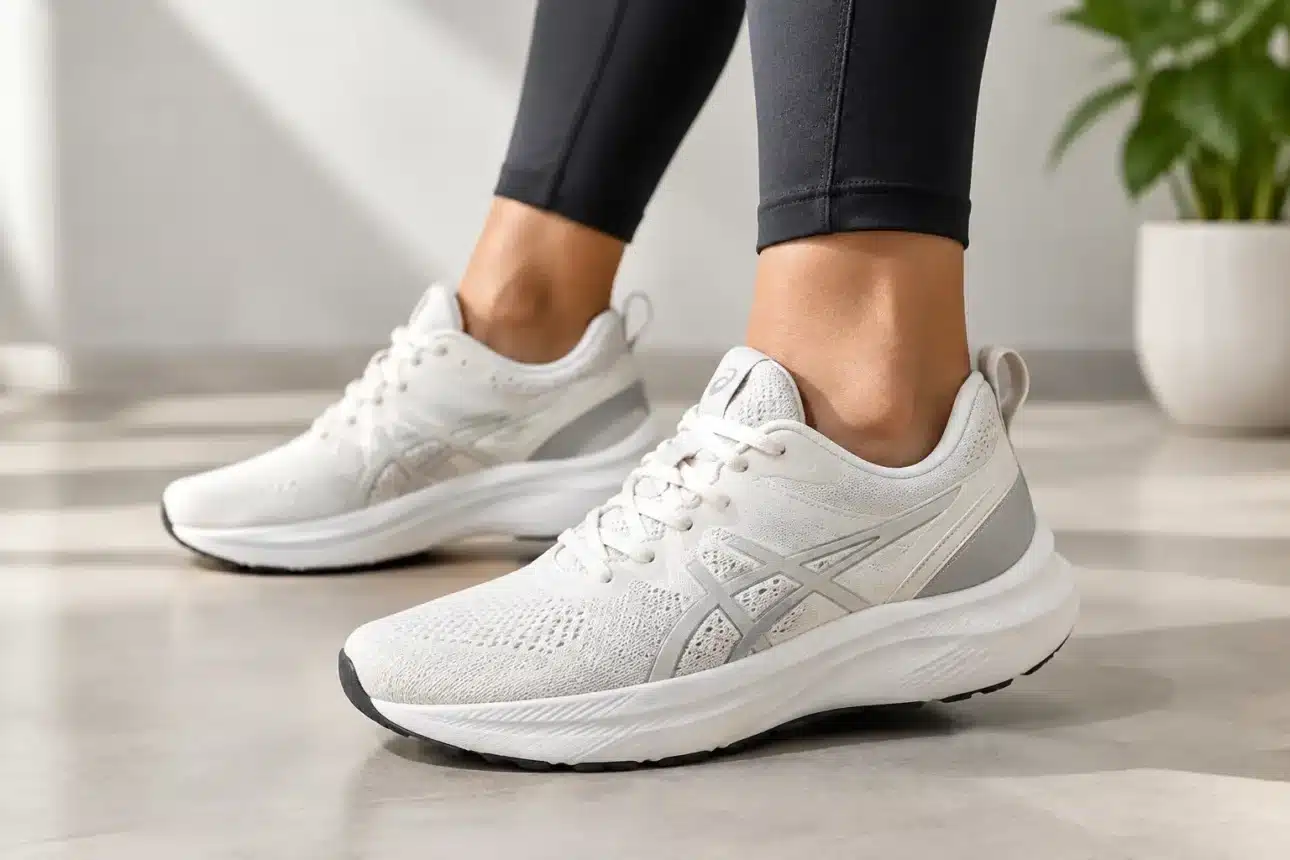
The Gel-Kayano is the easy recommendation if you want a supportive running shoe that also works for long days on your feet. It has enough cushioning for pavement and enough structure to keep the ride from feeling sloppy. The upper is usually secure without being overly stiff, which matters when your feet swell later in the day.
We like the Kayano for walkers, casual runners, and anyone who needs one shoe to cover a lot of ground. It is not the lightest option, and it does not look like a sleek low-profile lifestyle sneaker. That is the trade-off. It is built for comfort over showing off.
The Hoka Arahi is for people who want support without a heavy, blocky shoe. It has a lighter feel than many classic stability models and a rocker-shaped sole that can make walking feel smoother, especially if your feet get stiff by the end of the day.
The catch is fit. Hoka can feel narrow through the midfoot for some people, even when the length is right. If you have flat, wide feet, do not force it because you like the look or the soft ride. Check for a wide version or move on. A supportive shoe that squeezes your foot is not a supportive shoe.
The Brooks Adrenaline GTS is not flashy. That is part of why we rate it. It is a dependable daily sneaker with a stable feel and side support that helps guide your stride without putting a hard lump under your arch.
If you stand for work, walk a lot, or run a few times a week without chasing race times, this is a solid pick. It feels more traditional than the Arahi, with a more grounded ride and a familiar shape. People who hate overly soft shoes often get along well with it.
The New Balance 860 makes sense if your feet need room. New Balance is one of the better places to look when standard-width sneakers feel cramped, because many versions come in multiple widths. That is not a small detail. If the front of your shoe is too narrow, your foot cannot sit naturally, and every support feature becomes less useful.
The 860 is stable, cushioned, and practical. It is not the shoe we would buy for a fashion-first outfit, but it is a strong option for long shifts and steady miles. If you wear orthotics, its secure heel and roomy fit can also make it easier to get the combination right.
The Nike Structure is worth a look if you prefer Nike’s fit and want a running-inspired sneaker with more guidance than a neutral model. It has a firmer, more controlled ride than plush lifestyle shoes, and it works well for easy runs and everyday walking.
We would not pick it blindly if you have wide feet. Nike often runs more streamlined than New Balance or Brooks. But for a medium-width foot that wants support without a bulky appearance, the Structure is a clean option.
The On Cloudrunner is a good middle ground for someone who wants a sneaker that does not scream running shoe. It is light, tidy-looking, and more structured than On’s more casual models. For commuting, errands, and shorter walks, it can be a comfortable choice.
Still, we would take the Kayano, Adrenaline, or 860 over it for a demanding eight-hour standing shift or high-mileage walking. The Cloudrunner looks sharp and feels quick, but it is not our first choice when maximum stability is the priority.
Having flat feet does not automatically mean you need a stability sneaker. If you have low arches but no inward collapse, no recurring soreness, and you simply want softer cushioning, a neutral shoe with a broad base may feel better.
The Hoka Bondi is a good example. It is deeply cushioned and popular with people who walk or stand all day. Its wide platform gives it more stability than many soft shoes, even though it is not a traditional support model. We like it for people who want impact protection and do not enjoy a firmer stability ride.
But high-stack cushioning is not for everyone. Some people feel perched up on it, especially on uneven sidewalks or when turning quickly. If that sounds familiar, stay closer to the ground with something like the Brooks Adrenaline or New Balance 860.
Some sneakers look great but wear terribly when your feet need support. Flat, low-profile lifestyle models like the Adidas Gazelle and Puma Speedcat have their place. They look good with jeans, and we are not pretending every outing requires a running shoe.
But if you are working on concrete, walking 10,000 steps, or already dealing with sore feet, skip them for the full day. Their thin soles and low structure ask more from your feet than most people realize. Save them for dinner, casual plans, or days when walking is not the main event.
The same goes for overly soft neutral shoes with narrow bases. If your heel feels like it is leaning over the edge of the midsole, do not talk yourself into them. That feeling rarely improves after the break-in period.
Fit changes the answer more than brand loyalty does. Try sneakers later in the day, when your feet are closer to their normal working size. Wear the socks you actually use. Walk around long enough to notice whether your heel stays put and whether your toes have room to spread.
Your heel should feel held, not pinched. Your toes need about a thumb’s width of room in front. Pay attention to the middle of your foot too. If a shoe presses sharply into your arch, it is probably not going to become your favorite after 40 hours of wear.
If you use custom orthotics or have ongoing pain, swelling, numbness, or a past injury, get advice from a qualified clinician before relying on a new sneaker alone. Shoes can help with comfort and stability, but they are not medical treatment.
If you want one straightforward answer, start with the ASICS Gel-Kayano, Brooks Adrenaline GTS, or New Balance 860. They are the safest bets when you need support for real daily use. Choose the Hoka Arahi if you want a lighter, rocker-style ride, the Bondi if cushioning is your main concern, and the Nike Structure if you want a more streamlined running look.
At The Sneaker Base, we would rather put you in the shoe that still feels good after dinner than the one that only looks right in the mirror. Your feet do enough work. Buy them a sneaker that does some of it back.