Cart
No products in the cart.
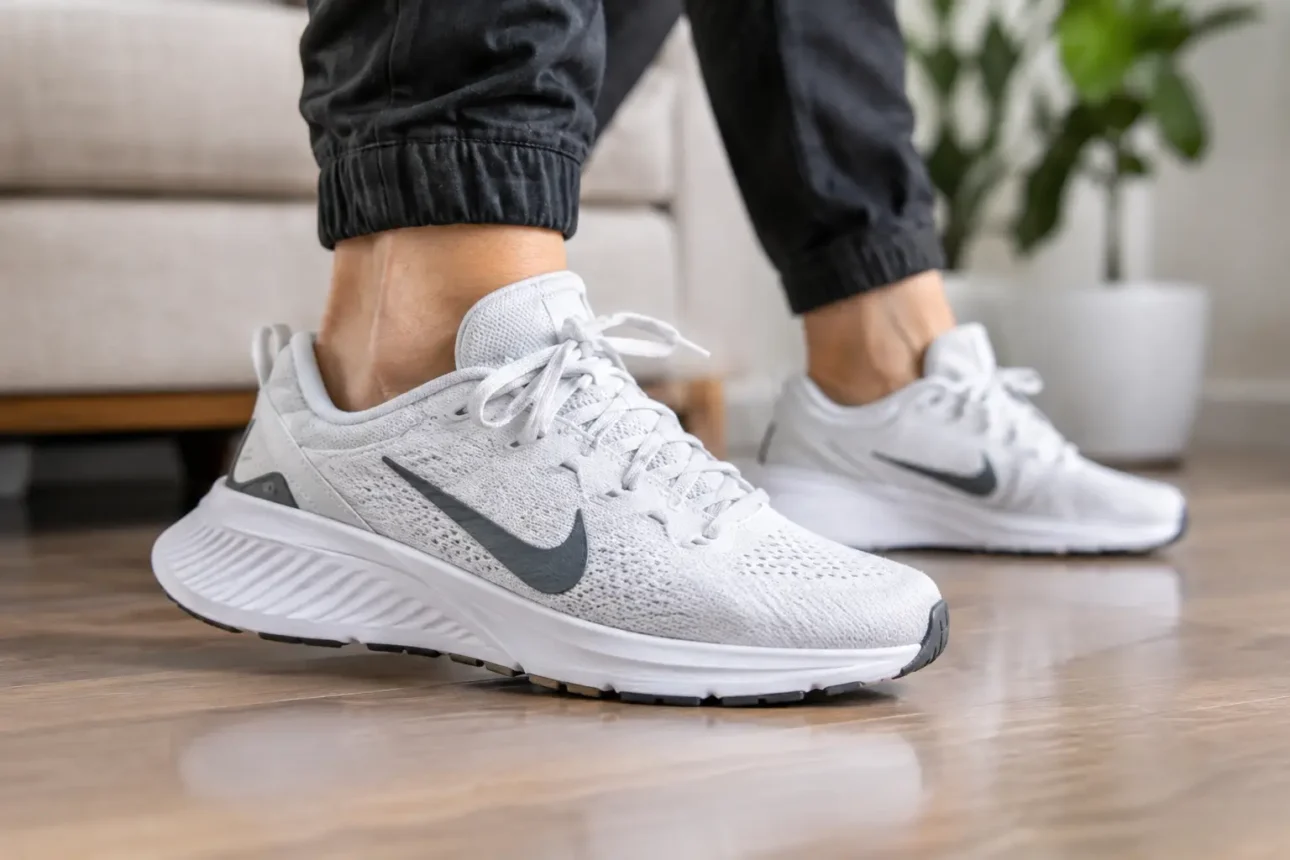
You walk into a store, school hallway, office, or kitchen and suddenly every step announces itself. Why do sneakers squeak indoors when they felt totally normal outside? Usually, it is not a sign that your shoes are bad. It is the rubber outsole meeting a smooth floor in exactly the wrong way.
That said, a squeak can also come from moisture, an insole rubbing inside the shoe, or a sole that is starting to come loose. The trick is figuring out which noise you have before you start throwing powders, sprays, or random internet fixes at a pair you actually like.
Most indoor squeaks happen because of friction. Your outsole grips a hard, smooth surface, then briefly sticks and releases as you shift your weight. That fast grab-and-release movement creates the high-pitched sound.
Rubber soles are made to grip. On concrete, asphalt, dirt, and rough sidewalks, the texture breaks up that contact. Polished tile, sealed wood, laminate, vinyl, and gym floors give the rubber a broad, even surface instead. A soft, grippy outsole can sound loud on those floors even when it performs exactly as it should.
This is why a new pair may squeak more than an older pair. Fresh rubber can be tackier and cleaner. Once the outsole picks up a little normal wear, the noise often fades. We would not panic over a squeak from a new pair that only happens on supermarket tile.
It also depends on the shoe. Running and walking shoes often use more rubber and softer foam than flat casual sneakers. That is good news for traction and comfort when you are on your feet all day. It can be noisy on a shiny floor. A flat, hard sole may stay quiet, but we would not choose one just to avoid a little squeak if your feet are already tired by 5 p.m.
Before trying a fix, do a quick test somewhere quiet. Take the shoes off and bend each one gently. Press the outsole with your thumbs. Walk slowly, then shift side to side. You are trying to separate an outsole squeak from a noise inside the shoe.
If the sound happens only when the outsole touches tile or wood, it is almost certainly surface friction. If it squeaks when you bend the shoe in your hands, the upper, midsole, or a glued section could be rubbing. If it squeaks only when your foot is inside, look at the insole and moisture first.
A simple clue: outsole squeaks usually stop on carpet or rough pavement. Internal squeaks tend to follow you everywhere.
This is the common one. Clean rubber on a clean floor can make a surprisingly loud noise. It is especially common with basketball-inspired sneakers, court shoes, and many cushioned walking shoes.
Start by wiping the outsole with a damp cloth and drying it fully. Sounds backward, but dust and sticky residue can make rubber behave inconsistently. Check the tread too. Small pebbles, dried mud, or a strip of tape stuck in a groove can create their own weird sound.
If the shoe is brand new, wear it normally for a week or two. Walking outside on safe, dry pavement puts a little texture on the bottom without wrecking the sole. Do not attack the outsole with sandpaper. You might quiet the shoe, but you can also reduce grip where you need it.
Wet outsoles squeak. So do damp insoles. Rain, spilled drinks, sweaty feet, and even a recently cleaned shoe can leave enough moisture behind to cause noise.
Let the pair air-dry at room temperature with the insoles removed. Loosen the laces and open the tongue so air can reach the toe box. Stuffing the shoes lightly with plain paper can help pull out moisture. Replace the paper if it feels damp.
Skip the radiator, clothes dryer, or hair dryer on high heat. Heat can dry out glue, warp foam, and make synthetic materials stiff. A squeak is annoying. A warped pair is worse.
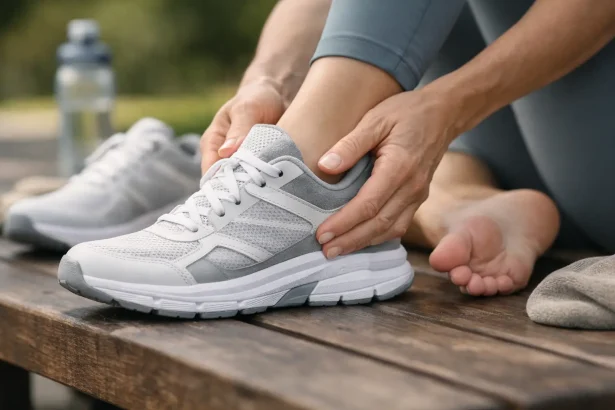
If every step squeaks but the outsole is quiet on carpet, pull out the insole. Moisture between the insole and the bottom of the shoe can create a rubbing sound, especially in shoes worn without socks or through a long, hot day.
Dry both parts completely, then put the insole back in flat. Make sure it is not curled up at the heel or folded near the toes. If the insole slides around, a small amount of foot powder underneath can reduce friction. Use very little. Too much powder clumps when damp and turns into another mess to deal with.
If the original insole is worn thin, warped, or keeps moving, replacing it can make the shoe feel better and stop the noise. Just do not buy the thickest insert you can find. A bulky insole can make a good-fitting sneaker feel tight across the top.
A squeak that comes from one exact spot, especially when you bend the shoe, deserves a closer look. Check around the toe, heel, and sides for gaps between the upper and sole. Look for a loose insole board, cracked foam, or a heel counter that flexes more on one shoe than the other.
Do not assume every squeak means the shoe is falling apart. Some foam midsoles make noise as they flex, and some uppers rub until they soften up. But if you can see the sole separating, or the squeak comes with a new wobble, stop wearing the pair for long walks or runs. That is not a noise issue anymore. It is a stability issue.
For a squeak caused by smooth indoor flooring, cleaning and drying the outsole is the sensible first move. Then give the shoe some normal outdoor wear. This solves more cases than people expect.
For a squeak inside the shoe, dry the pair fully and reseat the insole. A light dusting of foot powder beneath the insole can help when friction is the problem. If you use it, keep it away from the upper and use a small amount. White residue all over dark socks is not the look.
We would skip oils, lotions, silicone sprays, and household furniture polish. Yes, slippery products may silence rubber for a minute. They can also make the outsole less grippy. That is a bad trade when you are walking down wet stairs, crossing a slick lobby, or moving fast through a train station.
We would also skip heavy sanding. If the outsole is genuinely too sticky on one floor, normal wear will tone it down. Sanding can chew through shallow tread and make a shoe wear unevenly. It is the kind of fix that feels smart for ten minutes and looks bad later.
A squeak alone is rarely a reason to toss a pair. If the shoes are comfortable, stable, and the tread still has life, a little noise on gym flooring is just part of wearing rubber soles.
It is different when the noise comes with obvious wear. Watch for outsole rubber worn smooth in key spots, foam that feels crushed or lopsided, a heel that leans, or separation between the sole and upper. If your shoe suddenly feels less stable than it did last month, listen to that more than the squeak.
For people who stand all day or walk serious miles, the inside can wear out before the shoe looks rough from the outside. A sneaker may still look clean while the cushioning feels flat and the insole has stopped doing much. Looks are nice. How your feet feel at the end of the day matters more.
You cannot control every floor. Some polished surfaces will make almost any rubber-soled sneaker chirp. That does not mean you bought the wrong pair.
Keep the outsoles clean, dry wet shoes properly, and check that the insole sits flat. If the sound is new, persistent, and coming from a loose sole or unstable heel, do not ignore it. Otherwise, wear the shoes that feel right. A brief squeak in a grocery store is a lot less annoying than spending all day in sneakers that hurt your feet.