Cart
No products in the cart.
Flat shoes can feel fine for 20 minutes. Then your feet start talking. By mid-afternoon, your arches are tired, your heels feel beat up, and your knees might join the complaint. If you’re asking which shoes have arch support, you’re really asking which pairs still feel good when the day drags on. That’s the question that matters.
The short answer is this: not every cushioned shoe has real arch support, and not every firm shoe feels good. A lot of people mix those up. Soft underfoot foam can feel nice at first step, but if the midfoot collapses or the shape is too flat, it won’t do much for tired arches after hours of walking or standing.
Usually, the best arch-support shoes come from running, walking, and stability categories. That’s where brands put more focus on midfoot structure, heel stability, and foot guidance. Lifestyle sneakers can look better with jeans, sure, but many of them are flat, flexible, and built more for style than support.
That doesn’t mean every running shoe is right. Some are too soft. Some are too narrow. Some feel supportive for one foot shape and wrong for another. Arch support is not one thing. It depends on whether you need a shoe that feels gently guided, naturally shaped, or just less flat than the pair you’re replacing.
If you want the safe starting point, look at stability runners and max-cushion walking shoes first. That’s where we usually tell people to begin.
A shoe with arch support should feel stable through the middle of your foot. Not like a hard lump jamming into your sole. Not like a flat slab either. The right one usually feels like your foot is sitting on the shoe instead of sinking over the edges of it.
What matters most is the full setup. The arch area matters, but so do the heel base, the shape of the insole, the firmness of the midsole, and how much the shoe twists. A shoe can have a nice insole and still feel sloppy if the platform is unstable.
We like shoes that hold their shape when you press and twist them lightly. Not brick-stiff. Just not flimsy. If you can fold a shoe in half with almost no effort, don’t expect much support from it.
This is the easiest category to recommend. Stability shoes are built to guide the foot a bit more and keep the ride from feeling loose. They tend to work well for people who stand all day, walk a lot, or feel worn down in flat sneakers.
Models like the Asics Gel Kayano, Hoka Arahi, and some Brooks stability options are popular for a reason. They don’t just feel padded. They feel organized underfoot. That’s a big difference when your feet are tired.
The trade-off is style. Some stability shoes are not exactly subtle. A few look bulky. If you care most about comfort, that’s fine. If you want something sleek for everyday wear, you’ll need to be pickier.
A lot of people with sore arches do well in shoes with a tall, stable foam platform. Hoka Bondi is the obvious example. Brooks Ghost Max also fits here. These shoes are not trying to be fast. They’re trying to keep you comfortable for long hours.
That said, max cushion only works if the base is stable. Some very soft shoes feel amazing for ten minutes, then start feeling wobbly. If your arches are already stressed, too much mush can make things worse. We usually prefer cushion with some structure, not cushion for the sake of it.
If you’re not running, you do not need a race-day shoe. You need something that wears well from morning to night. Good walking shoes usually have a broader base, a smoother ride, and less of that tippy feeling you get from softer performance shoes.
New Balance is strong here. So are Brooks and certain Asics models. These tend to be less flashy, more practical, and honestly better for daily life than trend-first pairs.
This is where people get burned. A lot of everyday sneakers look clean but have almost no support. Thin soles, flat footbeds, no real midfoot structure. Fine for casual wear. Not great if you’re doing 10,000 steps or working retail.
Some lifestyle shoes from running brands borrow enough from their performance lines to feel better than standard fashion sneakers. But if arch support is the goal, we would skip most flat classics. They have their place. That place is not an eight-hour shift on hard floors.
Asics is one of the safer bets. The Gel Kayano line has been around forever because it works for a lot of people who want support without a harsh ride. It leans structured, and we like that for long days.
Hoka is strong if you want more cushion underfoot. The Bondi is a favorite for walking and all-day wear. The Arahi gives you more guidance. Some people love the rocker feel. Others need a day or two to get used to it.
Brooks is easy to recommend because the fit tends to be straightforward and the comfort is dependable. Ghost Max works well for people who want cushion and stability without too much drama. If you like a predictable shoe, Brooks usually makes sense.
New Balance is underrated for this. Not every model, obviously, but the brand does a good job with fit options and practical support. If you have wider feet, it’s often one of the first places we’d look.
On is more mixed. Some people like the firmer, structured ride. Others find certain models too stiff or not supportive in the way they expected. Adidas, Nike, and Puma all make comfortable shoes, but arch support varies a lot by model. You have to choose carefully. A good-looking sneaker from one of those brands might still be flatter than you want.
Start with the midsole shape. If the shoe narrows too much through the middle or looks flat from heel to toe, that’s not a great sign. Check the heel too. A solid, secure heel usually helps the whole shoe feel more stable.
Then look at the outsole and base width. A wider platform usually gives you a steadier ride. That’s especially useful if you stand for hours or walk on hard surfaces. Narrow, tall shoes can feel unstable even if the foam is expensive.
Finally, trust what happens after more than a few steps. First-step comfort lies all the time. What actually matters is how your feet feel at 5 p.m. If the arch area feels supported but not forced, and the rest of the shoe stays stable, you’re in the right zone.
If someone asked us for a simple shortlist, we’d start with Asics Gel Kayano for reliable support, Hoka Bondi for cushioned all-day wear, Hoka Arahi for a steadier ride, Brooks Ghost Max for balanced comfort, and supportive New Balance runners or walkers for fit options.
We would not start with flat retro sneakers, super-flexible casual shoes, or ultra-soft runners with no structure. They might look better on the shelf. That doesn’t help when your feet are done by lunch.
Sometimes the problem isn’t just support. It can be sizing, width, or wear pattern. If the shoe is too narrow, your foot won’t sit right no matter how supportive the midsole is. If it’s too long or too loose in the heel, you’ll slide around and lose the benefit.
And if your current shoes are badly worn, even a model that started supportive can feel dead. Midsoles break down. Insoles flatten out. Outsoles wear unevenly. People keep blaming their feet when the shoe gave up months ago.
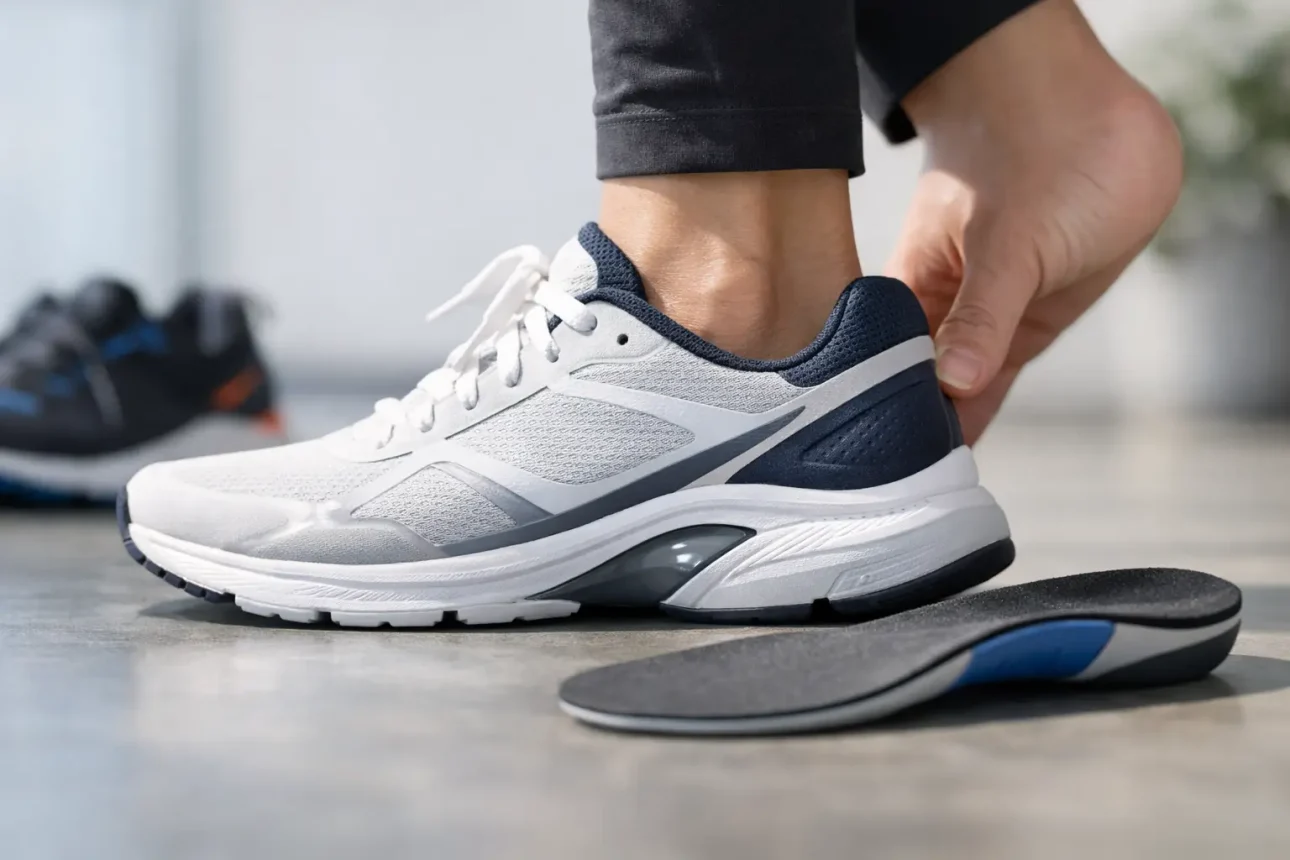
If you already use orthotics or insoles, you also need enough room inside the shoe. Some supportive shoes play well with inserts. Others get cramped fast. That’s another reason we usually lean toward practical running or walking models over slim casual pairs.
The ones built for support first and style second. That’s the honest answer. Stability runners, cushioned walkers, and a few structured everyday sneakers are where the smart money goes. Asics Gel Kayano, Hoka Bondi, Hoka Arahi, Brooks Ghost Max, and solid New Balance options are the kind of shoes we trust more than flat fashion pairs.
Not every foot wants the same feel. Some people want firmer support. Some want cushion with guidance. But if you’re on your feet all day, skip the flat ones. Your arches usually know the difference long before the mirror does.
If you’re stuck between a shoe that looks better and one that feels better, we know our pick. Go with the pair you’ll still like at the end of the day.