Cart
No products in the cart.
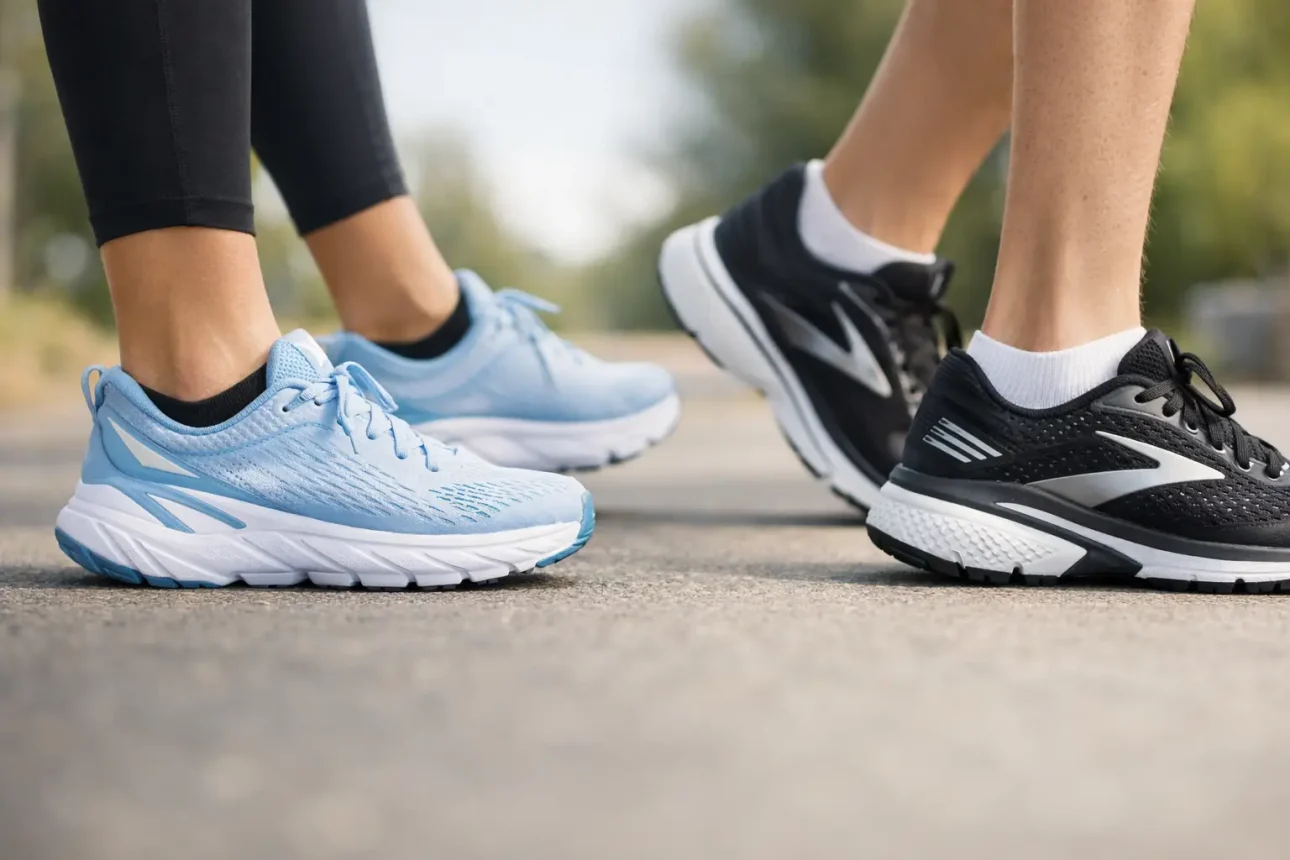
You feel it fast when a walking shoe is wrong. Your feet get hot, your knees start talking, and by mid-afternoon you’re already thinking about taking them off. That’s why hoka vs brooks walking is a real question, not just a brand debate. Both make solid shoes. They just feel very different on foot.
If you want the short version, Hoka usually wins on soft cushioning and that easy, rolling feel. Brooks usually wins on fit security, balance, and a more familiar ride. Neither is better for everyone. It depends on how you walk, how long you’re on your feet, and whether you want plush or steady.
Hoka tends to feel bigger underfoot. More foam. More stack. More of that protected feeling between your foot and the ground. For some people, that is exactly what they want after eight hours standing or a long day hitting 10,000 steps without trying. For others, it can feel a little too tall or a little too soft, especially if they like to feel planted.
Brooks usually feels more traditional, and we mean that in a good way. The platform often feels more stable, the upper tends to hold the foot more securely, and the step-in feel is less dramatic. If Hoka feels like a cushioned cruiser, Brooks often feels like a dependable daily driver.
That difference matters more than any logo on the side.
Hoka is the brand we point people toward when they say, “I want my feet to stop getting beat up.” The cushioning is the headline here. Models like the Bondi and Arahi have that thick, protective setup that helps take the edge off hard sidewalks and long shifts.
The other thing Hoka does well is the rocker shape. That curved sole helps move you forward without making each step feel flat and dead. If your walks are long, or if you’re someone who shuffles a bit when tired, that rolling motion can feel really good by the end of the day.
But let’s be honest about the trade-off. Some Hokas feel bulky. Not always heavy on the scale, but bulky in the way they sit under your foot. If you like a lower, more connected feel, Hoka can seem overbuilt. And if you’ve got narrower feet, the fit can be hit or miss depending on the model.
Brooks is strong when you want comfort without feeling like you’re standing on a platform. Shoes like the Ghost Max and Ghost line tend to feel stable, smooth, and easy to trust right away. You lace them up, walk out the door, and there’s not much adjustment period.
We also think Brooks often gets the upper right. The fit can feel more dialed in through the midfoot and heel, which matters if your foot slides around in softer shoes. That secure feeling is easy to overlook when you first try shoes on. After a full day, it matters a lot.
Brooks also tends to work well for people who want cushion but not sink. That’s a big difference. Soft isn’t always better. If a shoe compresses too much, some walkers end up feeling less stable, especially on corners, uneven sidewalks, or long indoor shifts where you’re constantly turning.
When people compare hoka vs brooks walking shoes, they often get stuck on brand reputation. We think the smarter move is to ask one question first: do you want softer cushion or steadier support?
If your feet feel beat up on hard surfaces and you want a more forgiving ride, Hoka has the edge. If your issue is that you feel wobbly, sloppy, or tired from fighting your shoes all day, Brooks may make more sense.
This is where model choice matters too. Not every Hoka is super soft, and not every Brooks is firm. But as a brand feel, Hoka leans plush and rolling. Brooks leans balanced and secure.
A lot of shoppers want the answer to be simple. Brand A is best. Brand B is second. That’s not how this works.
Fit can ruin a good shoe fast. Hoka’s shape works great for some feet, especially if you like room up front or want that less restrictive feel in certain models. For other people, Brooks just locks in better from the first try. Heel hold, midfoot wrap, toe box shape – these things decide whether a shoe feels great for 20 minutes or great for 10 miles.
If you have a wider foot, both brands have options, but you still need to pay attention to the model. One wide shoe can feel truly roomy. Another can just feel slightly less tight. We’ve seen people assume a brand is wrong for them when the real issue was choosing the wrong model in that brand.
If your day is more standing than walking, this gets a little more specific.
For pure underfoot protection on hard floors, Hoka is hard to ignore. The Bondi in particular has a reputation for a reason. It gives you a lot of foam between you and the ground, and for workers on concrete or tile, that can feel like a relief.
Still, some people standing all day actually do better in Brooks. Why? Because too much softness can feel tiring when you’re mostly stationary. If you need to feel centered and steady at work, Brooks may hold up better over a full shift. That’s especially true if you’re moving side to side, turning often, or carrying things.
So if you stand in one place a lot, don’t automatically chase the softest shoe. Sometimes stable beats plush.
For long walks outside, we usually lean Hoka if comfort is your top priority. That rolling ride helps on repetitive miles, and the extra cushioning can make sidewalks feel less harsh. If your walks are about zoning out, moving easy, and not thinking about your shoes, Hoka often nails that.
We lean Brooks for people who walk fast, want more control, or don’t like the feeling of a tall sole. Brooks can feel more natural and less dramatic. Not flashy. Just solid. That’s a compliment.
If you walk on mixed surfaces, like pavement, paths, and the occasional uneven patch, Brooks may feel more grounded. Hoka still works there, but some walkers don’t love the extra height when the surface gets less predictable.
We’re not going to pretend a shoe solves everything. But yes, the right one can make your day a lot easier.
If your feet feel slammed by the end of the day, Hoka often gives more immediate relief because of the softer, thicker cushioning. If your legs feel tired because you’re constantly adjusting your footing, Brooks may actually feel better because it keeps things more controlled.
That’s why two people with the same complaint can end up liking different shoes. One wants impact protection. The other wants less movement. Both matter.
Let’s not act like looks don’t count. You may wear these to work, on errands, on trips, or every day for months. If you hate how they look, you’ll notice.
Hoka can look chunky. Sometimes that works. Sometimes it doesn’t. Brooks usually plays it safer visually. Cleaner lines. Less of that oversized foam look. If you want a walking shoe that blends in easier with normal everyday clothes, Brooks often has the simpler shape.
That said, some people like the Hoka look because it clearly reads as comfort-first. Fair enough. Wear what you’ll actually keep on.
If we had to give one simple answer, here it is. Choose Hoka if your top concern is soft cushioning and long-walk comfort. Choose Brooks if your top concern is stable comfort and a more secure fit.
We wouldn’t call Hoka better across the board. We also wouldn’t call Brooks safer for everyone. Hoka can feel amazing when your body wants more protection. Brooks can feel better when your stride wants more control.
What actually matters is how your feet feel at 5 p.m., not what people say online. If you want that pillowy, rolling feel, go Hoka. If you want a shoe that feels planted, balanced, and easy to trust from day one, go Brooks.
And if you’re stuck between the two, we’d keep it simple. Softer? Hoka. Steadier? Brooks. That usually gets you closer to the right pair than any hype ever will.