Cart
No products in the cart.
Your feet start arguing with bad shoes long before they quit on you. Maybe your arches ache halfway through a shift. Maybe your knees feel rough after a neighborhood walk. Maybe your running shoes feel fine for a mile but weird for errands. When choosing running shoes or walking shoes, the label matters less than what you actually do in them.
We get why people grab whatever looks clean and call it a day. Plenty of sneakers can handle a short walk to the store. But if you run regularly, walk several miles, or stand for eight hours, the wrong kind of shoe can feel flat, unstable, or just tiring by 5 p.m. Here is the straight answer on what separates them and which one makes sense for you.
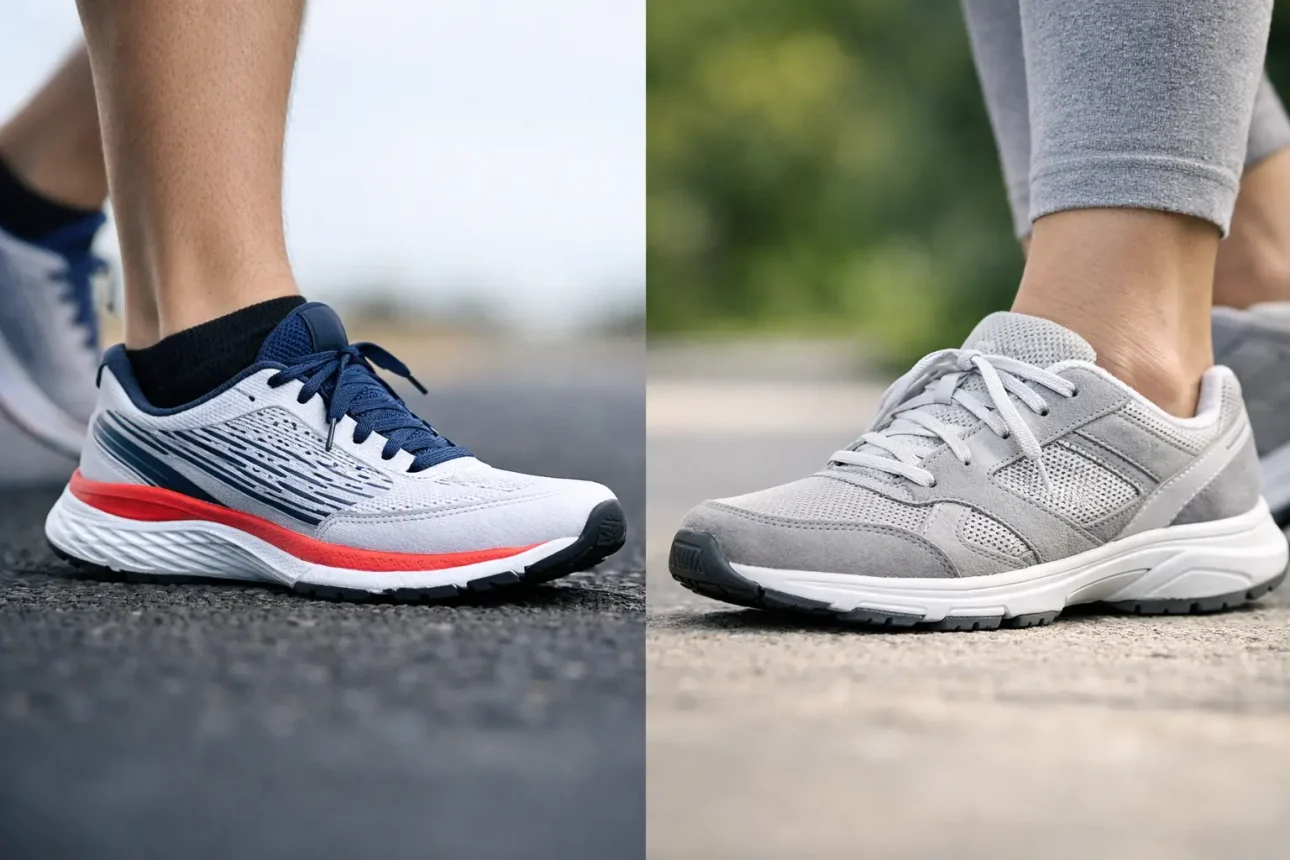
Running and walking put stress on your feet differently. Running creates a bigger impact every time you land. You are also moving faster, spending more time in the air, and usually landing toward the heel or midfoot before rolling forward. A running shoe is built to deal with that repeated impact while helping your foot move through a quicker stride.
Walking is more controlled. One foot stays on the ground at all times, and your heel rolls through to your toes in a steadier motion. A walking shoe usually focuses more on stable support, a smooth heel-to-toe roll, and comfort over long hours than on handling hard landings.
That does not mean running shoes are only for runners or that walking shoes are automatically better for walking. The categories overlap a lot now. A cushioned running shoe can be excellent for long walks and work shifts. A stiff, low-profile walking shoe can feel perfect for someone who hates squishy foam. The trick is matching the shoe to the job, not buying the name on the box.
A good running shoe usually has more shock absorption underfoot, especially at the heel and forefoot. That extra foam helps when you are hitting pavement over and over. Many also use a rocker-shaped sole that helps move you forward, plus a secure upper that keeps your foot from sliding around when your pace picks up.
If you run two or three times a week, start here. Do not try to make a flat lifestyle sneaker work for runs because it looks better with your outfit. It might look sharp, but a few miles in thin, stiff shoes is a fast way to learn what your calves and feet do not enjoy.
Running shoes also make sense if you walk fast, cover long distances, or need more cushioning for standing. Models like the Hoka Bondi, Brooks Ghost Max, or New Balance’s cushioned running options are popular for a reason. They have enough underfoot protection for people who are not chasing a race time but still want their legs to feel less beaten up afterward.
There is a trade-off. Some running shoes are tall and soft. That can feel great in a straight line but a little wobbly on uneven sidewalks, stairs, or quick turns. A super-soft shoe is not automatically the right shoe. If you feel like you are balancing on a mattress, go for a lower, more stable option.
Run regularly, mix jogging with walking, take long city walks, or want more impact protection on hard pavement. They are also a solid call for all-day standing if the fit is stable and the foam does not feel too soft under your heel.
Walking shoes tend to favor stability and predictable comfort. They are often less curved than running shoes, with a firmer base and a shape that supports the natural roll from heel to toe. That can be a better feeling for casual walkers, commuters, and anyone whose day involves a lot of standing, stopping, and starting.
A walking-focused shoe can also feel more grounded. That matters if you are moving around at work, carrying groceries, or spending time on uneven paths. You do not always need a giant stack of foam. Sometimes a steady platform and enough room for your toes will do more for your day than the softest shoe in the store.
If your walks are short and easy, comfort should beat technical features. Look for a flexible forefoot, a secure heel, and an upper that does not pinch across the top of your foot. You should not need a break-in period that lasts weeks. Shoes can soften up a little, but they should feel mostly right from the first try-on.
For people who want a cleaner sneaker look, walking and lifestyle models can be the better choice. Adidas Gazelles, Nike Shox, Puma Speedcats, and similar shoes have real style, but be honest about their role. They are fine for casual use. They are not our first pick for a 10-mile walking day or a long shift on concrete unless you already know your feet get along with them.
People often shop by pressing the midsole with a thumb. That tells you almost nothing. What matters is how the shoe feels after an hour, then after four. Soft foam can reduce the harsh feel of pavement, but too much softness may make your foot work harder to stay steady.
Think about your usual day. If you are walking a flat route, standing at a desk, or working retail, moderate cushioning with a stable base is often the sweet spot. If you run on roads or your legs feel hammered after longer walks, more cushioning can be worth it. If you need to feel the ground and hate bulky shoes, a firmer, lower shoe may feel better.
Support also gets misunderstood. You do not need a shoe that squeezes your foot into place. You need one that holds your heel securely and gives your foot a stable platform. If you notice your ankle rolling inward a lot, or if your current shoes wear down heavily on one side, a stability running shoe such as an Asics Gel-Kayano or Hoka Arahi may be worth trying. Still, support is personal. More is not always better.
We like a lot of brands, but no logo can fix a bad fit. Nike may work perfectly for your friend and feel narrow on you. New Balance may give you the toe room you have been missing. On shoes can feel light and quick, while Brooks often has the dependable, no-drama fit many walkers want. Try the shape, not the story.
Your toes need room to spread without hitting the front. Your heel should stay put when you walk. The middle of the shoe should feel snug but not tight. If you get numb toes, hot spots, or heel slip in the first few minutes, do not convince yourself it will magically improve.
Try shoes later in the day if you can. Feet commonly swell after hours of walking or standing, and a pair that feels roomy at breakfast can feel cramped by dinner. Wear the socks you normally use. If you use inserts or orthotics, bring them into the decision too. They take up space and can change how the shoe holds your heel.
Yes. For most people, a comfortable running shoe is completely fine for walking. In fact, it is often the better choice for long walks, travel days, and jobs where you stay on your feet. Just avoid picking a fast, stripped-back race shoe for daily use. Those are made to feel quick, not necessarily to feel relaxed for eight hours.
The opposite is less reliable. A walking shoe may work for a short, easy jog, but it is not the best move for regular running if it lacks cushioning, flex, or a secure fit. If you are starting a couch-to-5K plan, buy for the running you plan to do, even if you are walking most of the route at first.
Do not wait for holes. Foam loses its feel before the upper falls apart. If your shoes suddenly feel flat, your feet are more tired than usual, or the sole is worn unevenly, it may be time to rotate them out. Runners often track mileage, but walkers should pay attention to time on their feet too. A work shoe used five days a week can wear out faster than a running shoe used twice a week.
Keep one honest question in mind: what do your feet need on your longest, hardest day? Not on the walk from the car to the coffee shop. Not when the shoes are fresh out of the box. Pick the pair that still feels good when the day drags on. That is usually the pair worth wearing.