Cart
No products in the cart.

Your shoes can feel fine at 8 a.m. and completely wrong by 5 p.m. That is usually when support shows its real value. This walking shoe support guide cuts through the labels and tells you what to look for if you walk a lot, stand all day, or are just tired of ending the day with aching feet.
Support is not about buying the stiffest shoe or the thickest sole. It is about giving your foot a stable place to land, enough cushioning for your daily miles, and a fit that does not fight you. Get those three things right and walking feels a lot less like work.
Brands use words like support, stability, cushion, and motion control constantly. They are not all the same thing.
Cushioning is the soft material under your foot. It helps take the edge off hard sidewalks, concrete floors, and long days. More cushioning can feel good, especially if your heels get beat up after hours on your feet. But a shoe that is very soft without a stable base can feel wobbly. That is not ideal if you are carrying groceries, moving quickly at work, or walking on uneven pavement.
Stability is how well the shoe keeps your foot from rolling or shifting around as you walk. A wider base, firmer foam along the sides, and a secure heel can all help. You do not need a highly structured stability shoe just because your feet get tired. But if your old shoes lean to one side, your ankles feel shaky, or your knees complain after a long walk, some extra guidance is worth considering.
Arch support is the part people tend to overthink. A visible arch bump is not automatically better. If it presses hard into the middle of your foot, it can be annoying fast. The right amount of arch support feels present but not aggressive. It should help your foot feel settled, not like it is standing on a golf ball.
Forget the marketing for a minute. Think about where and how you actually walk.
If you spend most of the day on concrete at work, cushioning and a stable heel matter more than a light, speedy feel. A shoe such as the Hoka Bondi or Brooks Ghost Max makes sense for people who want a lot underfoot and do not mind a bigger look. They are not the sleekest shoes in every colorway. They are comfortable, though, and that matters more when you are eight hours into a shift.
If your walks are mostly neighborhood loops, errands, and travel days, look for a balanced daily shoe. You want enough foam to soften the pavement, a flexible forefoot that moves with you, and a sole that does not feel clunky. New Balance and Asics often do this well because many of their models combine a secure fit with cushioning that is not overly soft.
If you walk fast, cover long distances, or mix walking with easy runs, a running-inspired shoe can be a smart buy. Models like the Asics Gel-Kayano, Hoka Arahi, or certain On shoes can offer a more guided feel without turning your foot into a brick. The trade-off is that some stability-focused shoes feel firmer or more structured at first. Give them a few walks before deciding they are not for you.
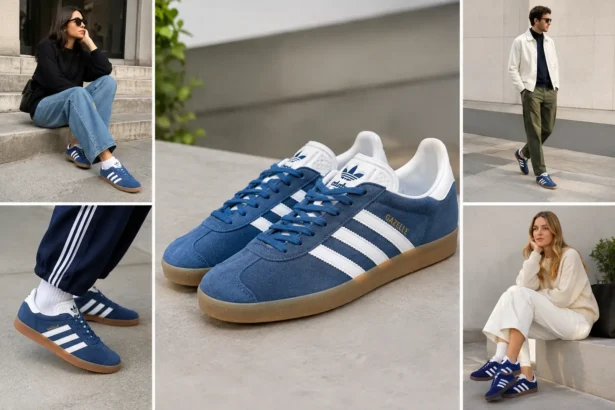
For casual wear with occasional walking, be honest with yourself. Adidas Gazelles, Nike Shox, and Puma Speedcats have style. Some people love them for a day out. But if you are walking 10,000 steps, working on your feet, or already dealing with soreness, skip the flat lifestyle pairs. A clean-looking sneaker is not much use when you are looking for somewhere to sit by lunchtime.
The heel is where many walking shoes either earn their place or let you down.
A supportive walking shoe should hold your heel without rubbing it raw. When you walk, your heel should not slide up and down or drift side to side. Put the shoe on, lace it properly, and walk around for a few minutes. If you can feel your heel moving, that fit is probably not going to improve after a week.
Look for a heel counter, which is the firmer cup around the back of the shoe. It does not need to be rock hard. It just needs to stop your heel from collapsing inward or wandering around. This is especially useful if you stand a lot or wear down the inside edge of your shoes quickly.
A padded collar can help too, but padding is not the whole story. Some shoes feel plush when you first try them on and still lack real hold. We would take a secure heel with sensible padding over a pillowy collar and a sloppy fit every time.
Support falls apart when the shoe is too narrow. Your toes need room to spread a little as you step. That does not mean buying a shoe that feels loose. It means the front of the shoe should match the shape of your foot instead of squeezing it into a pointed box.
Check for about a thumb’s width between your longest toe and the end of the shoe. Your longest toe may be your second toe, not your big toe. Walk downhill if you can. If your toes hit the front, size up or try a different model.
Width matters just as much as length. If the sides of your forefoot bulge over the midsole, if your little toe feels pinched, or if you loosen the laces all the way just to get comfortable, you likely need a wider option. Do not force a narrow shoe because it looks better on the shelf. A good fit looks better when you are not limping around in it.
Try shoes later in the day when possible. Feet often swell after walking, working, and being upright for hours. A pair that fits perfectly first thing in the morning can feel tight by dinner.
Thick foam has become common for a reason. It can make long walks feel easier on hard ground. But more foam is not always more support.
If a shoe feels like you are standing on a mattress, pay attention to how steady you feel. Very soft foam may compress unevenly, especially if you turn corners, walk on sloped sidewalks, or carry weight. Some people love that sink-in feeling. Others feel less secure in it.
The sweet spot for most walkers is cushioning with a broad, planted platform. Your foot should feel protected from the ground but still able to push off naturally. A shoe like the Brooks Ghost Max leans toward plush comfort. The Asics Gel-Kayano adds more structure. The Hoka Bondi brings a lot of foam but can feel bulky for people who prefer a lower, more connected ride.
None of those options is automatically the best. The best one is the pair you will actually wear for your real routine.
Maybe. Not everyone does.
A stability shoe is worth trying if your shoes consistently wear down on the inner edge, your ankles tend to roll inward, or you feel like your feet collapse when you are tired. It can also help if a neutral shoe feels loose or unstable after a few miles.
But do not buy a heavily supportive shoe just because someone said your arches are flat or your feet turn in a little. Many people walk comfortably in neutral shoes. Too much structure can feel restrictive, especially if your foot naturally moves well and you prefer a softer, freer feel.
Start with the sensation. If you put on a stability shoe and your foot feels centered, secure, and comfortable, that is promising. If it feels like the shoe is pushing you into a position that does not feel natural, move on. Shoes should support your stride, not argue with it.
Walking shoes often lose their useful support before the upper looks worn out. Foam compresses. Outsoles flatten. The heel starts leaning. Then you wonder why the same pair suddenly feels rough on your feet.
There is no exact mileage number because body weight, surfaces, and daily use all change the timeline. Instead, watch for clear signs: the midsole has deep creases, the outsole is smooth in key spots, the shoe rocks on a flat floor, or your feet feel noticeably more tired in that pair than they used to.
If you use one pair for work, walks, errands, and the gym, it will wear out faster. Rotating between two pairs can make practical sense, especially if you are on your feet every day. At The Sneaker Base, we would rather see you own two shoes that do their jobs than one trendy pair asked to do everything.
Before keeping a new pair, wear it indoors for 10 to 15 minutes with the socks you normally use. Stand still, walk, turn, and go up and down a few stairs if you can. Your heel should stay put, your toes should have room, and nothing should rub or press sharply.
Do not expect every shoe to feel broken-in from the first step. A little stiffness in the upper can settle. Pressure points, numb toes, heel slip, and a tight arch usually do not. Trust that early signal.
The right walking shoe is not always the coolest shoe in the room. It is the one you forget about while you are moving. That is the standard we would use: put it on, take the long route home, and see how your feet feel when the day is done.