Cart
No products in the cart.

A good sneaker outfit should not require a mirror debate every morning. That is the point of learning how to style lifestyle sneakers: you want shoes that look right with your clothes, feel good after a long day, and do not turn getting dressed into work.
Lifestyle sneakers are not just for gym clothes anymore. A clean pair can handle jeans, relaxed pants, shorts, casual dresses, and even some office outfits. But not every sneaker works with every look. A chunky running-inspired shoe can look solid with loose denim and terrible with tight dress pants. The details matter.
Before you think about color, look at the sole and the overall shape. This tells you what kind of clothes the shoe wants to be worn with.
Slim, low-profile sneakers like Adidas Gazelles, Puma Speedcats, and similar court-style pairs work best with cleaner outfits. Think straight-leg jeans, chinos, cuffed pants, shorts, simple tees, crewneck sweaters, and casual button-downs. They sit close to the ground and keep an outfit looking neat. If your wardrobe is mostly simple basics, this is the easiest lane.
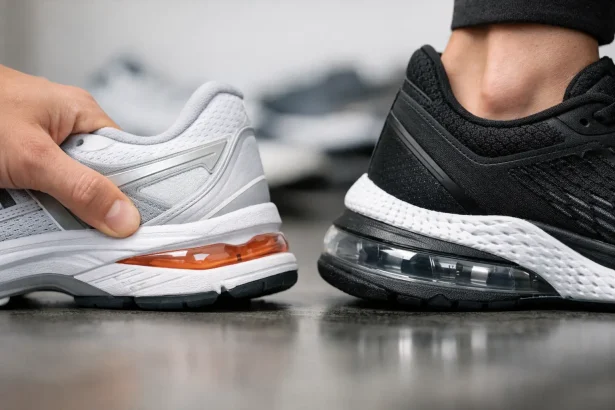
Chunkier shoes like New Balance runners, Nike Shox, Asics Gel-Kayano models, or Hoka Bondis bring more weight. We like these with relaxed jeans, cargos, wide-leg pants, hoodies, overshirts, and heavier outerwear. They make sense when the rest of the outfit has some room and texture. Put a big, cushioned shoe under skinny jeans and it can look like your feet showed up before the rest of you.
Retro running shoes sit in the middle. They have more shape than a flat court sneaker but are not as bulky as a max-cushion walking shoe. These are probably the most useful everyday option. Wear them with straight denim, joggers that are not too tight, work pants, shorts, or a casual skirt. They look casual without looking lazy.
Jeans are the safest place to start because almost every lifestyle sneaker works with them. The trick is matching the width of the jean to the size of the shoe.
Straight-leg jeans are the easy answer. They work with low-profile sneakers, retro runners, and chunkier comfort models. Let the hem rest lightly on the shoe or show a little ankle. You do not need a perfect crop. You just want the jeans to look intentional, not bunched up around the heel.
Relaxed and wide-leg jeans need a shoe with some presence. A padded New Balance pair, an Asics runner, or a Hoka-style sneaker balances the wider leg well. A very slim sneaker can get lost underneath. That does not mean it is wrong, but it tends to look less put together.
With slim jeans, keep the sneaker lower and cleaner. A simple white, black, gray, or gum-sole pair usually works. Skip the extra-tall sole and busy color blocking unless you are going for a throwback look on purpose.
If your jeans are blue, start with white, gray, cream, black, navy, or a sneaker that picks up one color from your top layer. You do not need to match shoes to your shirt exactly. In fact, that can look a little forced. Repeating one small color is enough.
Sneakers already bring personality, especially if they have mesh panels, visible cushioning, bright accents, or a bulky sole. Give them some space. If the shoes are loud, make the clothes quieter. If the outfit has bold colors or patterns, wear a calmer sneaker.
This is not a hard rule. A navy jacket, faded jeans, and silver-gray runners can look sharp without matching perfectly. What matters is that the outfit has a clear mood. Sporty shoes with sporty layers make sense. Minimal shoes with clean basics make sense. Problems start when every item is trying to be the main character.
A simple formula we come back to is this: neutral pants, a plain tee or sweatshirt, one outer layer, and sneakers with either a clean neutral color or one accent color. It works because it leaves room for real life. You can wear it to run errands, pick up the kids, work a casual shift, or meet someone for lunch without looking overdressed.
You do not need a closet full of color-coordinated sneakers. One light pair and one dark pair can cover most outfits.
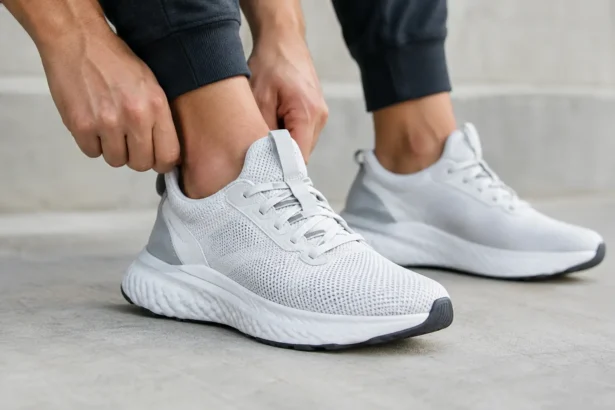
White, off-white, light gray, and beige sneakers work well with blue jeans, olive pants, black shorts, and most casual summer clothes. They look fresh, but they do show dirt. If you walk a lot, take public transit, or deal with rain and slush, an all-white shoe may become annoying fast. There is nothing wrong with wanting clean shoes. There is also nothing wrong with choosing gray because you do not want to scrub them every weekend.
Black, charcoal, navy, and dark brown sneakers are easier to live with. They suit black jeans, dark denim, khaki, cargo pants, and fall or winter layers. The trade-off is that a very dark sneaker can feel heavy with light shorts or pale summer pants. If you mostly dress in dark colors, though, it is the practical choice.
Bright sneakers can be fun, but be honest about how often you will wear them. A bold red, green, or electric blue pair is not a wardrobe foundation for most people. We would rather see you wear a gray sneaker four days a week than buy a wild pair that stays in the box because nothing feels right with it.
Some shoes look great for an hour and wear terribly by late afternoon. We are not interested in pretending that is fine. If you stand all day, walk several miles, commute, or deal with tired feet, comfort has to be part of your style decision.
A cushioned shoe like a Hoka Bondi, Brooks Ghost Max, or a supportive Asics model can still work with everyday clothes. Just lean into the relaxed, athletic look. Pair them with straight or loose pants rather than formal slim trousers. Add a structured jacket, clean tee, or good overshirt if you want the outfit to feel less like you just left a workout.
For days with less walking, a flatter lifestyle pair is fine. But if you know you will be on concrete for eight hours, skip the flat ones just because they photograph well. Your feet will have the final opinion at 5 p.m.
Fit matters here too. A sneaker that is too narrow, too short, or rubbing your heel will make you walk differently. And when you are uncomfortable, no outfit looks relaxed. Leave enough room in the toe box, wear the socks you actually use, and do not assume you need your usual size in every brand.
Lifestyle sneakers can work for casual offices, dinners, and family events, but this depends on the setting. We would not wear mesh running shoes to a formal wedding. A clean leather or suede-style sneaker is a safer call when the dress code is unclear.
For work, try dark straight-leg pants, a tucked or untucked knit polo, and low-profile sneakers in white, black, gray, or brown. Avoid shoes that look visibly worn out. Scuffs happen, but a beat-up pair can pull down an otherwise clean outfit fast.
For a slightly nicer plan, use contrast. Wear relaxed tailored pants with a simple sneaker, or a casual dress with a retro runner. The shoe keeps the outfit from feeling stiff. Just make sure the sneaker is clean and the sole is not falling apart. Casual does not mean careless.
Socks can help or hurt more than people think. With shorts, crew socks usually look better than tiny no-show socks with most running-inspired and retro sneakers. White crews are easy. Gray, black, or socks that pick up a small color from the shoe also work.
With jeans and pants, you can keep socks mostly hidden or let them show slightly. Do not overthink it. A clean pair of socks with no holes is already doing most of the job.
The best lifestyle sneakers are the ones you reach for without having to build an outfit around them. They should work with the clothes you already own and the day you actually have planned.
Start with a color you will wear, choose a shape that matches your usual pants, and do not sacrifice comfort for a look that only works standing still. A sneaker does not need to be flashy to look sharp. It just needs to make sense on your feet.