Cart
No products in the cart.
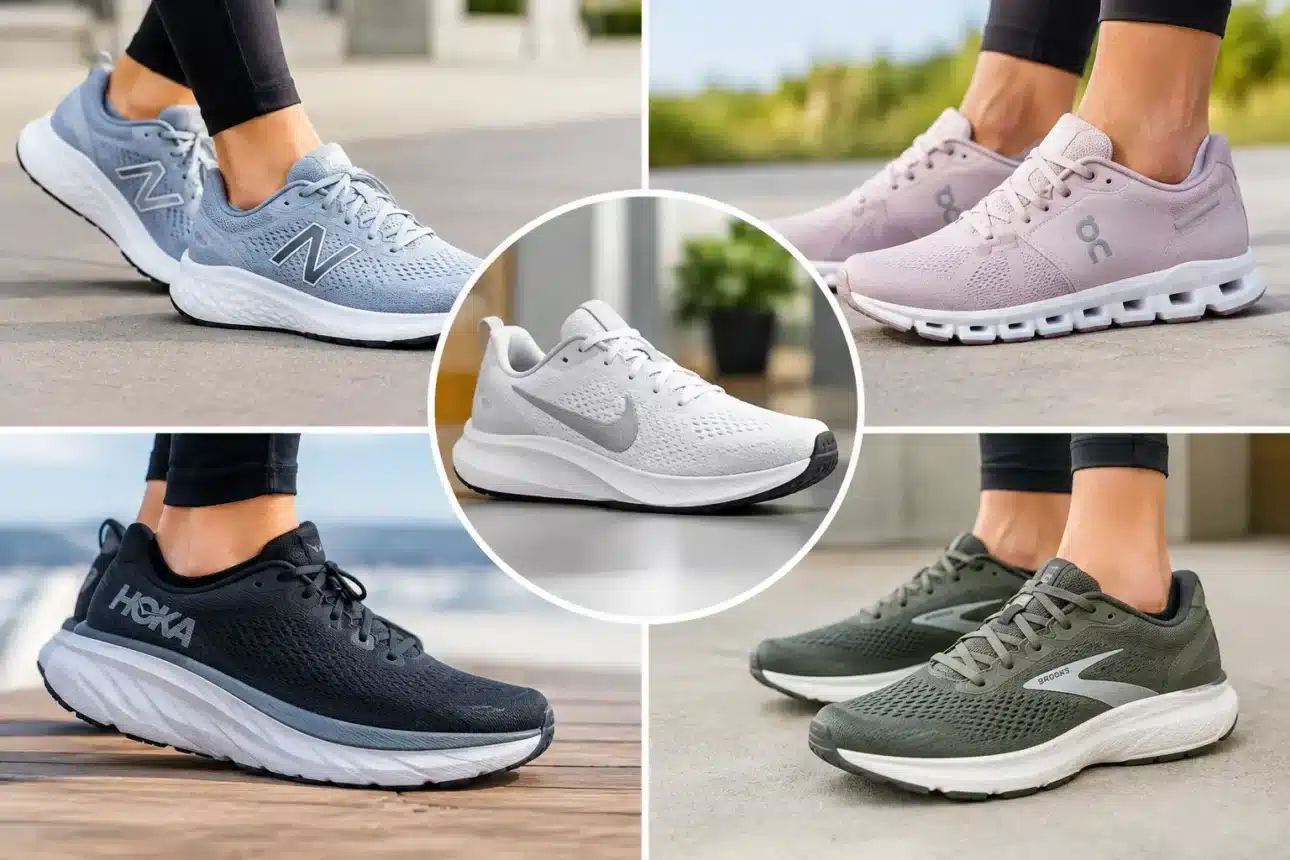
Your knees do not care whether a sneaker is trending. They care about what happens after six hours on concrete, a long walk with the dog, or an easy run that turned into four miles. These five knee friendly sneakers are the pairs we would start with when you want more protection underfoot without wearing something that feels clumsy or looks like hospital gear.
A quick reality check first: sneakers cannot diagnose, cure, or fix knee pain. Knees can hurt for plenty of reasons, and sharp, lasting, or worsening pain is worth discussing with a medical professional. But the right shoe can make daily walking and standing feel less punishing. For most people, that means enough cushioning, a stable platform, and a fit that does not let the foot slide around.
The softest shoe is not automatically the best choice. A huge pile of foam can feel nice for ten minutes, then feel wobbly when you are tired. What we look for is cushioning that takes the edge off hard ground, plus a base wide enough to keep your stride from feeling loose.
Heel-to-toe drop can matter too. A higher drop, where the heel sits higher than the forefoot, often feels easier on calves and Achilles tendons. A lower drop can work well, but it asks more of those areas. If you are switching from a traditional sneaker to a low-drop model, do not wear it for a full day straight out of the box.
Fit is the boring part that changes everything. Your heel should feel held, your toes should have room, and the shoe should not bend you into a narrower shape than your foot. If the upper pinches or the heel slips, skip it. A fancy midsole cannot rescue a bad fit.
The Hoka Bondi is the obvious max-cushion choice, and for once, the obvious choice makes sense. There is a lot of foam underfoot, a broad landing area, and a rolling shape that helps the shoe move forward instead of feeling flat and dead. For long shifts, recovery walks, travel days, and easy miles, it is hard to argue with.
We like the Bondi most for people who feel every hard surface by the end of the day. The cushion takes the sting out of sidewalks and store floors without feeling as squishy as an old foam mattress. It is not the sharpest-looking sneaker in the room, and it is not our first pick for speed work or quick changes of direction. But for steady, all-day comfort, it earns its big reputation.
If you want a cushioned shoe that feels more familiar than the Bondi, look at the Brooks Ghost Max. It has a tall stack of foam, but it stays composed. The ride is smooth, the base feels planted, and the upper usually works well for people who need a little more room through the forefoot.
This is a strong pick for walkers, newer runners, and anyone working on their feet who does not want a shoe that feels overly soft. The Ghost Max does not try to be flashy. Good. Its job is to make repetitive steps feel easier, and it does that well. If you wear very slim, low-profile sneakers most days, the height may take a few outings to get used to.
The ASICS Gel-Kayano is for the person who wants cushion but also wants their foot to feel guided. It has long been a stability favorite, and the current direction of the shoe is less about forcing your foot into place and more about giving it support when your stride starts getting messy.
We would point people toward the Kayano when their shoes tend to wear unevenly, their ankles roll inward a lot, or they simply prefer a more secure feel. The cushioning is substantial enough for walking and running, while the platform keeps it from feeling loose. It is heavier than a stripped-back daily trainer, though. If you only want a casual sneaker for short errands, it may be more shoe than you need.
The New Balance Fresh Foam X 1080 is a softer, more relaxed option for easy running and daily walking. It has a plush ride that works especially well when your route is mostly pavement. The upper has a flexible feel, and New Balance often offers useful width options, which is a big deal if standard shoes squeeze your forefoot.
This is the pair for someone who wants comfort without a firm stability setup. It feels good for slow miles, neighborhood walks, and long days where you are moving but not sprinting anywhere. The trade-off is that softer foam can feel less steady for people who need a lot of structure. If your ankles feel unstable in soft shoes, we would choose the Kayano or Ghost Max instead.
The On Cloudrunner is the cleaner-looking choice on this list. It does not have the giant sole of a Bondi, so it is easier to wear with jeans, joggers, or everyday clothes without looking like you came straight from a race expo. It still gives you a stable platform and enough cushion for walking, light running, and commuting.
We like it for people who want one shoe that can handle normal life and a few miles here and there. The ride is firmer than the Hoka, Brooks, or New Balance options above. That is not a flaw. Some people feel more confident on a firmer, more connected platform. But if your main goal is maximum softness on concrete, the Bondi or Ghost Max is the better call.
Start with where you will wear them most. For standing shifts and long city walks, choose the Hoka Bondi or Brooks Ghost Max. The Bondi is softer and more dramatic. The Ghost Max is a little more balanced and stable-feeling.
For walking plus running, the ASICS Gel-Kayano and New Balance 1080 make more sense. Pick the Kayano if support and a secure ride matter most. Pick the 1080 if you want a softer feel and your feet do not need much guidance. The On Cloudrunner is the easy choice when you want a more everyday look and do not need a mountain of foam.
Do not buy based on cushioning alone. Try shoes on later in the day, when feet are naturally a little fuller. Wear the socks you actually use. Walk around for more than thirty seconds. Pay attention to your heel, arch, and the outside of your little toe. A shoe that feels fine while standing still can reveal a problem as soon as you start moving.
If you use orthotics, remove the shoe’s standard insole before judging the fit. You need enough depth for your insert without your heel sitting too high or the upper pressing down on the top of your foot. And if a shoe feels wrong in the store, do not talk yourself into it because the color is good or the brand is familiar.
If your knees are already grumbling, skip flat lifestyle sneakers for your longest days. We like a clean Adidas Gazelle or Nike Dunk as much as anyone, but they are not built to absorb hours of impact. Save them for casual wear, not a ten-mile walking day or a full shift on hard floors.
We would also skip switching to a radically different shoe all at once. Even a comfortable shoe can annoy your body if the stack height, drop, or support level is new to you. Break them in with shorter walks first, then build up. That is less exciting than wearing them straight to a full-day event. It is also smarter.
The best pair is the one you keep reaching for because your feet and knees feel less beat up at 5 p.m. Start with the use case, get the fit right, and do not let a clean-looking flat sneaker talk you into a rough day.