Cart
No products in the cart.
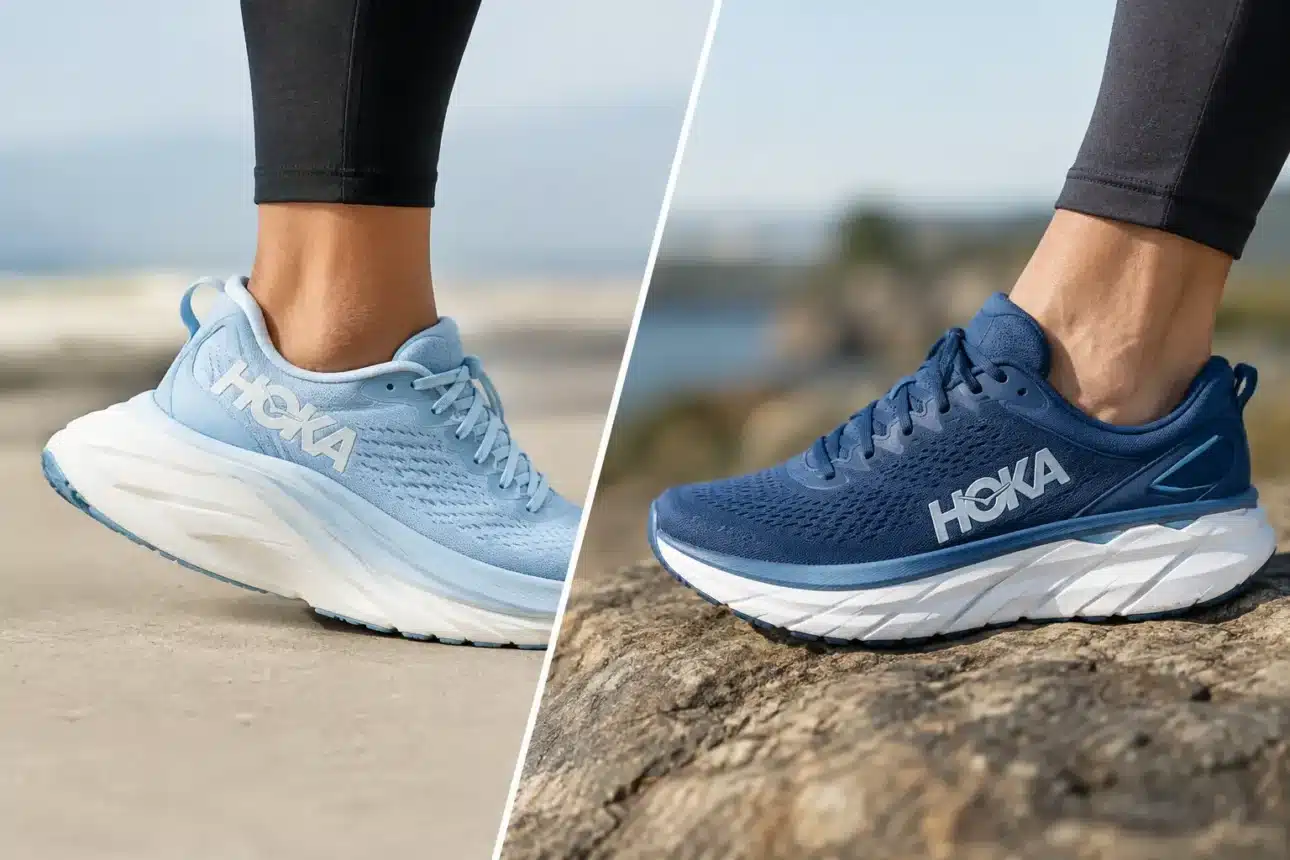
Your feet do not care how much cushioning a shoe has at 8 a.m. They care about how they feel at 5 p.m., after work, errands, stairs, and a walk you did not plan on taking. That is where the Bondi vs Clifton decision gets real.
Both are popular Hoka shoes with a cushioned, rocker-shaped ride. Both work for walking, easy running, and daily wear. But they do not feel the same on foot. The Bondi is the softer, bigger, more protective option. The Clifton is lighter, less bulky, and easier to use for a little bit of everything.
If you just want the short answer: choose the Bondi when standing comfort is your main concern. Choose the Clifton when you want cushion without feeling like you are wearing a lot of shoe.
The Bondi is Hoka’s max-cushion daily shoe. It has a thick midsole, a broad base, and a soft landing that takes some of the harshness out of concrete and long days on your feet. It is not trying to feel fast. It is trying to feel forgiving.
The Clifton sits a step below it in overall cushioning, though calling it a low-cushion shoe would be wrong. There is still plenty underfoot. The difference is that the Clifton feels more balanced. It is lighter, more flexible through the stride, and less noticeable when you pick up the pace.
Think of it this way: the Bondi is for reducing the beat-up feeling. The Clifton is for keeping your day moving without making your feet feel trapped in a giant foam platform.
Neither is automatically better. The right call depends on what you do in them.
We like the Bondi best for people who spend hours standing, walking slowly, or working on unforgiving surfaces. Hospital floors, retail shifts, airports, concrete sidewalks, and long days around town are where it makes the most sense.
That extra foam gives the shoe a soft, protected feel under the heel and forefoot. The wide platform also helps the shoe feel stable for its height. If your current sneakers leave your feet feeling tired by the end of a shift, the Bondi is the more obvious place to start.
There is a trade-off. The Bondi can feel heavy compared with a standard sneaker, especially if you are used to flatter shoes. It is not clumsy, but it is substantial. Some people love that planted feeling. Others feel like the shoe is doing too much.
For easy walks and recovery runs, that is usually fine. For faster running, gym circuits, or quick changes of direction, it can feel slow and a little awkward. We would not pick it as an all-purpose training shoe if you regularly do more than straight-ahead miles.
The Bondi makes sense if you are on your feet for work, want the most cushioning possible, or prefer a soft and steady ride over a light, quick one. It is also a strong choice for heavier walkers and runners who want a broad base rather than a narrow, tippy feel.
If you mostly wear your shoes casually and hate when a sneaker looks overly athletic, be honest with yourself: the Bondi is a big shoe. Some colorways look clean, but the thick sole is the whole point. It is comfort-first styling.
The Clifton is the shoe we would recommend to more people without a long conversation. It has enough cushioning for regular runs and long walks, but it does not feel as bulky as the Bondi. That matters when one pair needs to handle a commute, a few miles, grocery runs, and the rest of real life.
Its ride is still soft, but it is not quite as pillowy or isolated from the ground. You get a bit more sense of movement and a smoother transition from heel to toe. The rocker geometry helps the foot roll forward, which many walkers enjoy, especially when their legs are tired.
The Clifton is also easier to run in. It is not a racing shoe, and it does not need to be. For easy runs, relaxed miles, and beginner training plans, it feels light enough to keep you from fighting the shoe. If you occasionally run faster, it handles that better than the Bondi.
The trade-off is simple: less shoe means less protection. If you need maximum softness for ten-hour shifts or regularly finish the day with sore feet from hard floors, the Clifton may feel good but not quite enough.
Pick the Clifton if you want one Hoka for walking and running, prefer a lighter shoe, or do not like the oversized feel of max-cushion models. It is especially good for the person who runs two or three times a week but wears the same pair for daily errands.
It also has a cleaner shape than the Bondi. Still clearly a running shoe, yes, but less like a foam block on your foot. That should not be the main reason to choose a shoe, but you are more likely to wear the pair that you actually like looking at.
Both shoes generally fit true to your usual running-shoe size, but fit is more personal than a size chart. The Bondi often feels roomier and more accommodating because of its broad platform and generous overall build. The Clifton has a more streamlined feel, particularly through the midfoot.
If you have a wide forefoot, do not force a standard width just because the length feels right. A shoe that squeezes across the toes can make even the softest midsole miserable after a few hours. Both models are commonly available in wide options, and for some feet, that is the difference between a good shoe and one that gets returned.
Pay attention to heel hold too. A max-cushion shoe that lets your heel slide around is not comfortable. Lace the shoe snugly, walk around indoors, and check that your heel stays put without pressure on the top of your foot.
If you use orthotics, bring them into the decision early. The stock insoles can be removed on many versions, but the shape and volume inside the shoe matter. Try your orthotic with the shoe before committing. More cushioning does not automatically mean a better match for every insert.
This is where shoppers get tripped up. The Bondi has more foam, but it is not a traditional stability shoe built to guide every step. The Clifton is also a neutral daily trainer. Their broad bases can feel stable, especially compared with narrow running shoes, but neither is the obvious pick if you know you need a dedicated stability model.
If you tend to roll inward heavily, have been told to wear a stability shoe, or consistently feel unsupported in neutral sneakers, look at options made for that job. Hoka’s Arahi is one example worth considering. Do not buy the Bondi just because it is tall and assume it will solve every support issue.
And if your foot, knee, or back pain is persistent, a shoe can improve comfort but it is not a diagnosis or a cure. That is worth being straight about.
For short walks and general daily use, either works. For long walking days, the answer depends on your pace and preference.
Choose the Bondi if you walk slowly, stand often, or want the most cushioned option for pavement. It shines when comfort matters more than speed. Choose the Clifton if you power-walk, like a less heavy feel, or want a shoe that can switch from a walk to an easy jog without feeling out of place.
For travel, we lean Clifton for most people. It takes up less mental space on your feet and works across more situations. But if you are heading somewhere that means miles of sightseeing and long lines, the Bondi can earn its bigger footprint.
The Clifton wins for most everyday runners. It is lighter, more versatile, and easier to use for regular easy mileage. New runners often do well with it because it has enough cushioning without making the stride feel overly disconnected from the ground.
The Bondi is better for very easy running, recovery days, and runners who want a soft ride above all else. It is not a bad running shoe. It is just specialized. If your runs are relaxed and your priority is finishing with fresher-feeling legs, it is worth a look.
We would skip the Bondi for speedwork, intervals, or anyone who likes a nimble shoe. That is not its lane.
The Bondi is the better comfort shoe. The Clifton is the better all-around shoe.
If your job keeps you standing and hard floors wear you down, buy the Bondi and do not overthink its size. If you want one pair for walking, errands, and regular easy runs, choose the Clifton. It gives you plenty of Hoka cushioning without asking you to carry around more shoe than you need.
Start with what hurts most about your current pair: tired feet after a long day, or a shoe that feels too heavy once you start moving. Your answer points you in the right direction.