Cart
No products in the cart.
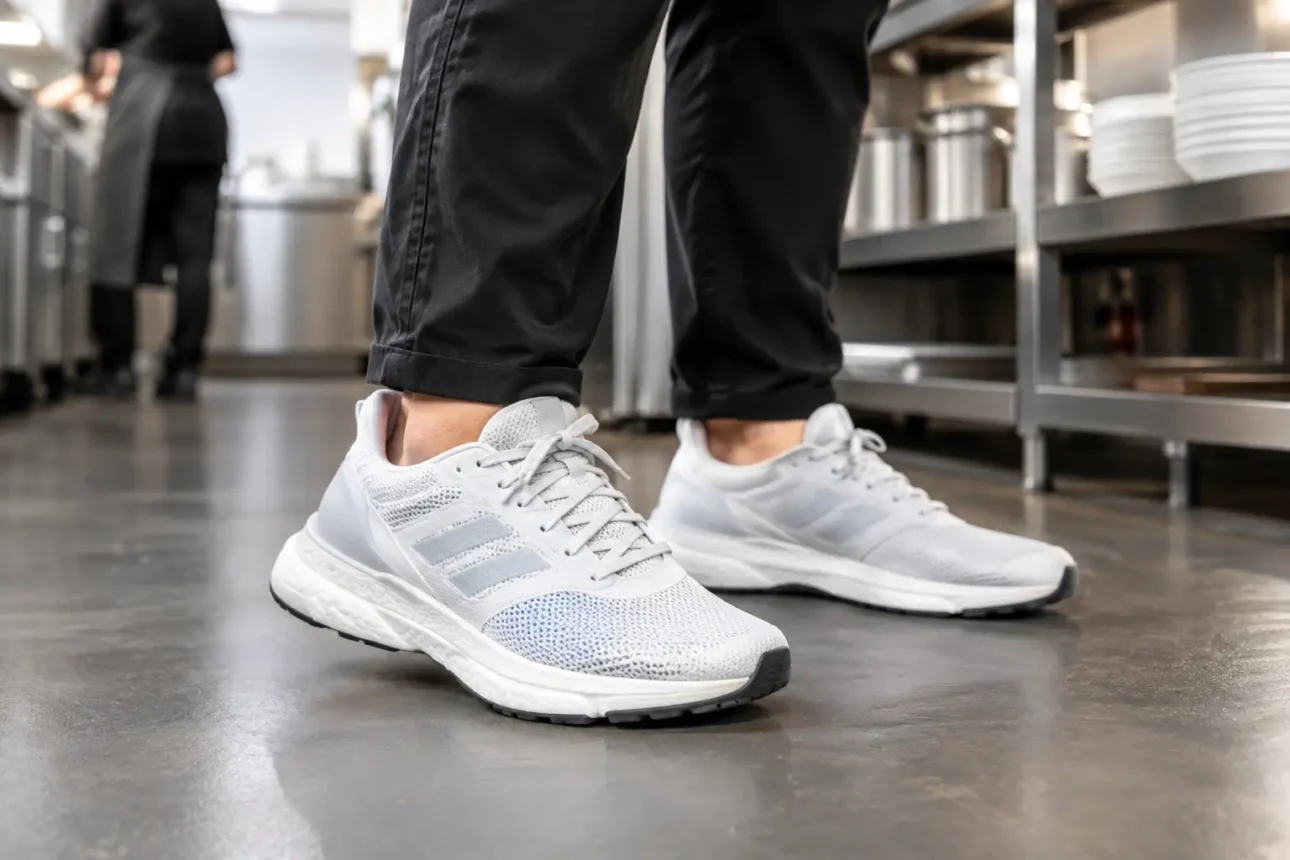
A restaurant shoe test should happen on a real shift, not under bright store lights. A shoe can feel soft for five minutes and still leave your feet cooked by 5 p.m. Worse, it can look clean and grip like soap on a wet kitchen floor.
If you work front of house, behind the line, or run food all night, your shoes are work gear. They need to handle spills, hard floors, quick turns, heat, and a lot more standing than anyone thinks about. We care about how they feel when the rush is over. That is the part that counts.
Before you look at cushioning or color, think about where you actually work. A host who mostly stands at a podium has different needs from a server covering a large dining room. A cook dealing with oil, water, and food debris needs more grip than someone working a dry café counter.
Restaurant floors are rough on shoes. Tile and sealed concrete are hard. Mats help, but they do not cover every step. Grease and dishwater turn a normal walkway into a problem fast. This is why a good-looking lifestyle sneaker is not automatically a good restaurant shoe.
Our honest take: if the floor gets wet or greasy, skip smooth fashion outsoles. A flat sole with shallow grooves may feel fine on a sidewalk, but it is a weak choice near a dish pit or fryer. You want a rubber outsole with deep, clearly defined tread and a pattern that can channel liquid away instead of skating over it.
You do not need a lab or a complicated scorecard. Put the shoe through these four checks and be honest about the results.
Grip is the first test because a slip can end a shift fast. Look at the outsole before you buy. It should feel like rubber, not hard plastic. The tread should have real texture, with grooves that are deep enough to stay useful after weeks of wear.
Then check the shoe’s stated use. Some work shoes are specifically made with slip-resistant outsoles. That wording matters. A running shoe may have good traction outdoors but still be designed for dry pavement, dirt paths, or a gym floor. Those are not the same conditions as greasy tile.
If your workplace requires slip-resistant shoes, follow the rule. Do not try to make a casual sneaker work just because it is comfortable. Comfort is not much help if you have to walk cautiously all shift.
People talk about walking comfort, but restaurant work includes long stretches of standing in one spot. At the register, on expo, at the grill, or while rolling silverware, your feet take the load without the natural movement of walking.
A solid shoe has cushioning that feels stable, not squishy. Super-soft foam can feel amazing when you first put it on. After several hours, some soft shoes let your foot sink and wobble too much, especially when you pivot or carry plates. We would take balanced cushioning over a marshmallow sole every time.
Look for a platform that stays level under your foot and a heel that does not collapse inward. A little rocker shape can make walking easier for some people, but it is personal. If it makes you feel like you are tipping forward, it is not the shoe for a busy shift.
Your shoe should bend with your foot, but your foot should not slide around inside it. That sounds obvious, yet loose uppers are common in roomy running shoes and worn-out sneakers. On a long shift, sliding creates friction. Friction turns into hot spots and blisters.
Check the heel first. Walk briskly, stop, and turn. If your heel lifts a lot, try a different size or model. Then check the toe box. Your toes need room to spread, especially later in the day, but they should not slam into the front when you stop suddenly.
Mesh is breathable, which feels good in a hot kitchen. The trade-off is cleanup. Open mesh soaks up spills and can stay damp. For messy work, a smoother synthetic, leather, or coated upper is usually easier to wipe down. It may run warmer, but it is more practical.
White knit sneakers look sharp on day one. In a restaurant, they can look tired by Thursday. That does not mean you need ugly shoes. It means you should buy with cleanup in mind.
Dark colors hide marks better. Smooth uppers wipe down quickly. A shoe with fewer exposed seams and fewer fabric panels is easier to keep presentable. If you work around flour, sauces, coffee, or oil, this matters more than a tiny difference in weight.
We also like a shoe that can handle being taken off at the end of the day and aired out properly. Pull out the insole when needed, let the shoe dry fully, and do not leave damp footwear trapped in a locker or gym bag. That is how a pair starts smelling rough before it is actually worn out.
Do not buy work shoes first thing in the morning if you can avoid it. Your feet often swell after hours of standing and walking. Try shoes on later in the day, with the socks you actually wear to work.
Leave about a thumb’s width in front of your longest toe. Lace the shoe firmly enough to lock down your heel, but not so tightly that the top of your foot feels squeezed. Walk around. Make a few quick turns. Stand still for a few minutes. Small pressure points rarely improve after an eight-hour shift.
Sizing also changes between brands and models. Do not assume your size in one sneaker carries over to another. Check the fit every time. It is boring advice, but returning the wrong size is more boring.
It depends on the job. A dedicated work shoe with a slip-resistant sole is the safest bet for wet, greasy areas. It may not be the coolest shoe in your closet, but function wins when you are carrying hot food around tight corners.
For a dry restaurant floor, a supportive walking shoe or stable running shoe can work well if your employer allows it. Models with a broader base, secure heel, and durable rubber coverage usually make more sense than lightweight race-day shoes. Those stripped-down running shoes are built for speed, not twelve thousand steps while carrying a tray.
Lifestyle sneakers are the hardest category to recommend for restaurant work. Some have enough cushioning for a short shift, but many are flat, heavy, or short on traction. Wear them if your role is low-risk and the floor is dry. If you are on your feet all day, skip the flat ones.
Do not wait for holes before replacing work shoes. Check the outsole every few weeks. If the tread is worn smooth in key areas, grip is fading even if the upper still looks fine. Look at the midsole from behind, too. If it is leaning noticeably to one side or feels dead compared with a newer pair, it is time.
Rotating two pairs can help if you work several long shifts a week. Each pair gets time to dry and rebound between wears. It also makes problems easier to spot. If one pair suddenly feels much worse, you will notice it instead of getting used to it.
The best restaurant shoe is not the one with the loudest logo or the thickest sole. It is the pair that grips when things spill, stays steady when you turn, and does not make you dread the walk to your car. Run that test, trust what your feet tell you, and buy the shoe that earns another shift.