Cart
No products in the cart.
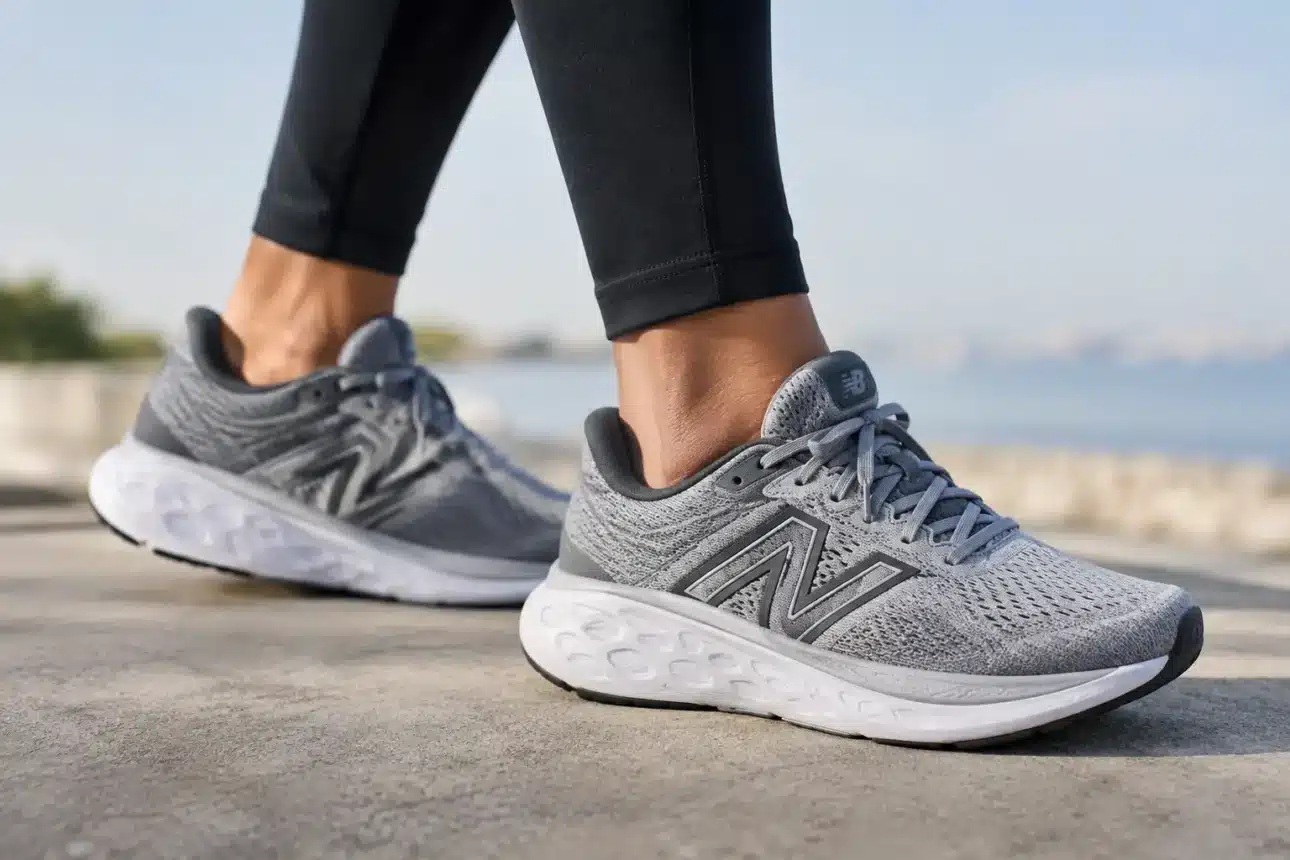
Your feet do not care how fast a shoe looks on a shelf. They care about mile six, the walk home, and that last hour of a long shift. That is where this New Balance 1080 review starts. The 1080 is built for people who want a soft ride without turning every step into hard work.
We are focusing on the current Fresh Foam X 1080 v14 here. It is a max-cushion daily trainer, meaning it is made for regular running, walking, recovery days, and plenty of time on your feet. It is not a race shoe. It is not meant to feel fast and sharp. It is meant to make ordinary miles feel easier.
The main reason to buy the 1080 is simple: the cushioning feels good straight away. The Fresh Foam X midsole is soft underfoot, especially through the heel, but it is not the loose, sinking feeling some extra-cushioned shoes have. There is enough structure in the foam to keep the ride moving forward.
That matters if you are walking all day or running easy miles. A shoe can be very soft and still be tiring when your foot has to work to stabilize every landing. The 1080 avoids most of that problem. It has a gently rocking shape that helps your stride roll from heel to toe instead of feeling flat and stuck to the ground.
For an easy three-mile run, a long walk, or a day spent standing, it feels smooth. It does not ask much from you. Put it on, lace it up, and get on with your day.
The upper is another strong point. It is a soft engineered mesh with enough stretch to feel comfortable around the forefoot. Your toes are not trapped in a stiff shell, which is good news if your feet swell a bit through the day. The heel padding is substantial without being excessive, and the tongue helps spread lace pressure across the top of the foot.
This is the kind of shoe we would reach for when comfort is the priority. If your current shoes leave your heels sore after a grocery run or make your legs feel beat up after easy jogging, the 1080 makes a lot of sense.
The 1080 is at its best when you let it do its intended job. Easy runs, recovery runs, long slow runs, treadmill sessions, neighborhood walks, and workdays with a lot of standing all suit it well.
At relaxed paces, the foam has a soft, protected feel. It takes the edge off pavement without making the shoe feel like a giant mattress. The rocker also helps when your legs are tired. You get a little forward roll with each step, which can make a slow run feel less clunky.
For many people, this is enough. Not everyone needs a shoe that pushes them to run faster. Most runners need a pair they will actually want to wear often. The 1080 is very good at being that pair.
Soft shoes always come with a trade-off. In the 1080, that trade-off is stability. It is not wildly unstable, and we would not call it wobbly for most neutral runners. But the tall, soft platform does move more than a firmer daily trainer.
If you strongly roll inward, have ankles that feel shaky, or simply prefer a planted ride, test the fit carefully. The 1080 does not have the firmer guidance features found in a true stability shoe. It is a neutral shoe first.
It also is not our first pick for speedwork. You can run faster in it, of course, but it does not feel especially snappy when you start pushing the pace. The foam is designed more for comfort than punch. For intervals, track workouts, or race day, a lighter and firmer option will feel more alive.
The outsole is fine, not exceptional. There is rubber in the areas that take the most wear, and it grips normal dry pavement well. Still, the exposed foam means we would not expect it to be the toughest shoe in your rotation if you drag your feet or regularly run on rough surfaces. It is best treated as a road and treadmill shoe, not a trail shoe that can handle anything.
The look is also very much a running-shoe look. Some colorways are clean enough for daily wear with jeans or joggers. Others are big, padded, and clearly built for comfort. We do not think that is a bad thing. Just do not buy it expecting a low-profile sneaker.
The New Balance 1080 usually fits true to size for most people. The heel is secure, the midfoot has a comfortable hold, and the toe box offers decent space without feeling huge.
That said, the fit is not identical for every foot. If you have a wide forefoot, pay attention to width options when they are available. New Balance does a better job than many brands of offering wider fits, and that can make the difference between a shoe you love and one that rubs your little toe.
If you are between sizes, think about how you will use the shoe. For walking and casual wear, your usual size should be the right call. For long runs, some people prefer a little extra room up front because feet can swell after several miles. You should have about a thumb’s width between your longest toe and the end of the shoe.
The upper is forgiving, but do not expect it to solve a bad size choice. A soft mesh can stretch slightly around the foot, yet it cannot create enough length or turn a narrow shoe into a true wide fit.
We like the 1080 for the runner who has one goal: keep going without their shoes becoming the problem. It suits beginners building a routine, experienced runners looking for a softer easy-day shoe, walkers who cover serious distance, and people who work on their feet.
It is also a good choice if you want one pair that can handle a morning jog and the rest of your day. The cushioning is protective enough for miles, while the upper is comfortable enough that you will not be desperate to take it off afterward.
If you want firm ground feel, quick cornering, or a shoe that feels aggressive at fast paces, look elsewhere. The 1080 is not trying to be all things to all runners. That is part of why it works.
Compared with firmer daily trainers, the 1080 feels softer and more relaxed. That makes it easier on easy days but less exciting when you want to pick up the pace. Compared with some other max-cushion shoes, it is not the tallest or the bounciest. We think that is a good thing for everyday use. It feels more manageable than shoes that make you feel like you are running on stilts.
If your priority is stability, a structured support shoe may be the smarter buy. If your priority is lightweight speed, choose a performance trainer. But if your priority is getting through lots of regular miles in comfort, the 1080 sits in a very sensible spot.
Price matters too. This is a premium cushioned running shoe, so it is not the budget choice. We would not recommend paying extra just because it is a well-known model. We would recommend it when the fit is right and you will use the cushioning often. A comfortable shoe that gets worn three or four times a week is worth more than a cheaper pair that stays in the closet.
The New Balance 1080 is not flashy, and it does not need to be. It is a soft, dependable shoe for easy running and long days on your feet. The ride is comfortable, the upper is friendly, and the rocker helps it feel less sluggish than many heavily cushioned shoes.
Just be honest about what you need. If you need stability support or a fast workout shoe, this is not your answer. If you want your feet to feel less punished by everyday pavement, it is a solid choice. Try it in the right width, walk around in it for a few minutes, and pay attention to how your heel and toes feel. That tells you more than the logo ever will.