Cart
No products in the cart.
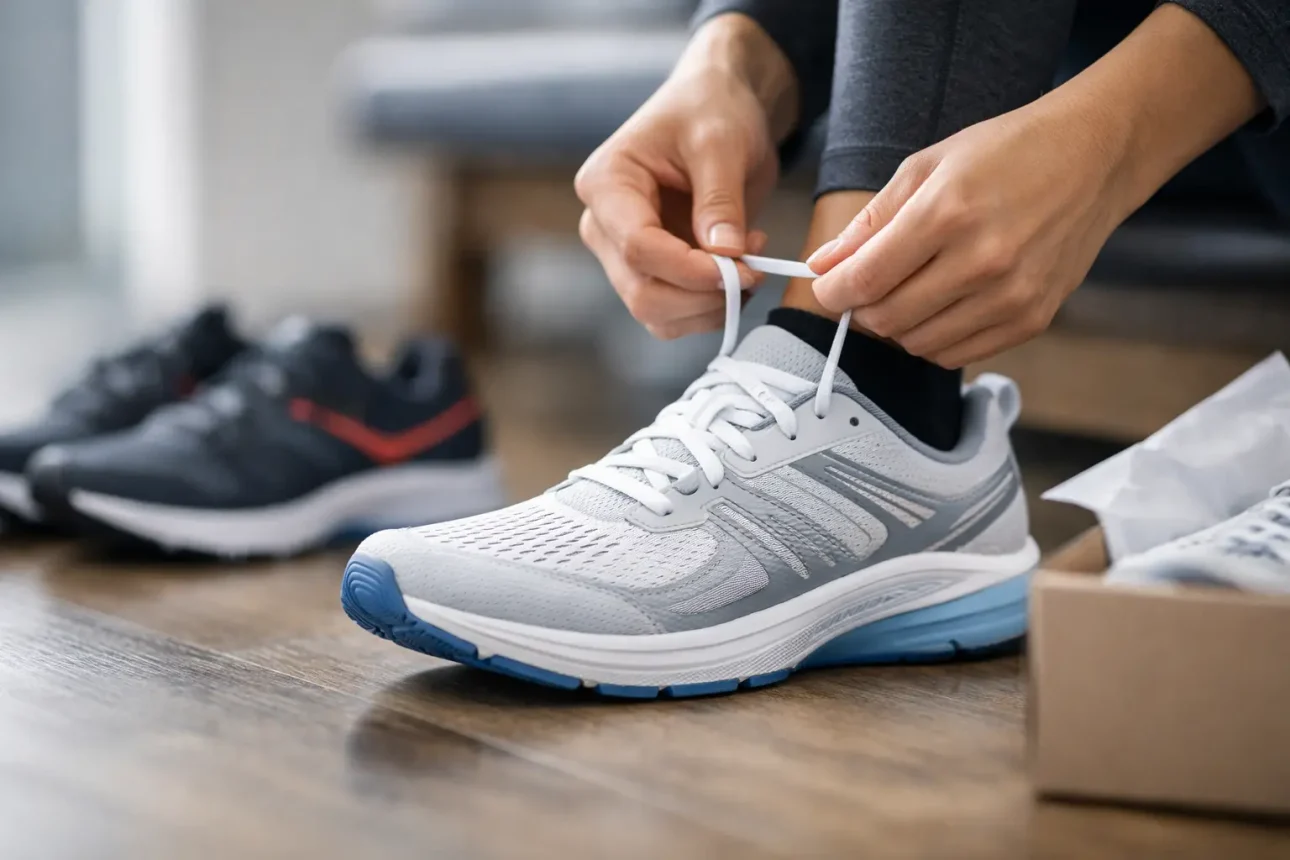
You don’t notice bad running shoes at mile one. You notice them later, when your toes are jammed, your arch is annoyed, or your knees start sending little warning shots. That’s why knowing how to buy running shoes matters. The right pair can make an easy run feel easy. The wrong pair can make a short jog feel like work.
We keep this simple. You do not need a lab test, a fancy gait report, or a shoe that costs a small fortune. You need a pair that fits your foot, suits the way you run, and feels good after more than five minutes.
Start with your actual use, not your fantasy self. If you run two or three times a week for a few miles, shop for that. Don’t buy a stripped-down race shoe because it looks fast. A lot of those shoes feel harsh for daily use, and some are less stable than they look.
Ask yourself three basic questions. How far do you usually run? Where do you run – road, treadmill, track, or light trails? Do you want soft and cushioned, or more firm and responsive? Those answers cut through a lot of noise.
If most of your miles are on pavement, a daily road runner is usually the safe bet. That’s the category most people should start with. Shoes like the Brooks Ghost line, New Balance daily trainers, ASICS Gel Kayano for more support, or Hoka Bondi if you want a lot of cushion all make sense depending on how your feet feel and what kind of ride you like.
That last part matters. Some people love a plush shoe. Others try one on and say it feels like running on a mattress. Neither person is wrong.
Here’s the truth. The best-looking shoe on the wall is useless if it doesn’t fit your foot shape. We would take a slightly less exciting shoe that fits well over a trendy one that rubs your heel raw.
Your running shoes should feel secure at the heel, snug through the midfoot, and roomy at the toes. Not sloppy. Not tight. You want about a thumb’s width in front of your longest toe. That extra space helps because feet swell when you run, even on shorter sessions.
A lot of people buy running shoes too small because they shop in their casual sneaker size and call it good. That’s one of the easiest ways to end up with black toenails, pressure on the forefoot, or numb toes halfway through a run. Running shoe sizing often lands a bit different, and brand shape matters too. Nike can fit narrower in some models. New Balance often gives you a little more room. Hoka can feel high-stack and broad depending on the shoe. On has a fit some people love and some people quit on fast.
Try shoes on later in the day if you can. Feet are usually a bit bigger then. Wear the kind of socks you’d actually run in. Small stuff, but it changes the fit.
A good fit is boring in the best way. No pinching. No heel slip. No hot spot right away that you’re hoping will somehow disappear. If something feels off in the store, it usually feels worse on the run.
Don’t talk yourself into a pair because the color is clean or the brand is having a moment. Shoes don’t break in the way people like to pretend. They might soften a little, but they don’t turn from wrong to right.
This is where people get lost. Neutral. Stability. Max cushion. Energy return. Half of the labels are helpful. Half are just shelf talk.
Most runners do well in a neutral daily trainer unless they know they want more support. If your foot rolls a lot, or if you tend to feel wobbly and prefer a more guided ride, a stability shoe can be worth it. Shoes like the Gel Kayano or Hoka Arahi exist for a reason. For the right person, they feel planted and easier to trust on tired legs.
But don’t force yourself into a support shoe just because some old chart says you overpronate. A lot of runners are fine in neutral shoes. If a stability model feels stiff and awkward to you, skip it.
Max cushion is another one that depends. If you’re on your feet all day or you like a soft landing, a cushioned shoe can feel great. That’s why shoes like the Bondi or Ghost Max get attention. They take the edge off pavement. The trade-off is that some highly cushioned shoes can feel bulky or less nimble, especially if you like a faster, more connected feel.
If you want a shoe for easy runs, walking, and daily wear too, softer and more forgiving usually wins. If you like short runs with a little pace, something lighter and firmer may feel better.
You do not need to diagnose your foot like you’re building a race car. You just need to be honest about shape and comfort.
If you have wide feet, stop trying to squeeze into narrow models because they look good online. That’s how you end up hating your shoes. Go for brands and models known for a more accommodating fit, or look for wide sizing if it’s available.
If your arches are high, you may prefer a shoe with a little more cushioning and a less intrusive midfoot shape. If your feet are flatter, you may like a shoe that feels a bit more guided. Again, this is preference as much as theory. The foot doesn’t care what the box says. It cares how the shoe feels after 30 minutes.
Heel shape matters too. Some people need a locked-in heel or they get rubbing fast. Others need more room in the forefoot because their toes spread a lot when they run. That’s why reviews only go so far. A shoe can be loved by thousands of people and still be wrong for your foot.
We get it. If one brand worked before, it’s easy to go back. Sometimes that’s smart. Sometimes it’s how people end up with a worse version of a shoe they used to love.
Brands change midsoles, uppers, fit, and shape all the time. A new version of your old favorite may be softer, narrower, stiffer, or just weird. Start with brands you’ve had luck with, sure. Just don’t assume every model from that brand will work the same way.
A lot of people ask if they need to spend big. No. But there is a floor. The super-cheap pair that looks like a running shoe often feels dead, flat, or flimsy fast. If you’re actually going to run in them a few times a week, that usually ends up being money wasted.
The sweet spot is buying a solid daily trainer from a trusted line, especially if you can catch a previous version at a better price. That’s one of the smartest moves in running shoes. Last year’s model is often very close to this year’s, just with less marketing around it.
If your budget is tight, spend on fit first. Skip the flashy plating, skip the race-day stuff, skip whatever social media won’t stop pushing. A comfortable, durable trainer beats a fast-looking shoe you don’t enjoy wearing.
People buy for looks first. We like a sharp shoe too, but running shoes are tools before they’re anything else.
People size too small. This happens constantly.
People buy one pair to do everything from 5K jogs to gym lifting to long days at work. Sometimes that works. Often it means the shoe is just okay at everything and great at nothing.
And people ignore early discomfort because they want the shoe to work. Bad idea. If a shoe annoys you right away, listen.
If you’re stuck between ten tabs and getting nowhere, here’s our take. Most people should buy a dependable daily trainer with decent cushioning, a secure fit, and no weird tricks. Not the lightest. Not the softest. Not the most expensive. Just solid.
That could mean Brooks if you want a smooth, easy ride. ASICS if you like a stable, reliable feel. Hoka if you want more cushion underfoot. New Balance if you need a range of fits and a good all-around option. If you’re shopping at The Sneaker Base, that’s the lane we trust most for real-life runners and people on their feet all day.
The right shoe isn’t the one with the loudest ad. It’s the one you forget about while you’re running. That’s the whole point.