Cart
No products in the cart.

Your feet do not care which logo is cooler when it is 5 p.m. and you have been standing since breakfast. That is where the On Cloud vs Hoka question gets real. Both brands make comfortable shoes with a clean look, but they do not feel alike underfoot. Pick the wrong one and even a good shoe can feel like a bad purchase.
Our short take: Hoka is usually the safer bet for people who want lots of soft cushioning and an easy ride. On makes more sense if you want a lighter, firmer feel and a shoe that does not look like a mattress strapped to your foot. Neither brand wins for everyone. Your day, your foot shape, and how much softness you actually enjoy matter more than the logo.
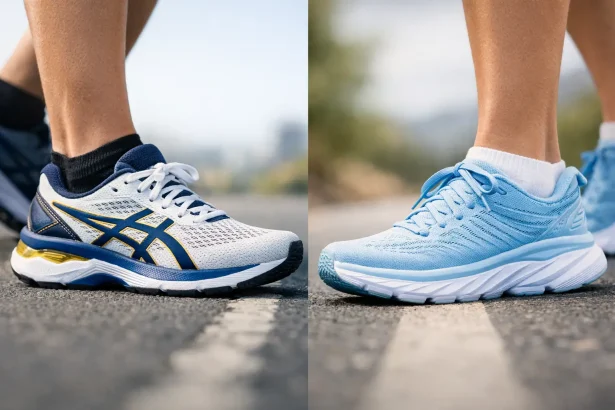
The biggest difference is simple. Most Hoka shoes feel plush, tall, and rolling. Most On shoes feel more structured, responsive, and closer to the ground, even when they have plenty of foam.
Hoka built its name on thick midsoles and a rocker shape that helps your foot move from heel to toe. For walking, long shifts, and easy miles, that rolling sensation can take some work out of each step. Models like the Bondi lean hard into softness. The Clifton keeps the cushioned Hoka feel but is less bulky. If your knees or feet feel beat up after a long day, we understand why Hoka is often the first brand people try.
On uses its CloudTec pods and firmer foam setups to create a different kind of comfort. The landing often feels more defined. You notice the shoe working beneath you instead of sinking into it. The Cloudsurfer and Cloudmonster are softer than older On models, but they still tend to feel tidier and less pillowy than a Bondi.
That is not a knock on either brand. Some people hate a super-soft shoe because it can feel unstable or slow. Others put on a firmer shoe and wonder why their heels are taking all the abuse. This is personal.
We would point most all-day walkers, workers on hard floors, and casual runners toward Hoka first. A well-chosen Hoka can make a long day feel less punishing, especially if you spend hours on concrete, tile, or pavement.
The Bondi is the obvious choice when comfort comes before sleek looks. It is big. It is not subtle. But it has earned its reputation with people who want a lot of foam between them and the ground. If you are a nurse, teacher, retail worker, traveler, or anyone who gets home with tired feet, that trade-off is often worth it.
The Clifton is the better middle ground. It is lighter and less chunky than the Bondi, so it works well for daily walks and easy running without feeling like an oversized recovery shoe. For runners or walkers who want some guidance rather than a loose, soft ride, the Arahi is worth a look. It adds support without turning the shoe into a stiff brick.
There is one catch. Hoka’s high-stack feel is not for everybody. If you are used to flatter, firmer sneakers, the height can feel strange at first. Some people also find that very soft foam feels less stable during quick turns, gym work, or busy shifts where they move side to side a lot.
Hoka often works well for average to wider feet, and several key models come in wide sizing. That is a real advantage if your toes feel squeezed in standard running shoes. Still, do not assume every Hoka will fit wide. The heel and midfoot can feel secure while the forefoot has more space, which some people love and others do not.
If your heel tends to slip, pay attention to the lockdown before you keep the shoes. More cushioning cannot make up for a shoe that moves around on your foot.
On is a strong choice for people who want comfort without the full max-cushion look. The shoes usually look sharper with jeans, joggers, or work-casual clothes than a huge running shoe. That matters if you need one pair for walking the dog, commuting, and getting through a shift.
The everyday On feel is often firmer and more springy than Hoka. The Cloud 5, for example, is popular because it is light, simple, and easy to wear around town. We would not choose it for an eight-hour shift on concrete if your feet need serious cushioning, but for errands, travel, and casual use, it makes sense.
For more cushioning, the Cloudsurfer is a better place to start. It has a smoother, softer ride than the classic Cloud models and works well for easy running and daily walking. The Cloudmonster brings more underfoot protection and a more noticeable bounce, making it the On option for people who want a bigger ride without switching to Hoka.
On also has stable options such as the Cloudrunner for walkers and runners who prefer a more guided feel. Just do not buy a stability shoe because you assume it is automatically better for sore feet. Support is useful when it matches your stride and comfort needs. Otherwise, it can feel like the shoe is fighting you.
This is where On can lose people. Many On shoes fit more snugly through the midfoot and toe box than comparable Hoka models. If you have a wide forefoot, high-volume feet, or you simply hate a close fit, try sizing carefully and look for wide versions where available.
On’s secure fit is a plus for people who dislike a loose, bulky shoe. It can feel locked in and neat. But if your toes go numb on long walks, do not talk yourself into it because the shoe looks good. A clean upper is not worth a miserable afternoon.
For long walks and standing all day, Hoka usually gets our vote. Start with the Bondi if softness is your main goal, or the Clifton if you want less bulk. The rocker shape and deeper cushioning are simply more forgiving when the day keeps going.
For easy running, it depends on what you like to feel. Choose Hoka if you want protection and a relaxed, soft ride. Choose On if you prefer a more responsive shoe that feels lighter and less mushy. The Hoka Clifton and On Cloudsurfer are both sensible daily options, but they serve different tastes.
For gym sessions, short walks, and casual wear, On has the edge. Hoka can work, but many of its taller models feel like too much shoe for lifting or quick lateral movement. An On Cloud model is usually easier to style and less awkward for an everyday sneaker rotation.
For wide feet, Hoka has the advantage more often than not. For narrow to average feet, On may give you the more secure fit. That is not a hard rule, but it is a useful starting point.
Do not buy Hoka just because everyone says it is the most comfortable brand. Some people need a firmer platform and feel wobbly in a high-stack shoe. And do not buy On just because it looks clean on social media. Some of the lighter lifestyle models are not built for heavy daily mileage or long hours on hard floors.
Also, do not expect a shoe to solve pain that needs medical attention. Better cushioning and fit can make daily movement feel easier, but shoes are not a diagnosis. If pain is sharp, persistent, or getting worse, get it checked out.
The practical move is to think about your hardest regular day, not your best day. Are you walking 10 miles on a trip? Standing behind a counter? Jogging a few easy miles after work? Buy for that. A shoe that feels great for ten minutes in your hallway needs to feel good three hours later too.
If you want the softest, most forgiving ride, we would start with Hoka. If you want a lighter shoe with a cleaner look and a firmer, more connected feel, start with On. Try the pair that matches your actual life, not the pair that looks best in someone else’s photo. Your feet will give you the honest review fast.