Cart
No products in the cart.

Your old gym shoes might be fine for a quick errand. They are not always fine for three miles, a long walk, or a shift where you barely sit down. Good running sneakers should make the ground feel less harsh without making your feet work harder than they need to.
That sounds simple, but the shoe wall gets confusing fast. Thick soles, carbon plates, stability labels, soft foam, lightweight uppers. Most people do not need the flashiest option. They need a pair that fits cleanly, feels steady, and still feels good when the day is almost over.
A running shoe has one job: help you move comfortably and consistently. It should give you enough cushioning for your body, enough grip for the surfaces you use, and enough room for your foot to move naturally.
Notice what is not on that list: looking fast. Some running sneakers look sharp and wear terribly. A shoe can have a sleek shape, a loud color, and a big logo, then leave your arches aching after an hour. We would take a slightly plain shoe that works every time.
The right amount of cushioning depends on your routine. If you run a couple of easy miles twice a week, you probably do not need a stripped-down race shoe. If you walk 10,000 steps before your actual run, a protective daily trainer makes more sense. And if you are on your feet at work, the best running shoe may also become the pair you reach for on your commute.
Thick foam can feel amazing when you first step into it. But too much softness can make some runners feel wobbly, especially on uneven sidewalks or when turning corners. If your ankles tend to roll or you simply like a planted feel, look for a shoe with a broader base and foam that has a little structure.
Models such as the Hoka Bondi and Brooks Ghost Max are built for people who want plenty underfoot. They can be a solid call for walking, easy running, and long days standing. The trade-off is bulk. A heavily cushioned shoe will not feel as quick or connected to the ground as a lighter trainer.
On the other side, a firmer shoe can feel more stable and responsive. It may also feel rough if you are new to running or your routes are mostly concrete. There is no prize for choosing the least cushioned shoe your body can tolerate.
Stability shoes are made to provide extra guidance through your stride. That can help if you feel like your foot collapses inward, wear down the inside edge of your shoes quickly, or prefer a more controlled ride. Shoes like the ASICS Gel-Kayano and Hoka Arahi are popular for that reason.
Still, do not buy a support shoe just because someone online said everybody needs one. Too much structure can feel restrictive for a runner who is comfortable in a neutral shoe. Start with how your current shoes feel. Do your feet feel tired and unstable, or are you mainly dealing with hard pavement and not enough cushioning? Those are different problems.
If you have ongoing pain, numbness, or an injury that will not settle down, a shoe store cannot diagnose it. Talk with a qualified medical professional. Shoes can improve comfort, but they are not a fix for everything.
Fit beats brand loyalty. You may love Nike casual sneakers and still find that New Balance running shoes suit your foot better. Brand sizing is not consistent enough to assume your usual size will always work.
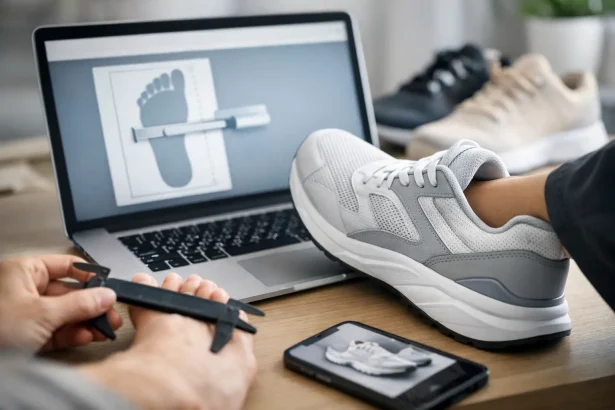
Try shoes later in the day when your feet are a little more swollen. Wear the socks you actually run or walk in. Stand up, not just sit down, and leave about a thumb’s width between your longest toe and the end of the shoe. Your longest toe is not always your big toe.
Your heel should feel held in place without being squeezed. The midfoot should feel secure, but not pinched. Up front, your toes need room to spread. If the toe box feels tight in the store, do not expect it to become roomy after 50 miles. Breaking in a shoe can soften the upper a bit. It does not magically create more space.
A lot of people blame their feet when the real issue is shoe width. If the sides of your feet feel compressed, your little toe rubs, or your foot spills over the midsole, look for a wider option. New Balance and Brooks are often good places to start because many of their running models come in multiple widths.
A wide shoe should not feel loose at the heel. It should simply give your forefoot the space it needs. That difference matters on longer walks and runs, when your feet naturally expand.
Be honest about what you will use the shoes for. A fast-looking shoe built for short workouts is not automatically the right choice for a person walking the dog, working retail, and running a few easy miles on weekends.
For most people, one dependable daily trainer is enough. Think moderate cushioning, decent grip, and an upper that does not trap heat. The ASICS Gel-Nimbus, Brooks Ghost, New Balance Fresh Foam models, and several On running shoes fit this lane depending on your preferred feel. Some are softer, some firmer, some roomier. None is best for every foot.
If you want a shoe mainly for all-day standing and walking, prioritize cushioning and stability over speed. A rocker-shaped sole can help the shoe roll forward smoothly, but it may feel strange if you prefer a flatter, more natural step. Give it a real walk around the house on a clean floor before committing.
If you are starting to run, skip the race-day stuff. Carbon-plated shoes can be fun, but they cost more, wear differently, and are not necessary for building a simple routine. Put that money toward a shoe you can use three or four times a week without thinking about it.
Running shoes do not always look destroyed when they are done. The upper may still look clean while the midsole has lost its bounce and protection. If your usual route suddenly feels harder on your legs, the outsole is worn smooth in key spots, or the shoe feels lopsided on a flat floor, it is probably time.
Many pairs last roughly 300 to 500 miles, but that range is not a rule. Bigger runners, rough pavement, frequent walking, and daily wear can shorten the lifespan. Rotating between two pairs can help each shoe dry out and may make it easier to notice when one pair starts feeling flat.
Do not keep dead shoes around just because they were expensive. If they have done their job, they have earned retirement. Keep them for yard work if you want. Just do not ask them to carry you through another long run.
At The Sneaker Base, we would rather point you toward a shoe you will actually wear than sell you the trendiest model on the wall. Start with fit. Choose cushioning you can live with. Then pick the color you like. That is how you end up with running sneakers that do not sit by the door looking good while your feet choose something else.