Cart
No products in the cart.

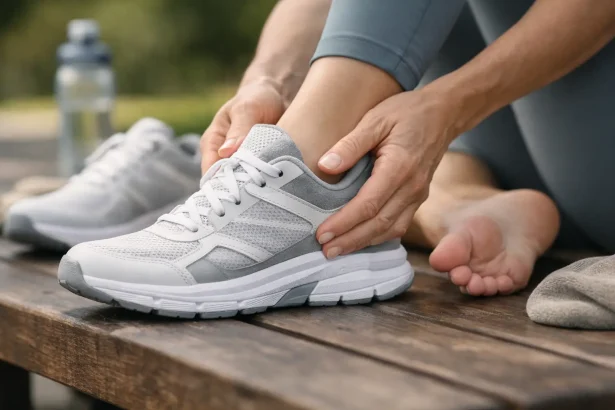
Your toes should not be something you think about halfway through the day. If the front of your shoe is rubbing, burning, pinching, or leaving a hot spot, something is off. So, what causes toe box rubbing? Usually, it is not just that the shoe is “too small.” The real problem is often the shape, the fit, the socks, or the way your foot moves once you start walking.
We see people blame their feet when the shoe is the issue. Don’t. A good pair should hold your foot securely without scraping the tops, sides, or tips of your toes every time you take a step.
Toe box rubbing happens when your foot repeatedly meets the inside of the shoe with too much pressure or friction. That can happen at the top of the toes, around the pinky toe, along the big toe, or at the very front of the shoe.
The most common cause is a toe box that does not match your foot shape. Length matters, but width and depth matter just as much. You can have plenty of room in front of your longest toe and still get rubbed raw if the upper presses down on your toes or squeezes them together.
Rubbing also gets worse as the day goes on. Feet can swell after hours of standing, walking, commuting, or running errands. A shoe that felt fine at 9 a.m. can feel like a bad decision by 5 p.m.
This is the obvious one, and it still catches people out. When your toes reach the front of the shoe, each step creates a small impact. On a long walk or a run, those small impacts add up fast.
You should generally have about a thumb’s width between your longest toe and the end of the shoe when standing. Not every foot has a big toe that is longest, so check both feet. If one foot is slightly larger, fit the shoe to that foot.
Going up half a size can help, but only if length is actually the issue. If the shoe is already long enough, sizing up may let your heel slip and create a whole new set of rubbing problems.
A narrow toe box squeezes the forefoot from the sides. This is common when a shoe has a sharp, tapered front. It may look clean on a shelf, but looks do not help when your pinky toe is getting crushed on your walk home.
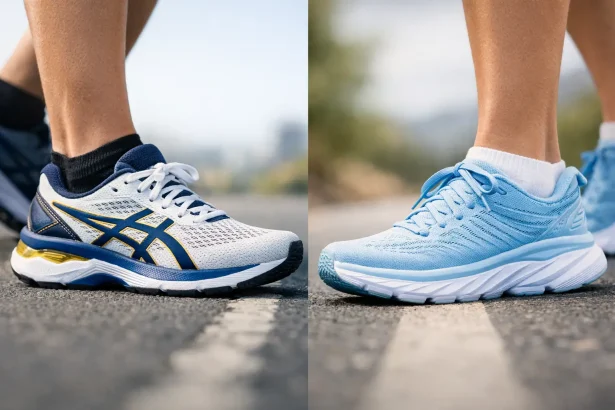
If you regularly feel rubbing on the side of your big toe or pinky toe, stop assuming you need a longer shoe. You may need a wider fit or a model with a rounder front. Some sneaker lines naturally suit narrow feet better, while others give your toes more room to spread.
For all-day wear, we take a clear side here: a little extra toe room is usually worth it. Your feet are not meant to stay squeezed into a point all day just because the shoe has a slim profile.
Depth is the part people miss. A shoe can be wide enough but still press onto the tops of your toes, especially around the nails or toe joints. You may notice red marks on top of your toes after taking the shoes off, or feel the upper rubbing when you bend your foot.
This often happens with low-profile lifestyle sneakers and some running shoes with a firm, structured upper. They can look sharp, but a stiff low toe box does not magically soften because you want it to.
Mesh uppers often give more than leather or synthetic overlays, though that depends on the shoe. Stretch can feel better, but too much stretch can also leave your foot sliding around. The goal is secure space, not a loose shoe.
Sometimes the toe box itself is fine. Your foot is just ending up in the wrong place.
If your heel lifts or your midfoot is not held securely, your foot can slide forward with every step. Then your toes hit the front or rub the upper, especially going downhill, walking quickly, or stopping and starting all day.
A shoe that feels roomy at first can be the culprit. More space is not always better if the rest of the fit is sloppy.
Before you write off a shoe, check how it is laced. If the heel and midfoot feel loose, use the top eyelets and pull the laces snug enough to hold your heel down. You want your foot to stay back in the heel cup, not creep toward the front.
Do not crank the laces down so hard that the top of your foot goes numb. That is not a fix. It just trades toe rubbing for pressure across the instep.
If the shoe only feels right when the laces are pulled painfully tight, it is probably the wrong shape for your foot.
A shoe can feel decent on flat ground but rub your toes on hills, stairs, or a treadmill incline. Gravity pushes your foot forward. If there is not enough length or heel hold, the front of your toes takes the hit.
This matters for runners and hikers, but it also matters if your commute includes stairs or you spend the day moving around a large workplace. Test shoes the way you will actually wear them, not just by standing in front of a mirror for 30 seconds.
Thin, worn-out socks can let your feet move more inside the shoe. Rough seams can rub the tops or tips of your toes. Cotton socks can hold onto moisture, which makes skin softer and more likely to blister.
You do not need fancy gear for every walk. But if you are on your feet for hours, a smooth, moisture-managing athletic sock is a smart move. It reduces friction and gives a little cushioning where you need it.
Also, try shoes with the socks you actually wear. Trying on a running shoe in thin dress socks tells you almost nothing if you plan to wear thicker athletic socks. That extra material can change the fit, especially in a snug toe box.
New shoes can feel stiffer because the upper, lining, and internal seams have not softened with wear. That is normal to a point. A shoe may feel more natural after a few short outings.
But do not confuse breaking in with suffering through a bad fit. Leather can give a little. Mesh can relax a little. A toe box that is plainly too short, too narrow, or too shallow is not going to become roomy after 20 miles.
We would not recommend wearing painful shoes around the house for a week hoping they turn into your favorites. Wear them indoors briefly. Walk on clean flooring. Notice exactly where the pressure starts. If you feel rubbing right away, trust that signal while the shoes are still returnable.
Try shoes on later in the day if you can. Your feet are more likely to be at their everyday size after you have been moving around. Stand up, walk around, bend your foot, and pay attention to all sides of the toe box.
Your toes should be able to lie naturally rather than stack, curl, or press against each other. The upper should not scrape the top of your toes. Your pinky toe should not feel folded inward. And when you walk, your heel should stay put.
If you are deciding between a shoe that feels fitted and one that feels slightly roomier, think about your real day. For short casual wear, a closer fit may be fine. For eight-hour shifts, long walks, or runs, we would rather give your feet that extra bit of breathing room.
Toe rubbing can be worse if you have thickened nails, bunions, hammertoes, swelling, or sensitive skin. Shoes cannot diagnose or treat those issues. They can only add pressure or avoid adding more pressure.
If you keep getting painful blisters, numbness, open skin, or toe pain even in shoes that seem to fit, it is sensible to speak with a podiatrist or other qualified clinician. Especially if you have diabetes or circulation concerns, do not try to tough it out.
A shoe should make your day easier, not give you a problem to manage. Start with the fit you have, not the size printed on the box. If the toe box rubs, it is giving you an honest answer: that shoe is not working for your feet.