Cart
No products in the cart.
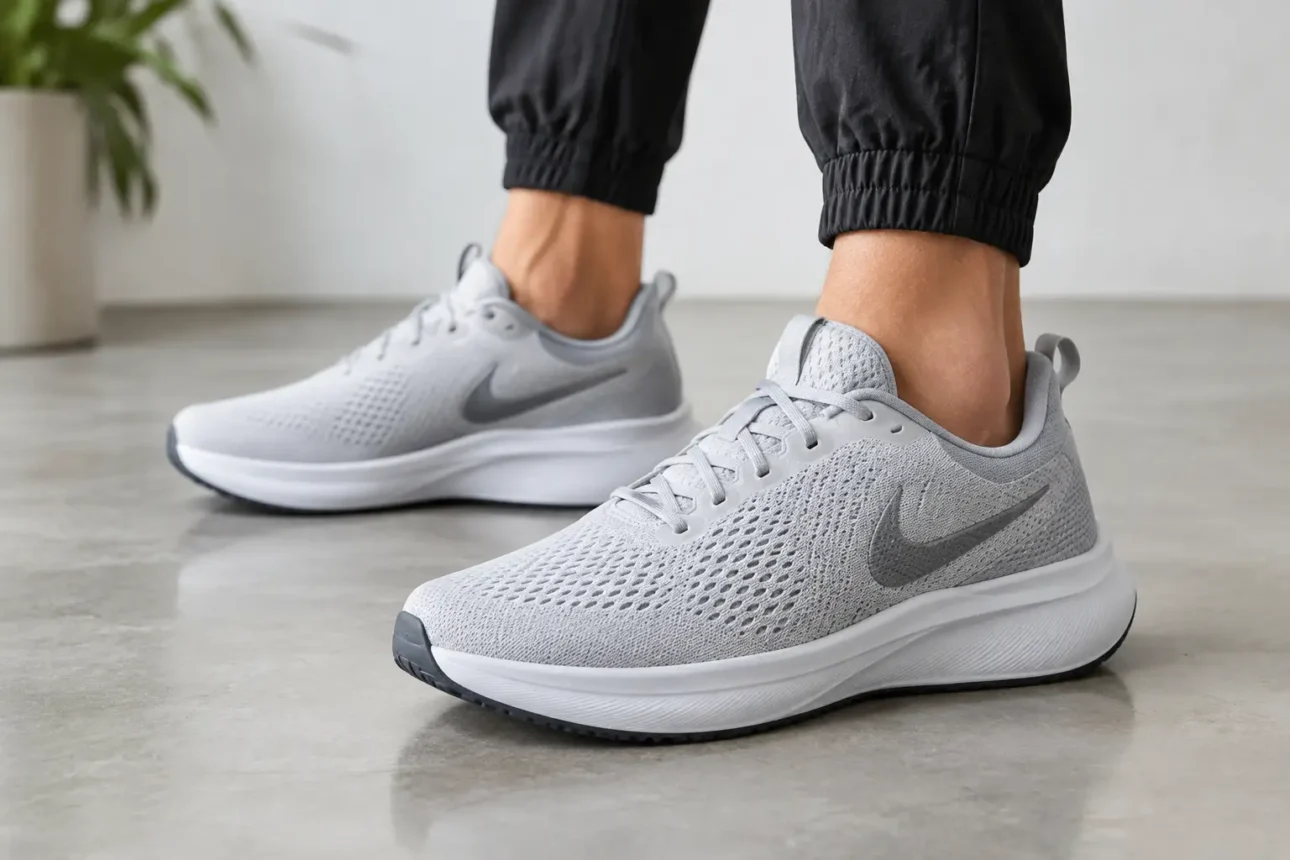
Concrete does not give anything back. That is why the best shoes for concrete floors are not usually the flattest, cheapest, or best-looking pair on the shelf. If you stand at work, walk long warehouse aisles, teach all day, or spend weekends on hard sidewalks, you need cushioning that still feels useful at 5 p.m.
We would skip thin casual sneakers for this job. They can look clean, but a flat sole and tired foam make a long day feel longer. The right pair should soften impact, keep your foot steady, and fit well enough that you are not thinking about your shoes every hour.
Soft cushioning matters, but piling on soft foam is not the whole answer. A shoe that feels like a pillow in the store can feel wobbly after several hours. For concrete floors, we look for a broad base, a stable heel, enough cushioning under the forefoot, and an upper that does not squeeze when your feet swell through the day.
Fit comes before brand. If your toes are crowded, more foam will not save the shoe. Leave about a thumb’s width in front of your longest toe, make sure the heel does not slide, and do not assume your usual size works in every model. Trying on shoes later in the day is smart because that is when feet tend to be at their largest.
There is one practical catch. Most running and walking shoes are not certified slip-resistant work shoes. If your workplace has wet floors, oil, kitchen spills, or a required safety standard, check the policy first. Cushioning is useful. Falling is not.
The Hoka Bondi is the easy pick when your main problem is impact. It has a tall, thick midsole that takes the edge off hard pavement and unforgiving indoor floors. For people who come home with tired heels and achy feet, it is often the first shoe we would look at.
It is not a subtle shoe. The stack is high, and the shape is chunky. Some people will not love the look, and anyone who wants a quick, low-to-the-ground feel should pass. But for standing, walking, and getting through a long shift, the Bondi is tough to beat.
The Brooks Ghost Max is a strong all-around choice for walkers and workers who want cushioning without the super-soft, unstable feeling some max-cushion shoes create. It has plenty underfoot, but the platform stays broad and predictable.
We like it for the person who walks a lot during the day rather than standing in one place. The ride is smooth, the upper is straightforward, and it does not feel overly sporty with everyday clothes. It is not the lightest option here, but that extra substance is part of why it works well on concrete.
If your feet tend to roll inward or you simply like a shoe that feels guided and planted, the ASICS Gel-Kayano deserves a look. It pairs cushioning with structured support, so your stride does not feel loose when your legs get tired.
This is not the best choice for everybody. Some neutral walkers prefer a less structured shoe, and the Kayano can feel like too much support if you like total freedom through the foot. Still, for a long day on concrete, we would take useful stability over a floppy soft shoe every time.
The New Balance Fresh Foam X 1080 is for people who want a soft ride but do not want a shoe that looks like work gear. It has enough cushioning for long walks and hard floors, while the upper usually feels less stiff than many traditional running shoes.
The trade-off is that softer foam can feel less steady around sharp turns or when you are moving fast. If you mostly walk, stand, commute, and run errands, that is not a big issue. If you need a shoe for constant lateral movement, we would choose something with a firmer, wider base.
The Hoka Arahi is a lighter alternative to the Bondi for people who need some support. It does not have the same deep, plush feel, but it is more controlled and less bulky. That matters if you are moving around a store floor, hospital corridor, or office all day.
We like the Arahi when a shoe needs to work for walking and light exercise too. It is not the pick for someone chasing maximum softness. It is the pick for someone who wants cushion with a little discipline.
The On Cloudrunner is a good middle-ground shoe. It has a firmer, more responsive feel than the Bondi or 1080, so it works for people who find ultra-soft shoes too squishy. The ride feels tidy, and the design is easy to wear outside the gym.
Be honest about what you need, though. If your entire shift is spent standing on concrete and your feet already hurt, we would choose more cushioning first. The Cloudrunner makes more sense when you split your day between walking, commuting, errands, and some time on your feet.
The Nike Vomero brings a cushioned running-shoe feel that works well for everyday walking. It is a solid choice if you want a soft heel landing and a more athletic look than some of the bigger max-cushion models.
It is best for neutral walkers who want comfort without a heavy stability setup. The fit can feel more shaped through the midfoot than brands known for wide options, so wide-footed shoppers should pay attention. Do not force it because you like the swoosh. A cramped shoe on concrete becomes a bad shoe fast.
Start with how you spend most of the day. If you stand in one area for hours, go for maximum cushioning and a stable base. The Hoka Bondi and Brooks Ghost Max make the most sense. If you walk miles during a shift, the Ghost Max, Nike Vomero, or New Balance 1080 give you a smoother transition from heel to toe.
If you want extra support, look at the ASICS Gel-Kayano or Hoka Arahi. They are better choices when your ankles and feet feel tired from a long day and you prefer a more guided ride. That does not mean everyone needs a stability shoe. Plenty of people do better in a neutral model. It depends on what feels natural when you walk.
Also, do not buy a running shoe expecting it to last forever as a work shoe. Concrete wears down outsole rubber and compresses foam. If you wear the same pair five or six days a week, rotating between two pairs can help both shoes dry out and hold their shape longer.
Good socks are not boring when you are on concrete all day. A pair with light cushioning and moisture control can reduce rubbing and keep your feet from sliding around inside the shoe. Cotton socks are fine for short errands, but they are not our favorite for long shifts.
Replace shoes when the midsole feels dead, not only when the outsole looks worn. If you notice more foot, knee, or lower-back fatigue than usual and the shoe has a lot of miles on it, the foam may be done. You do not need to wait for a hole to admit a pair has had its day.
The best shoes for concrete floors are the ones you can wear for eight hours without counting down to the moment you can take them off. Start with the level of cushion you need, make sure the fit is right, and ignore the pair that looks cool if it feels wrong after ten minutes. Your feet will have the final say.