Cart
No products in the cart.

Your feet do not care whether a shoe looked good in the mirror at 8 AM. By 5 PM, they care about pressure, support, heat, and whether every step feels like work. That is why walking shoes need to do more than match your jeans. They need to carry you through commutes, errands, dog walks, travel days, and long shifts without making your legs feel wrecked.
We see plenty of people buy flat lifestyle sneakers because they look clean, then wonder why their heels and knees are complaining a few hours later. Flat shoes have their place. Walking all day is usually not it. A good walking shoe is not about fancy specs. It is about a stable base, enough cushioning for your routine, and a fit that lets your foot move without sliding around.
Start with what happens when you walk. Your heel lands first, your body moves over the shoe, and your toes push off. Repeat that thousands of times. A shoe that is too soft can feel nice for ten minutes but wobbly later. A shoe that is too firm can feel stable but harsh on concrete. The right choice sits somewhere between, and where that line is depends on your day.
For most people, we look for moderate cushioning, a secure heel, and a sole that bends near the forefoot instead of folding through the middle. That last part matters. If you can twist or fold a shoe like a towel, it may feel light, but it is not giving your feet much structure over a long day.
A little rocker shape can help too. This means the sole curves upward slightly at the heel and toe, helping your foot roll forward. Brands like Hoka use this shape often. It is not for everyone, especially if you prefer a more natural, grounded feel, but it can take some of the effort out of long walks.
Cushioning gets most of the attention, and fair enough. Hard sidewalks are unforgiving. But the softest shoe on the shelf is not automatically the best walking shoe.
If you stand for eight hours, a plush shoe can feel great at first but leave you feeling unstable if the foam is tall and squishy. If you walk 10 kilometers most days, a firmer platform may feel more consistent and less tiring. We like shoes that compress a little underfoot, then settle quickly instead of sinking like a mattress.
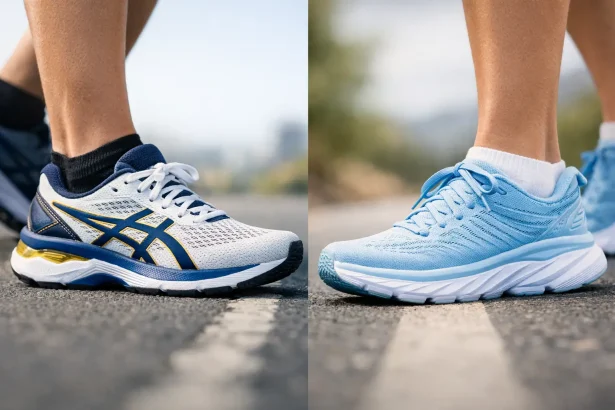
The Hoka Bondi is a solid pick for people who want a lot of padding and a smooth roll. It is not subtle, and some people will find it bulky. That is the trade-off. The Brooks Ghost Max gives you a similarly cushioned idea with a more familiar sneaker feel. For a lighter, less built-up option, many New Balance and Asics models offer enough foam for daily walking without putting you high off the ground.
A popular shoe that fits badly is still a bad shoe. Simple as that.
Your heel should feel held in place without rubbing. Your toes need room to spread and move, especially later in the day when feet tend to swell. Leave roughly a thumb’s width between your longest toe and the front of the shoe. Do not assume your longest toe is your big toe. For plenty of people, it is the second toe.
Width matters just as much as length. If the upper is pressing against the side of your forefoot, sizing up may only give you a longer shoe, not a wider one. Look for brands and models offered in wide sizes when you need them. Trying to break in a narrow shoe is a losing game. The material may loosen a bit, but the shape will not magically become right for your foot.
Try shoes on later in the day if you can. That is when your feet are closer to their real working size. Wear the socks you normally use too. Thin dress socks and thick athletic socks can make the same shoe fit very differently.
The best pair for a casual weekend walk may not be the best pair for a hospital shift or a city trip. Before getting caught up in colors or brand names, be honest about where you will wear them.
If your day means concrete, tile, or warehouse flooring, prioritize cushioning and a stable heel. You do not need a super-flexible shoe. You need something that does not feel dead after several hours on hard ground.
Look at options from Hoka, Brooks, and Asics first. The Hoka Arahi is worth considering if you like a more guided, supportive feel. The Brooks Ghost Max works well for people who want plenty of underfoot protection without a stiff, boot-like ride. Asics Gel Kayano models have a supportive reputation for a reason, though they can feel more structured than some walkers want.
We would skip thin-soled retro sneakers for this job. Yes, a Gazelle or Speedcat can look sharp. No, we would not choose one for a 12-hour shift unless you enjoy thinking about your feet all day.
For neighborhood miles, school runs, and normal life, you have more room to balance comfort with style. A clean running-inspired sneaker often works best because it gives you usable cushioning without looking like you are headed to a race.
On models are popular for their light feel and simple looks. They can be a good fit for shorter walks and busy days, but their firmer, more distinct underfoot feel is not everyone’s favorite. Try them if you want a responsive shoe and do not need maximum softness.
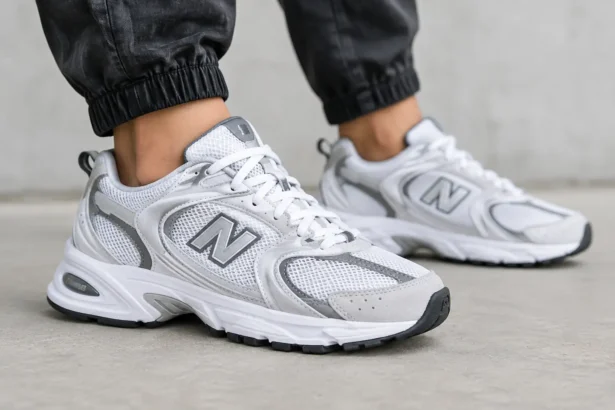
New Balance is often a safe place to start for everyday wear, especially if fit is your main problem. Many of its shoes have a stable, easygoing feel and options for different foot widths. Nike can work well too, but fit varies a lot by model. Do not buy based on the swoosh alone.
Travel walking shoes need to handle long airport terminals, uneven streets, standing in lines, and whatever weather turns up. Breathable mesh is nice, but an upper with a little more structure will usually hold up better when you are carrying a bag and putting in serious miles.
Choose grip you can trust. A smooth outsole is fine indoors but can get sketchy on wet pavement. Also think about how easy the shoe is to pack. A huge max-cushioned pair may feel amazing, but it takes up space. For some trips, a medium-cushioned sneaker that works with most outfits is the smarter call.
You will hear words like neutral, stability, and motion control. Here is the plain version. Neutral shoes are built for people who do not need much extra guidance. Stability shoes add structure to help keep the foot from rolling inward too much as you walk or run.
If your current shoes wear down heavily on the inside edge, or your ankles feel like they collapse inward when you are tired, you may prefer a stability model. The Asics Gel Kayano, Hoka Arahi, and similar shoes are common starting points. But more support is not always better. If a stability shoe pushes against your arch in the wrong place, it can be annoying from the first walk.
We would not diagnose your stride from a photo or tell you a shoe will solve pain. Bodies are more complicated than that. If pain is persistent, sharp, or getting worse, talk with a qualified medical professional. Shoes can improve comfort and reduce obvious pressure points, but they are not medical treatment.
The upper should feel secure, not restrictive. Mesh is cooler and often lighter. Knit can feel soft and sock-like, though it may not hold the foot as firmly. Leather or synthetic overlays can add durability, but they may run warmer.
Pay attention to the heel collar. If it digs into your Achilles area or slides while you walk around the house, return the shoe. Do not talk yourself into it. Also check the outsole. Deep rubber in high-wear areas generally lasts better than exposed foam, especially if you walk on pavement every day.
Your walking shoes should feel good right away. A short adjustment period is normal. Blisters, toe numbness, heel slipping, and arch pain are not a break-in period. They are feedback.
One good pair is enough to start. But if you walk or stand in the same shoes every day, rotating between two pairs is worth it. The foam gets time to rebound, the inside dries out, and you are less likely to keep stressing the exact same spots on your feet.
Replace a pair when the sole is worn smooth, the cushioning feels flat, or the shoe starts leaning to one side. Mileage helps as a rough guide, but your wear pattern matters more. Someone walking on city pavement every day will wear through a shoe faster than someone using it mostly indoors.
At The Sneaker Base, we would rather point you toward a shoe that fits your real routine than tell you every new model is worth buying. Pick the pair that feels steady, leaves room for your toes, and still feels decent after an hour on your feet. That is the pair you will actually keep reaching for.